Melting domes
The cheapest accessory that solves a problem you cannot solve any other way.

We earn a commission if you buy through our links, at no extra cost to you. That is how this site is paid for, and it does not decide what we recommend — full disclosure.
Quick picks
Ranked on published specifications using our scoring rubric. Tap a row for the full write-up.
| # | Product | Best for | Score | Price |
|---|---|---|---|---|
| 1 | Melting DomeCheese, and steaming anything | Cheese, and steaming anything | 8.4 | Check price on Amazon |
| 2 | 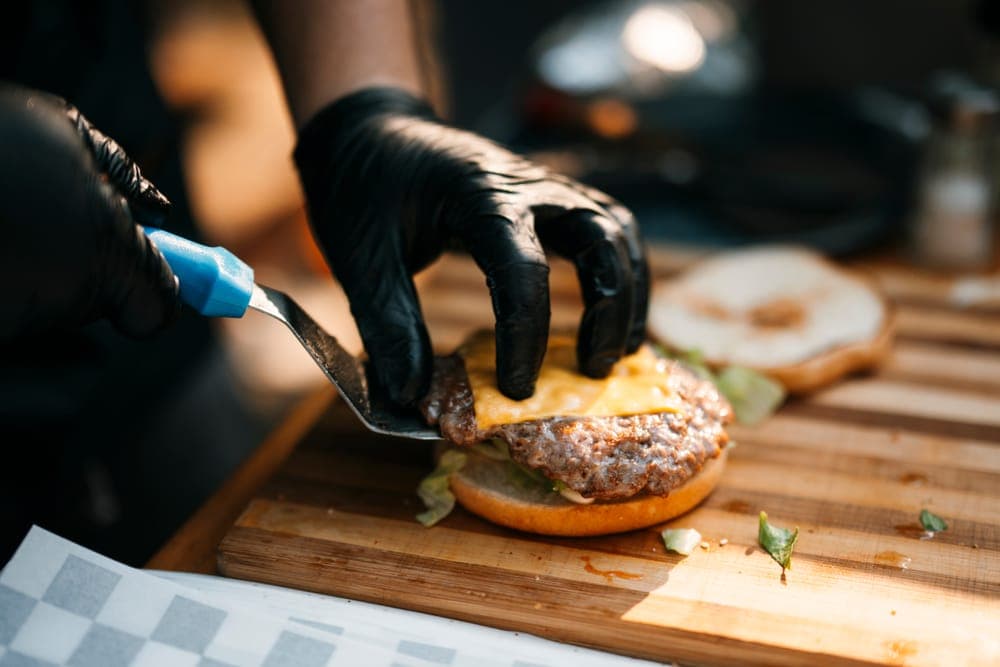 Squeeze Bottle SetOil control, which is most of the technique Squeeze Bottle SetOil control, which is most of the technique | Oil control, which is most of the technique | 8.3 | Check price on Amazon |
| 3 |  Smash Burger PressCrust, which is the entire point Smash Burger PressCrust, which is the entire point | Crust, which is the entire point | 8.6 | Check price on Amazon |
#ad We publish no prices: there is no verified price feed on this site, so the retailer’s page is the only price. How this is funded
The problem it solves
A thin smash-burger patty is done in about ninety seconds. Cheese does not melt properly in ninety seconds on an open griddle, because the only heat reaching it is conducted up through the patty.
So you have two bad options: take the burger off with unmelted cheese, or leave it on until the cheese melts and overcook the patty.
A dome gives you a third. Cover the burger, squirt a little water on the plate beside it, and the trapped steam melts the cheese in seconds — heat arriving from above rather than through the meat.
How to use one
- Flip the patty and put the cheese on.
- Squirt a small amount of water onto the plate beside the burger, not on it.
- Drop the dome over both immediately.
- Ten to twenty seconds. Lift.
Water beside rather than on the patty matters — water on the meat washes away the fond and cools the crust you just built.
What to look for
Stainless, not aluminum
Aluminum domes warp with repeated heat cycling, and a warped dome does not sit flat on the plate. Once it does not seal, it does not trap steam, and the dome has stopped doing its one job.
Stainless holds its shape essentially indefinitely.
A handle that stands off
A dome over a 400 °F plate filled with steam gets hot within seconds. A flush or low-profile handle is unusable without a glove, which defeats the point of a tool you need to grab quickly.
Look for a handle that stands proud of the dome body with an air gap, ideally with a heat-resistant grip.
Diameter
Bigger than the patty plus the cheese overhang, with room for the rim to sit on the plate rather than on the food. A dome resting on the burger does not seal.
Other things it does well
- Steaming vegetables. Onions, peppers and mushrooms soften much faster covered.
- Reheating buns without drying them out.
- Finishing thick food. A griddle has no lid, so trapped heat is the only way to cook something thick through without burning the outside — a dome is a partial substitute for a hood.
- Eggs. A dome steams the top of a fried egg, setting the white without flipping.
How many you need
One dome covers one burger. Cooking six means working in rounds, which is fine for a family and slow for a crowd.
Two domes is a reasonable purchase for anyone cooking burgers regularly, and some kits include two for this reason.
Dome versus basting cover
Essentially the same tool. “Basting cover” tends to describe a shallower, wider version, and “melting dome” a taller, rounder one.
Taller gives more steam volume and more clearance over a tall stack. Shallower seals a little more easily. Either works; the material and handle matter more than the shape.
The picks in detail
Specifications are linked to their source on every card. Scores are ours, derived from those specifications.
#1 · Cheese, and steaming anything
Melting Dome
A dome plus a squirt of water turns a dry griddle into a steamer for thirty seconds — it is how cheese melts before the patty overcooks.
#ad We publish no prices: there is no verified price feed on this site, so the retailer’s page is the only price. How this is funded
Key specifications
- What it does
- Traps steam so cheese melts in seconds, not minutes
- Diameter
- Larger than your patty plus the cheese overhang
- Material
- Stainless holds up; aluminum warps
- Handle
- Must stand off the dome — it gets hot immediately
- Technique
- Squirt water beside the food, then cover
- Also good for
- Steaming vegetables and reheating buns
Scores
- Seal8.5
- Material8.0
- Handle7.0
- Value9.0
What works
- Solves the real smash-burger problem: the patty cooks in 90 seconds, cheese does not melt in 90 seconds
- Doubles as a steamer for anything on the plate
- Cheap and essentially unbreakable in stainless
What to know
- Aluminum domes warp and then do not seal
- A dome with a flush handle is unusable without a glove
- One dome covers one burger; cooking six means working in rounds
#2 · Oil control, which is most of the technique
Squeeze Bottle Set
Two bottles — one oil, one water — are the most underrated griddle tools there are, because dosing oil by eye is how food sticks or swims.
#ad We publish no prices: there is no verified price feed on this site, so the retailer’s page is the only price. How this is funded
Key specifications
- How many
- Two minimum: oil and water
- Tip
- Narrow, so you can lay a thin line rather than a puddle
- Water bottle use
- Steam-lifting residue and steaming under a dome
- Material
- Heat-tolerant — bottles sit near a hot plate
- Caps
- Must seal; open bottles collect everything
- Label them
- Oil and water look identical in an opaque bottle
Specifications from Blackstone accessories.
Scores
- Control9.0
- Material7.0
- Sealing7.5
- Value9.5
What works
- A thin controlled line of oil is the difference between a seared crust and a fried one
- The water bottle makes daily cleanup a 60-second job
- Trivially cheap for how much technique they unlock
What to know
- Wide-tip bottles over-dose oil and defeat the purpose
- Cheap plastic deforms if left on a hot side shelf
- Oil goes rancid in a bottle left outside for months
#3 · Crust, which is the entire point
Smash Burger Press
Mass and a flat face are all that matter — a heavy press holds the patty against the plate long enough to build crust instead of steaming it.
#ad We publish no prices: there is no verified price feed on this site, so the retailer’s page is the only price. How this is funded
Key specifications
- What matters most
- Weight — light presses bounce off the patty
- Face
- Dead flat; a domed face leaves a thin middle
- Diameter
- Wider than your finished patty
- Handle
- Offset and insulated — it sits on a 400 °F plate
- Technique
- Press once, hold 10 seconds, do not press again
- What fails first
- Wooden handles, which char at the joint
Scores
- Mass9.0
- Flatness8.5
- Handle7.0
- Value8.5
What works
- Heavy cast iron presses do the job a spatula physically cannot
- A flat face gives even crust across the whole patty
- Works equally on any griddle regardless of brand
What to know
- Pressing a second time squeezes out the juice you just built crust to hold in
- Light aluminum presses are common and do not work
- Needs its own seasoning and care if it is bare cast iron
Common questions
How do you use a melting dome on a griddle?
Should a melting dome be stainless or aluminum?
Why put water beside the burger rather than on it?
What else is a melting dome good for?
Sources
Every specification on this page came from one of these. If you find one of them has changed, tell us and we will correct it.
Read next
Smash burgers on a griddle
The complete smash burger method, why each step is what it is, and the five mistakes that produce gray patties.
Smash burger presses
Why mass decides whether a press works, why a domed face ruins the patty, and the one-press rule.
Griddle hard covers vs hoods
Hinged hoods against lift-off hard covers: weather protection, trapped-heat cooking, clearance and fit.
Griddle tool kits
What a kit genuinely needs to contain, what is filler, and when buying the tools separately is the better call.

Breakfast on a griddle
A full griddle breakfast: the zone plan, the order of operations, and timings so everything lands together.
Griddle spatulas
Why stiffness matters more than anything, why two beats one, and why the spatulas in big kits are the wrong tool.