Can you use a propane griddle indoors?
No. Not in a garage with the door open, not on a screened porch, not once.
The answer
No. A propane griddle must not be used indoors, in a garage, in a shed, in a tent, in an RV, or on a porch enclosed on more than two sides.
This is not a liability-driven over-caution. It is the reason this page exists and the reason it carries no buy button.
Why
Burning propane produces carbon monoxide. In a well-ventilated outdoor space it disperses into open air. In an enclosed space it accumulates.
Carbon monoxide is colorless and odorless. You cannot see it, smell it or taste it. It binds to haemoglobin far more readily than oxygen does, which means it displaces the oxygen your blood is carrying.
The early symptoms — headache, dizziness, nausea, confusion — are easily mistaken for something else, and one of them is confusion, which impairs exactly the judgment you would need to recognize what is happening and leave.
Combustion also consumes oxygen and produces moisture, neither of which helps in a sealed room.
The edge cases people ask about
“My garage door is open”
Still no. A garage with one open side is a partially enclosed space with poor cross-flow. Carbon monoxide is close to the density of air, so it does not reliably drift out of a single opening — it mixes and accumulates in the volume.
“It is a screened porch”
Depends on how enclosed it is. Two open sides with real cross-flow is reasonable. Three or four walls with screens is not — screens do not meaningfully ventilate, they keep insects out.
“I will only do it for ten minutes”
Carbon monoxide accumulates over time, and griddles run for longer than people plan. Ten minutes becomes thirty. The exposure is cumulative.
“I have a carbon monoxide detector”
A detector is a backstop for an unexpected fault, not a permission slip for a known source. Deliberately running a combustion appliance in a space and relying on an alarm to tell you when it has become dangerous is the wrong way round.
“What about a tent or an awning?”
No. Tents are small, poorly ventilated volumes, and this is a recognized cause of fatal incidents. The same applies to an RV, where the volume is smaller still.
The one legitimate exception
A commercial kitchen with purpose-built combustion ventilation — engineered make-up air, extraction rated for the appliance, and inspection. That is an engineering solution, not a domestic one, and it is not something you can approximate with a range hood and an open window.
What to use instead
- An electric griddle. No combustion, so no carbon monoxide. Capped at about 1500 watts.
- A steel plate on your range. A gas range is a combustion appliance, but it is installed under engineered extraction and designed for indoor use. A plate across it is the most capable indoor flat top there is.
- An electric range or induction cooktop with a plate, where compatible — no combustion at all.
The full electric-versus-gas comparison covers what you gain and give up.
Using propane safely outdoors
- Open air, with clearance from walls, fences, overhangs and anything that can burn.
- Not under a low awning, pergola roof or soffit.
- Leak-test connections with soapy water when you change a tank.
- Store tanks outdoors and upright — never in a garage or basement.
- Never leave a lit griddle unattended.
If you are converting a griddle to natural gas, that has its own safety requirements — covered here.
Common questions
Can you use a propane griddle indoors?
Is it safe to use a propane griddle in a garage with the door open?
Does a carbon monoxide detector make indoor propane cooking safe?
What can I use indoors instead of a propane griddle?
Sources
Every specification on this page came from one of these. If you find one of them has changed, tell us and we will correct it.
Read next
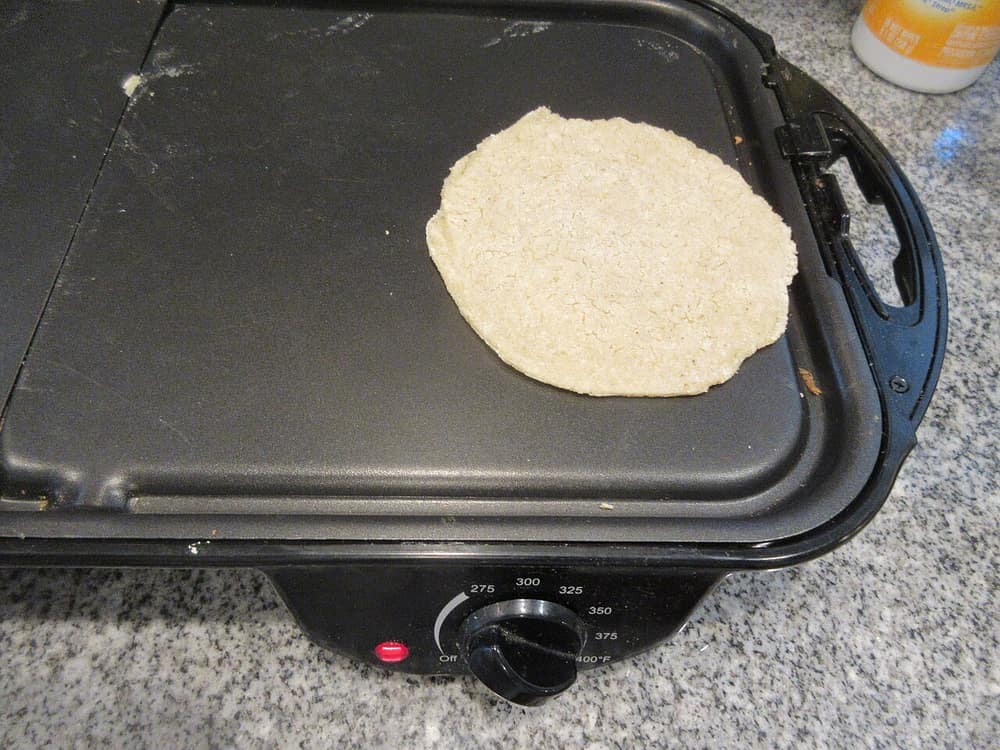
The best indoor electric griddles
Indoor griddles compared, why smoke rather than power is the real limit, and how to cook flat-top food in a kitchen.
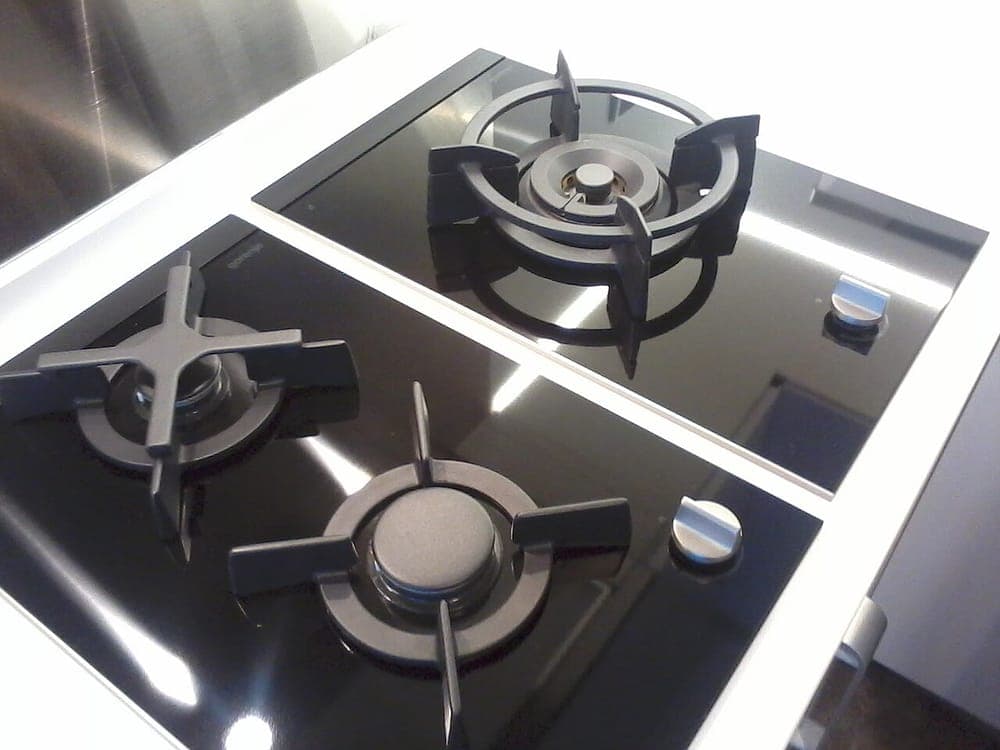
Stovetop griddles
Steel plates for gas and electric coil ranges: thickness, weight, what fits, and why ventilation becomes the real limit.
Electric vs gas griddle
1500 watts against 34,000 BTU — what the gap means in practice, and the things electric genuinely does better.
Electric griddles for RVs
What 1500 watts means on RV shore power, how to store a griddle that moves, and the propane rule that is absolute.

Converting a griddle to natural gas
What a natural gas conversion really involves, the safety and warranty implications, and the models sold ready for it.

The best electric griddles
Electric griddles compared on surface, coating quality, temperature control and storage — since wattage barely varies.