The best oils for a griddle
One property decides whether an oil seasons or burns, and it is not the one on the front of the bottle.
We earn a commission if you buy through our links, at no extra cost to you. That is how this site is paid for, and it does not decide what we recommend — full disclosure.
Quick picks
Ranked on published specifications using our scoring rubric. Tap a row for the full write-up.
| # | Product | Best for | Score | Price |
|---|---|---|---|---|
| 1 |  Griddle Seasoning & ConditionerA convenient blend, not a magic one Griddle Seasoning & ConditionerA convenient blend, not a magic one | A convenient blend, not a magic one | 7.6 | Check price on Amazon |
| 2 |  Squeeze Bottle SetOil control, which is most of the technique Squeeze Bottle SetOil control, which is most of the technique | Oil control, which is most of the technique | 8.3 | Check price on Amazon |
| 3 | 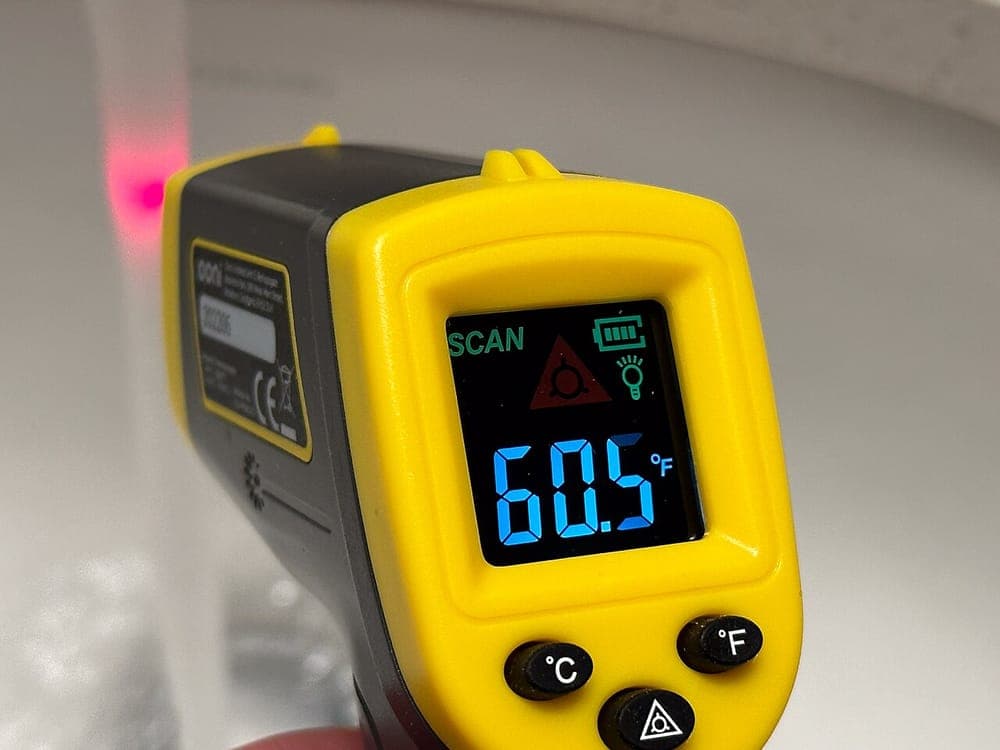 Infrared Surface ThermometerKnowing what your plate is actually doing Infrared Surface ThermometerKnowing what your plate is actually doing | Knowing what your plate is actually doing | 8.3 | Check price on Amazon |
#ad We publish no prices: there is no verified price feed on this site, so the retailer’s page is the only price. How this is funded
What seasoning oil has to do
Seasoning is polymerization: you heat a very thin film of oil past its smoke point, the oil breaks down and cross-links into a hard polymer, and that polymer bonds to the steel.
The requirement follows directly. The oil has to survive being heated past its smoke point and set, rather than simply burning. That means a high smoke point, and it means a refined oil rather than one carrying a lot of flavor compounds and solids.
Smoke points, roughly
Published figures vary between sources because refinement level varies between producers, so treat these as bands rather than constants:
| Oil | Smoke point band | For seasoning |
|---|---|---|
| Avocado (refined) | Very high | Excellent |
| Grapeseed | High | Excellent — the usual recommendation |
| Canola / rapeseed | High | Very good, and cheap |
| Sunflower (refined) | High | Very good |
| Vegetable / blended | Moderate–high | Workable |
| Flaxseed | Low | Hard, brittle finish — prone to flaking |
| Olive (extra virgin) | Low | No — burns rather than setting |
| Butter | Very low | No — milk solids burn |
The honest conclusion about oil choice
Among the suitable oils, differences are small. Grapeseed, canola, refined sunflower and refined avocado all polymerize well, and nobody will be able to tell from the finished surface which one you used.
Which means technique matters far more than oil choice. A perfect oil applied too thickly gives a sticky, flaking mess. A cheap canola applied thinly and heated properly gives an excellent surface. The technique is here.
The flaxseed question
Flaxseed gets recommended in cast-iron circles because it polymerizes into a particularly hard layer. The problem is that hard also means brittle, and a brittle layer on a large flat surface that expands and contracts with heat tends to chip and flake.
For a griddle — a big plate taking thermal cycling and a metal scraper — a slightly softer, more resilient layer from a standard high-smoke-point oil holds up better. If yours is already flaking, that has its own page.
Branded conditioners: what you are paying for
Blends of oils and waxes formulated to a high smoke point and a convenient viscosity. They work, and the viscosity is a genuine benefit — it is easier to spread a truly thin, even coat with a product designed for it than with a thin liquid oil.
But chemically they do nothing a suitable oil does not. You are buying convenience and consistency, not a different outcome. That is a fair purchase as long as you know that is what it is. Conditioners and waxes in detail.
The genuinely useful purchase
Not a special oil. Squeeze bottles. A narrow-tip bottle lets you lay a thin controlled line of oil instead of pouring a puddle, and over-application is the single most common cause of seasoning failure.
Two bottles — one oil, one water — cost very little and do more for your results than any oil upgrade. Pair them with an infrared thermometer so you know the plate is actually past the smoke point rather than guessing.
The picks in detail
Specifications are linked to their source on every card. Scores are ours, derived from those specifications.
#1 · A convenient blend, not a magic one
Griddle Seasoning & Conditioner
A blended conditioner is a reasonable convenience, but it does nothing a high-smoke-point oil applied thinly does not already do.
#ad We publish no prices: there is no verified price feed on this site, so the retailer’s page is the only price. How this is funded
Key specifications
- What it is
- A blend of oils and waxes with a high smoke point
- What it does
- The same polymerization any seasoning oil does
- Real advantage
- Consistency and a usable application viscosity
- Alternative
- Grapeseed, canola or avocado oil applied very thinly
- Application rule
- Thin to the point of looking dry, then heat until it stops smoking
- Common mistake
- Too much product — thick coats stay sticky and then flake
Specifications from Blackstone accessories.
Scores
- Effectiveness8.0
- Convenience8.5
- Smoke point8.5
- Value6.5
What works
- Formulated to the right viscosity, which makes a genuinely thin coat easy
- One product for seasoning and post-cook conditioning
- Removes the guesswork about smoke point
What to know
- Costs considerably more per application than a bottle of grapeseed oil
- Does not chemically do anything a suitable oil does not
- Marketed as a requirement; it is a convenience
#2 · Oil control, which is most of the technique
Squeeze Bottle Set
Two bottles — one oil, one water — are the most underrated griddle tools there are, because dosing oil by eye is how food sticks or swims.
#ad We publish no prices: there is no verified price feed on this site, so the retailer’s page is the only price. How this is funded
Key specifications
- How many
- Two minimum: oil and water
- Tip
- Narrow, so you can lay a thin line rather than a puddle
- Water bottle use
- Steam-lifting residue and steaming under a dome
- Material
- Heat-tolerant — bottles sit near a hot plate
- Caps
- Must seal; open bottles collect everything
- Label them
- Oil and water look identical in an opaque bottle
Specifications from Blackstone accessories.
Scores
- Control9.0
- Material7.0
- Sealing7.5
- Value9.5
What works
- A thin controlled line of oil is the difference between a seared crust and a fried one
- The water bottle makes daily cleanup a 60-second job
- Trivially cheap for how much technique they unlock
What to know
- Wide-tip bottles over-dose oil and defeat the purpose
- Cheap plastic deforms if left on a hot side shelf
- Oil goes rancid in a bottle left outside for months
#3 · Knowing what your plate is actually doing
Infrared Surface Thermometer
The only way to know a griddle's real surface temperature — and the fastest way to find the hot spots every griddle has.
#ad We publish no prices: there is no verified price feed on this site, so the retailer’s page is the only price. How this is funded
Key specifications
- Type
- Infrared, non-contact — not a probe thermometer
- Range needed
- At least 100–600 °F
- Use
- Read several points; a griddle is never one temperature
- Limitation
- Reads surfaces, not the inside of food
- Accuracy caveat
- Shiny bare steel reads low; a seasoned plate reads true
- Pairs with
- A probe thermometer for doneness
Scores
- Usefulness9.0
- Accuracy7.5
- Range8.0
- Value8.5
What works
- Turns 'medium heat' from a guess into a number
- Finding your plate's hot spots takes about 30 seconds and changes how you cook on it forever
- Non-contact, so there is nothing to clean
What to know
- Reads surface only — it cannot tell you a burger is done
- Emissivity error on bare, shiny steel can read 50 °F or more low
- One more battery device living near a hot griddle
Common questions
What is the best oil for seasoning a griddle?
Should I use flaxseed oil to season a griddle?
Are branded griddle conditioners worth it?
Can you season a griddle with olive oil?
Sources
Every specification on this page came from one of these. If you find one of them has changed, tell us and we will correct it.
Read next
Seasoning a griddle for the first time
The complete first-seasoning process step by step, the three ways it goes wrong, and what a correct result actually looks like.
Griddle conditioners and waxes
What blended griddle conditioners actually are, when the convenience is worth it, and when a bottle of oil is the better buy.
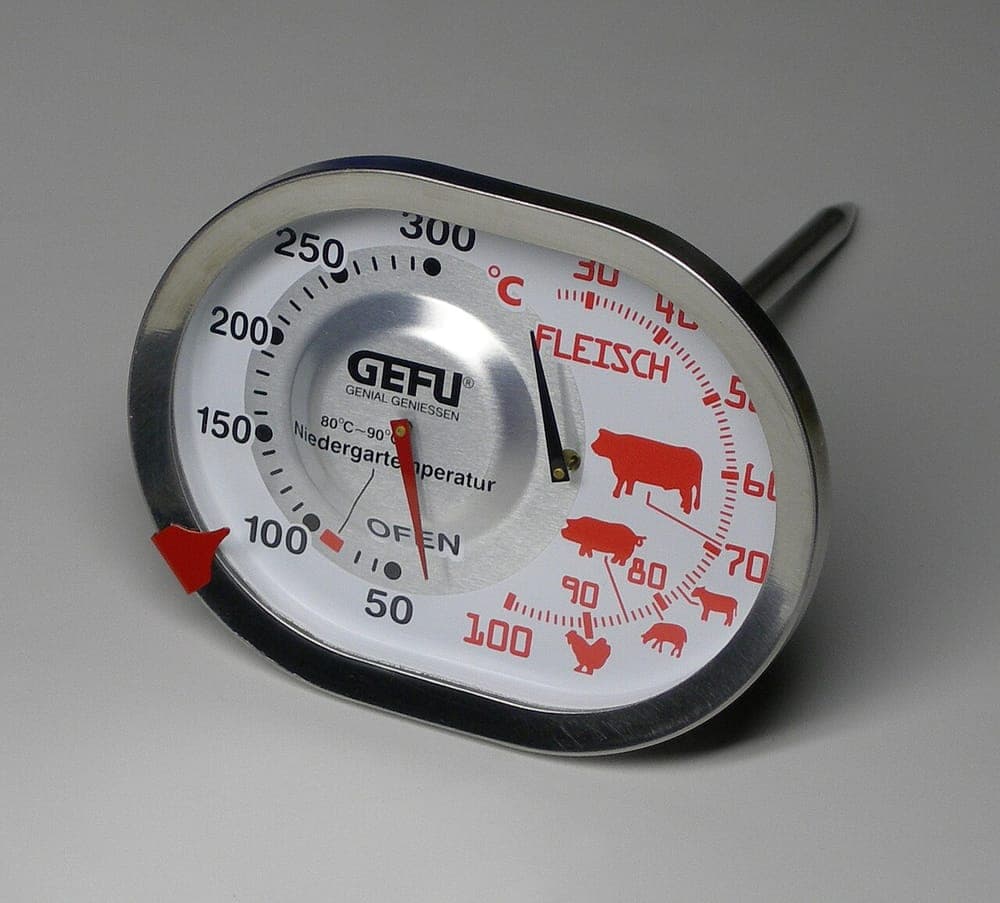
What temperature to season a griddle
Why seasoning temperature depends on your oil, the visual signal that works regardless, and how to check the whole plate.
Why your griddle seasoning is flaking off
Why seasoning flakes, why adding more oil makes it worse, and how to take the surface back to a sound layer.
How often to season a griddle
After-cook oiling versus a full re-season: which is daily, which is rare, and the four situations that call for a reset.
Griddle thermometers
Why infrared beats a probe for griddles, what range you need, and the emissivity error that reads bare steel low.