Almost everyone arrives at this category asking “which griddle is best?” and leaves having actually answered three narrower questions: how big, how many burners, and which cooktop material. Get those right and the brand matters far less than the marketing suggests. Get them wrong and no brand saves you.
Start with size, because size is the decision you cannot undo
Flat tops cluster into four sizes, and they are genuinely different appliances rather than the same appliance at different scales.
17-inch tabletops are single-burner travel griddles. One burner means one temperature across the whole plate, which rules out the hot-side/cool-side technique that makes griddle cooking work. Buy one as a second griddle, not a first.
22-inch tabletops are the smallest size that gives you two independent zones. That is a real line in the sand: two zones is a griddle, one zone is a hot plate.
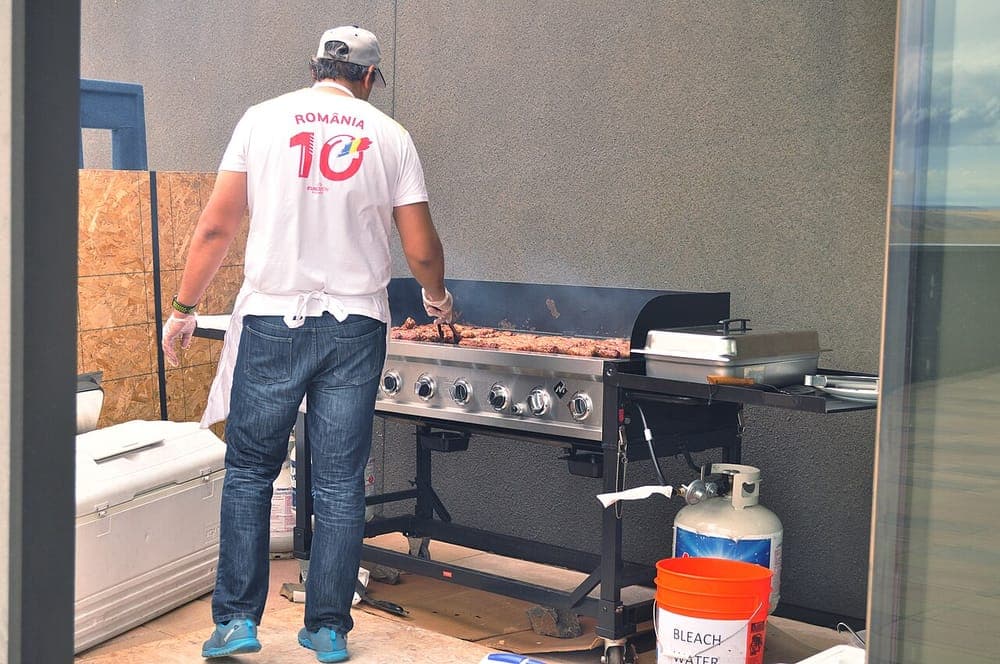
28 to 30-inch carts are what most households should buy. A Blackstone 28 gives you 525 square inches, a Weber Slate 30 gives you 540 with three zones instead of two. Either feeds four people with room to spare.
36-inch carts are for cooking for eight or more, regularly. The honest version of this advice is that most 36-inch griddles are bought by people who cook for four, and the extra 240 square inches is storage footprint they resent within a year.
Every manufacturer leads with total BTU, which tells you almost nothing on its own: 60,000 BTU is a lot across 500 square inches and merely adequate across 770. The number that matters is BTU per square inch, and we publish it on every griddle because nobody else in this category does.
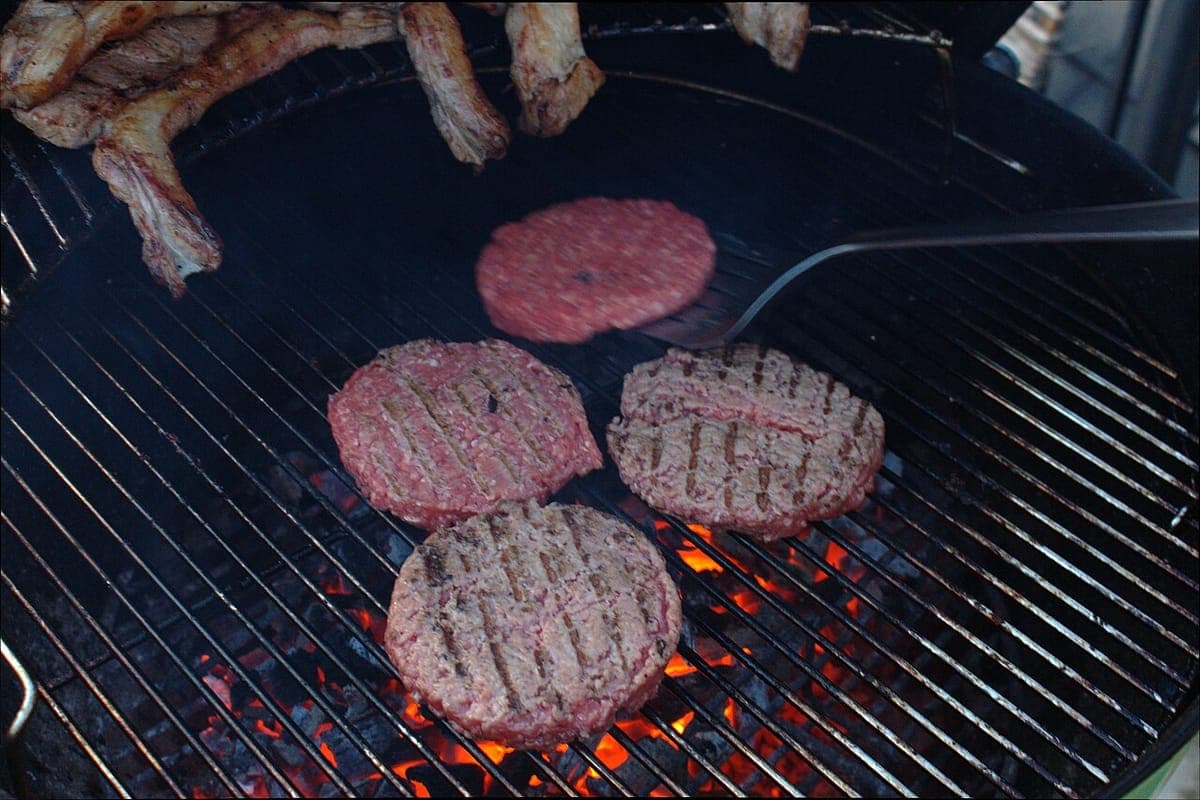
The spread is wider than you would expect. A Pit Boss Deluxe runs 82.3 BTU per square inch. A Weber Slate 22 runs 45.5. That is nearly double, and you feel it in exactly one moment: when a full load of cold food hits the plate and the surface temperature falls off a cliff. High density recovers; low density sits there steaming your burgers instead of searing them. We explain the arithmetic here.
Cooktop material is the ownership decision
This is where the brands genuinely diverge, and it is the one that decides whether you still own a working griddle in three years.
Bare carbon steel — Blackstone, Traeger, Camp Chef, Nexgrill — can be seasoned to a genuinely non-stick finish, restored indefinitely with a scraper and oil, and will rust within weeks if you leave it uncovered and unseasoned. It rewards a routine and punishes neglect.
Rust-resistant steel — the Weber Slate line — arrives pre-seasoned and tolerates the kind of neglect that destroys a bare top. You pay for it in heat: the Slate 36 runs 63.5 BTU per square inch against the Blackstone 36’s 78. If you cook once a fortnight, that trade is obviously worth it. If you cook weekly, it is obviously not.
Coated surfaces — Pit Boss’s armored ceramic, Royal Gourmet’s porcelain enamel — skip seasoning entirely. The catch is that a coating is a wear item. Steel can be brought back from almost anything; a chipped or worn coating cannot. The full material comparison is here.
What actually decides the price
Within a size class, price tracks three things: cooktop treatment (rust-resistant and coated tops cost more than bare steel), burner count, and how much of the cart is steel rather than painted sheet. It does not track heat density, which is why the highest-density griddle in this guide is not the most expensive one. It is also why the budget picks are competitive on the spec that matters most.
The mistake almost everyone makes
Buying the 36 because it was only a little more than the 28. The extra surface is free to buy and expensive to live with: a bigger cover, a bigger footprint, more plate to season, more plate to scrape, and a griddle that no longer fits where you wanted to put it. Unless you are routinely cooking for more than six, the 28 to 30-inch class is the right answer and the 36 is a storage problem you bought on purpose.
The second mistake is skipping the cover. A correctly sized, vented cover is the cheapest thing in this entire category and it is the difference between a griddle that lasts a decade and one that is pitted by its second spring.
Eighteen pairings worked through on the same specification fields, so the differences are like-for-like rather than two marketing pages placed side by side.
A 28 to 30-inch, two or three-burner cart griddle. That size feeds four people comfortably, fits a normal patio, takes a standard cover, and gives you the independent heat zones that make griddle cooking work. Go to 36 inches only if you regularly cook for more than six.
Is a higher BTU griddle always better?+
No — total BTU is meaningless without the surface area it has to heat. Compare BTU per square inch instead. A 36-inch griddle at 48,000 BTU has less heat per square inch than a 28-inch at 34,000, and it is the per-square-inch figure you feel when cold food hits the plate.
Do I need a rust-resistant cooktop?+
It depends entirely on how often you cook. Bare carbon steel stays seasoned on its own if you use it weekly. If you cook occasionally and store the griddle outdoors, a rust-resistant top like the Weber Slate is worth the lower heat density it comes with.
Can I just put a griddle plate on my existing gas grill?+
Yes, and for a lot of people that is the right call. A thick steel insert turns a gas grill into a flat top without a second appliance or a second propane tank. The trade-offs are that you lose the grill while the plate is on, and your grill's burners were laid out for grates rather than a solid plate, so hot spots follow the burner pattern.