Smash burger presses
Weight and a dead-flat face. Those are the only two things that matter, and most presses get one of them wrong.

We earn a commission if you buy through our links, at no extra cost to you. That is how this site is paid for, and it does not decide what we recommend — full disclosure.
Quick picks
Ranked on published specifications using our scoring rubric. Tap a row for the full write-up.
| # | Product | Best for | Score | Price |
|---|---|---|---|---|
| 1 | Smash Burger PressCrust, which is the entire point | Crust, which is the entire point | 8.6 | Check price on Amazon |
| 2 | 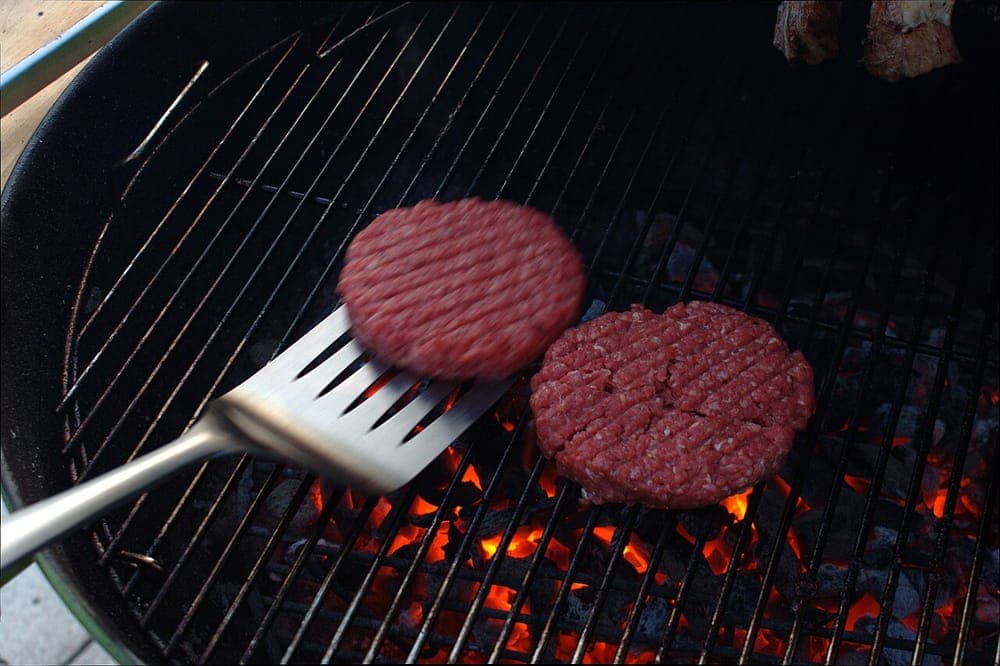 Griddle Spatula PairThe two tools you actually use Griddle Spatula PairThe two tools you actually use | The two tools you actually use | 8.7 | Check price on Amazon |
| 3 |  Melting DomeCheese, and steaming anything Melting DomeCheese, and steaming anything | Cheese, and steaming anything | 8.4 | Check price on Amazon |
#ad We publish no prices: there is no verified price feed on this site, so the retailer’s page is the only price. How this is funded
Why a press at all
A smash burger’s crust comes from maximum contact between beef and very hot steel, for long enough to brown hard before the thin patty overcooks.
A spatula cannot do this. You can lean on one, but the blade flexes and the pressure is uneven — and the moment you lift, the patty contracts away from the plate. A press holds the whole face down flat, under constant weight, for as long as you need.
Specification 1: mass
The press has to overcome the patty’s tendency to contract and spring back. A light press — thin aluminum is the common offender — gets pushed back up by the meat and never achieves full contact.
Heavy cast iron does the job essentially by itself: you place it, hold briefly, and the weight does the work. That is the whole reason cast iron dominates this category.
Specification 2: a dead-flat face
A domed or slightly convex face presses the center harder than the edges, which gives you a patty that is thin in the middle and thick at the rim — the opposite of what you want, since the rim is where the crust should be most developed.
Flat means even thickness, and even thickness means even browning.
Diameter
Wider than your finished patty. If the press is narrower, you press the middle and the edges spread out un-pressed, so the rim never makes proper contact.
Err wide. A press that overhangs slightly is fine; one that is too small is useless.
The handle
Offset and insulated. The press sits on a 400 °F-plus plate and conducts heat straight up — a handle sitting flush against the body becomes untouchable within a minute.
Wooden handles are common and work well, but they char at the joint if the press is left on the plate. Take it off between burgers.
The technique, which matters more than the press
- Plate as hot as it goes. 450 °F and up. This is where heat density earns its keep — the plate has to recover after the cold ball of beef lands.
- Loose ball, not a formed patty. Over-worked meat is dense and will not spread properly.
- Press once, immediately, hard. Within a few seconds of the ball hitting the plate, while it is still pliable.
- Hold about ten seconds. Long enough for the face to set flat against the steel.
- Then never press again. This is the rule people break. A second press squeezes out the rendered fat and juice you built the crust to retain, and gives you a dry burger with a good crust — which is a worse outcome than a decent crust on a juicy one.
- Flip once, cheese on, and a dome with a squirt of water to melt it. The patty is done in about ninety seconds and cheese does not melt in ninety seconds.
Parchment: the one accessory worth adding
A square of parchment between the press and the patty stops the meat sticking to the press and tearing when you lift. It costs nothing and removes the most common frustration.
A bare cast iron press that is well seasoned sticks less, but parchment is more reliable.
The picks in detail
Specifications are linked to their source on every card. Scores are ours, derived from those specifications.
#1 · Crust, which is the entire point
Smash Burger Press
Mass and a flat face are all that matter — a heavy press holds the patty against the plate long enough to build crust instead of steaming it.
#ad We publish no prices: there is no verified price feed on this site, so the retailer’s page is the only price. How this is funded
Key specifications
- What matters most
- Weight — light presses bounce off the patty
- Face
- Dead flat; a domed face leaves a thin middle
- Diameter
- Wider than your finished patty
- Handle
- Offset and insulated — it sits on a 400 °F plate
- Technique
- Press once, hold 10 seconds, do not press again
- What fails first
- Wooden handles, which char at the joint
Scores
- Mass9.0
- Flatness8.5
- Handle7.0
- Value8.5
What works
- Heavy cast iron presses do the job a spatula physically cannot
- A flat face gives even crust across the whole patty
- Works equally on any griddle regardless of brand
What to know
- Pressing a second time squeezes out the juice you just built crust to hold in
- Light aluminum presses are common and do not work
- Needs its own seasoning and care if it is bare cast iron
#2 · The two tools you actually use
Griddle Spatula Pair
Two stiff, wide, bevelled-edge spatulas do 90% of griddle work — everything beyond that in a 30-piece kit is storage clutter.
#ad We publish no prices: there is no verified price feed on this site, so the retailer’s page is the only price. How this is funded
Key specifications
- What matters
- Blade stiffness — a flexible blade cannot lift a stuck smash burger
- What matters
- A bevelled front edge that gets under fond
- Width
- Wide enough to carry a whole patty, narrow enough to turn in a crowd
- Quantity
- Two — one to lift, one to steady
- Handle
- Riveted, not glued
- What fails first
- The handle rivet and the blade's leading edge
Scores
- Stiffness9.0
- Edge9.0
- Handle7.5
- Value8.5
What works
- A stiff bevelled blade is the difference between turning a smash burger and destroying one
- Two spatulas lets you work food against itself rather than against the plate
- Stainless blades can be scraped and scrubbed without degrading
What to know
- Thin, flexible 'griddle' spatulas sold in big kits are the wrong tool and are what most kits contain
- Long handles get in the way on a tabletop griddle
- Riveted handles collect grease at the joint
#3 · Cheese, and steaming anything
Melting Dome
A dome plus a squirt of water turns a dry griddle into a steamer for thirty seconds — it is how cheese melts before the patty overcooks.
#ad We publish no prices: there is no verified price feed on this site, so the retailer’s page is the only price. How this is funded
Key specifications
- What it does
- Traps steam so cheese melts in seconds, not minutes
- Diameter
- Larger than your patty plus the cheese overhang
- Material
- Stainless holds up; aluminum warps
- Handle
- Must stand off the dome — it gets hot immediately
- Technique
- Squirt water beside the food, then cover
- Also good for
- Steaming vegetables and reheating buns
Scores
- Seal8.5
- Material8.0
- Handle7.0
- Value9.0
What works
- Solves the real smash-burger problem: the patty cooks in 90 seconds, cheese does not melt in 90 seconds
- Doubles as a steamer for anything on the plate
- Cheap and essentially unbreakable in stainless
What to know
- Aluminum domes warp and then do not seal
- A dome with a flush handle is unusable without a glove
- One dome covers one burger; cooking six means working in rounds
Common questions
What should I look for in a smash burger press?
How long should you press a smash burger?
Why does meat stick to my burger press?
Can I just use a spatula instead of a press?
Sources
Every specification on this page came from one of these. If you find one of them has changed, tell us and we will correct it.
Read next
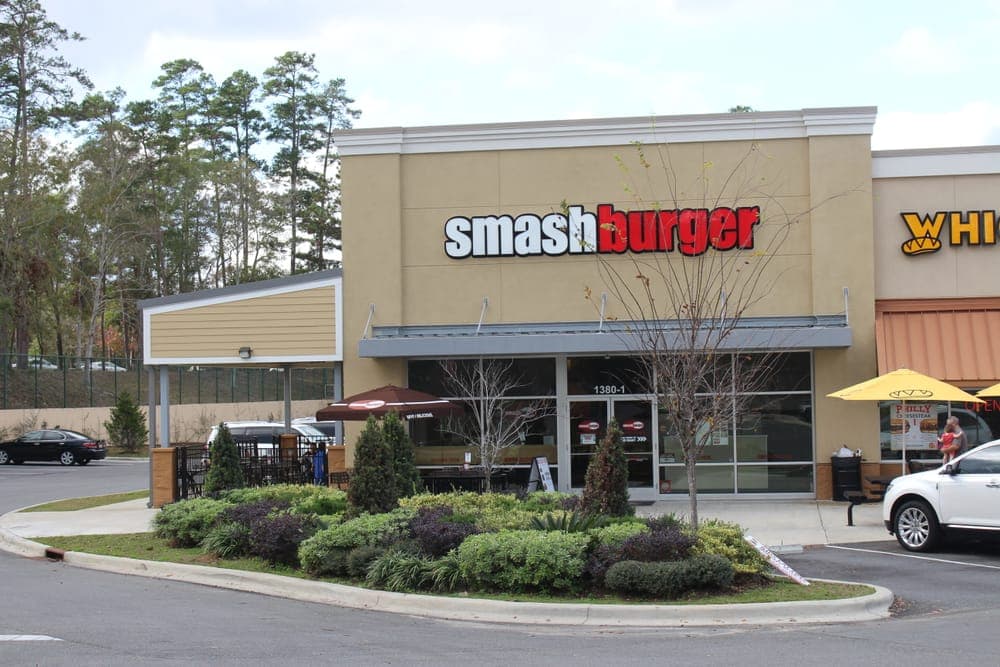
Smash burgers on a griddle
The complete smash burger method, why each step is what it is, and the five mistakes that produce gray patties.
Melting domes
Why a dome plus water beats waiting, what to look for in material and handle, and the other things it is good for.
Griddle spatulas
Why stiffness matters more than anything, why two beats one, and why the spatulas in big kits are the wrong tool.
The best griddles for smash burgers
Griddles ranked for smash burgers by heat density — the spec that decides whether a cold patty sears or steams.
Griddle BTU, explained
Why total BTU is close to meaningless, how heat density reorders the category, and which griddles actually recover under load.
Griddle tool kits
What a kit genuinely needs to contain, what is filler, and when buying the tools separately is the better call.