Smash burgers on a griddle
Six steps, one rule you must not break, and five mistakes that account for every disappointing smash burger.
We earn a commission if you buy through our links, at no extra cost to you. That is how this site is paid for, and it does not decide what we recommend — full disclosure.
Quick picks
Ranked on published specifications using our scoring rubric. Tap a row for the full write-up.
| # | Product | Best for | Score | Price |
|---|---|---|---|---|
| 1 |  Smash Burger PressCrust, which is the entire point Smash Burger PressCrust, which is the entire point | Crust, which is the entire point | 8.6 | Check price on Amazon |
| 2 |  Melting DomeCheese, and steaming anything Melting DomeCheese, and steaming anything | Cheese, and steaming anything | 8.4 | Check price on Amazon |
| 3 | 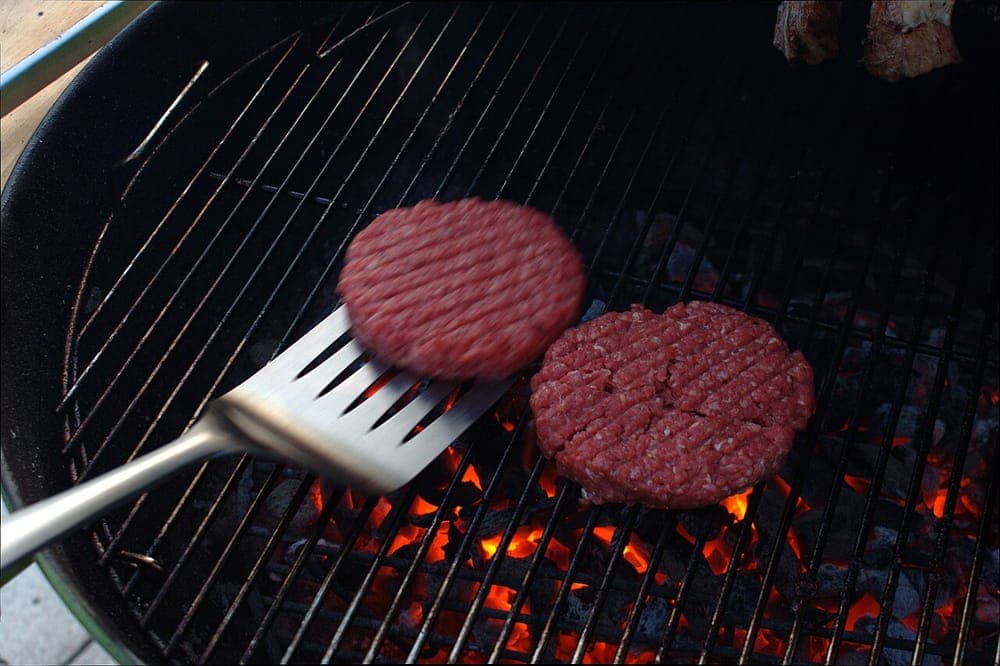 Griddle Spatula PairThe two tools you actually use Griddle Spatula PairThe two tools you actually use | The two tools you actually use | 8.7 | Check price on Amazon |
| 4 | 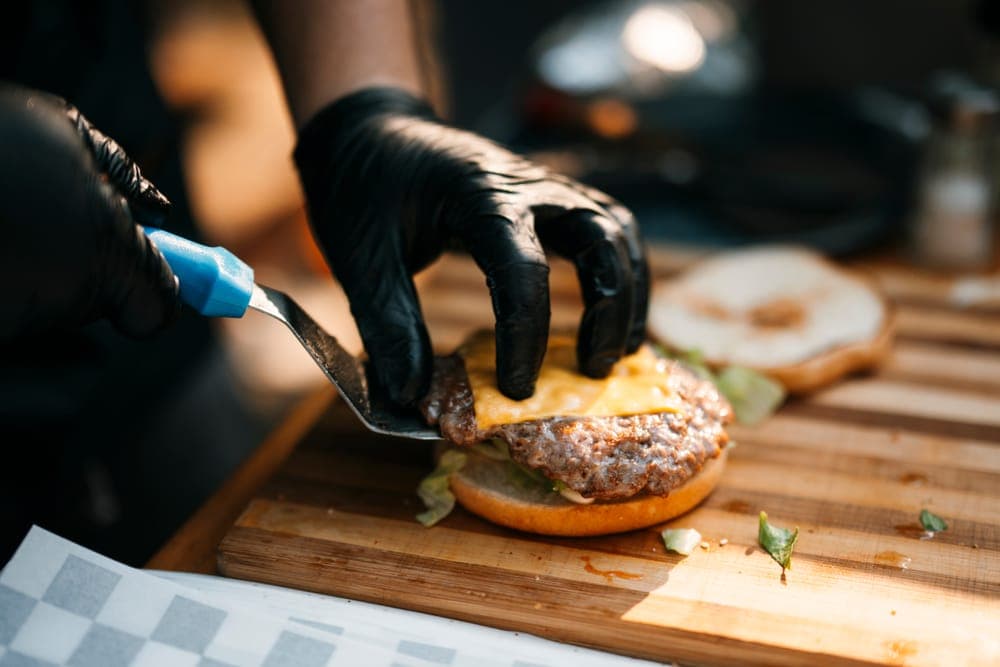 Squeeze Bottle SetOil control, which is most of the technique Squeeze Bottle SetOil control, which is most of the technique | Oil control, which is most of the technique | 8.3 | Check price on Amazon |
#ad We publish no prices: there is no verified price feed on this site, so the retailer’s page is the only price. How this is funded
What you are actually trying to do
Brown the entire contact face of a very thin patty as hard as possible, before the inside of that patty overcooks.
Everything in the method serves that. A thin patty cooks through in about ninety seconds, so you have ninety seconds to develop crust — which is why surface heat and maximum contact matter so much.
The method
- Get the plate properly hot. 450 °F and up. Preheat longer than feels necessary — you are banking heat that the cold beef will immediately draw out.
- Loose balls, not formed patties. Roughly 2–3 oz, handled as little as possible. Over-worked meat is dense and will not spread.
- Barely oil the plate. A thin film. The beef has its own fat, and excess oil turns contact browning into shallow frying.
- Ball down, press immediately. Within a few seconds, while it is still pliable. A heavy flat press, hard, with parchment between press and meat so it does not tear.
- Hold about ten seconds, then lift the press and leave the patty alone.
- Season now, on top of the patty, rather than in the mix — salt in the mix draws out moisture and makes the meat bind.
- Wait for the edges to brown, roughly 60–90 seconds. Lacy, dark edges are the signal.
- Scrape, do not lift. Get a stiff spatula under it and scrape forward, so the crust comes with the patty rather than staying on the plate. This is the step that separates a good smash burger from a ruined one.
- Flip once, cheese on immediately, squirt water beside it and dome it for ten to twenty seconds.
- Off. Total cook time is around two minutes.
The one rule
Press once. Never press again.
The first press, while the meat is still pliable, shapes the patty and establishes contact. Any later press just squeezes out the rendered fat and juice — which is the thing you built the crust to hold in.
A second press gives you a dry burger with a good crust, which is a worse outcome than a decent crust on a juicy one.
The five mistakes
1. Plate not hot enough
Cold beef on a 350 °F plate steams in its own moisture and goes gray. If your griddle struggles to recover, cook two at a time instead of six — this is a heat density problem and batch size is the lever you control.
2. Pressing too late
Once the underside has started to set, pressing deforms a cooking patty rather than spreading a raw one. Within a few seconds, or not at all.
3. Lifting instead of scraping
The crust is bonded to the plate — that is the point. Lifting tears the patty away from its own crust. Scrape forward and under.
4. Too much oil
Oil between beef and steel slows conduction and gives you a fried exterior instead of a browned one. A squeeze bottle lets you dose a thin line rather than pouring.
5. Over-handling the meat
Compacted meat does not spread under the press and cooks dense. Form loose balls with minimal handling, and keep the beef cold until it goes down.
Practical details
- Fat content: 80/20 is the usual recommendation, and fat is what fries the crust. Leaner mince browns less and dries out faster.
- Two thin patties beat one thick one. Twice the crust, same quantity of beef — which is the entire logic of a double.
- Toast the buns on a cooler part of the plate at 325–350 °F while the patties cook. The cool zone you mapped is for this.
- Onions: smashed into the raw patty before it goes down is a classic Oklahoma method and works beautifully on a flat top.
Which griddles do this best, and whether an electric griddle can.
The picks in detail
Specifications are linked to their source on every card. Scores are ours, derived from those specifications.
#1 · Crust, which is the entire point
Smash Burger Press
Mass and a flat face are all that matter — a heavy press holds the patty against the plate long enough to build crust instead of steaming it.
#ad We publish no prices: there is no verified price feed on this site, so the retailer’s page is the only price. How this is funded
Key specifications
- What matters most
- Weight — light presses bounce off the patty
- Face
- Dead flat; a domed face leaves a thin middle
- Diameter
- Wider than your finished patty
- Handle
- Offset and insulated — it sits on a 400 °F plate
- Technique
- Press once, hold 10 seconds, do not press again
- What fails first
- Wooden handles, which char at the joint
Scores
- Mass9.0
- Flatness8.5
- Handle7.0
- Value8.5
What works
- Heavy cast iron presses do the job a spatula physically cannot
- A flat face gives even crust across the whole patty
- Works equally on any griddle regardless of brand
What to know
- Pressing a second time squeezes out the juice you just built crust to hold in
- Light aluminum presses are common and do not work
- Needs its own seasoning and care if it is bare cast iron
#2 · Cheese, and steaming anything
Melting Dome
A dome plus a squirt of water turns a dry griddle into a steamer for thirty seconds — it is how cheese melts before the patty overcooks.
#ad We publish no prices: there is no verified price feed on this site, so the retailer’s page is the only price. How this is funded
Key specifications
- What it does
- Traps steam so cheese melts in seconds, not minutes
- Diameter
- Larger than your patty plus the cheese overhang
- Material
- Stainless holds up; aluminum warps
- Handle
- Must stand off the dome — it gets hot immediately
- Technique
- Squirt water beside the food, then cover
- Also good for
- Steaming vegetables and reheating buns
Scores
- Seal8.5
- Material8.0
- Handle7.0
- Value9.0
What works
- Solves the real smash-burger problem: the patty cooks in 90 seconds, cheese does not melt in 90 seconds
- Doubles as a steamer for anything on the plate
- Cheap and essentially unbreakable in stainless
What to know
- Aluminum domes warp and then do not seal
- A dome with a flush handle is unusable without a glove
- One dome covers one burger; cooking six means working in rounds
#3 · The two tools you actually use
Griddle Spatula Pair
Two stiff, wide, bevelled-edge spatulas do 90% of griddle work — everything beyond that in a 30-piece kit is storage clutter.
#ad We publish no prices: there is no verified price feed on this site, so the retailer’s page is the only price. How this is funded
Key specifications
- What matters
- Blade stiffness — a flexible blade cannot lift a stuck smash burger
- What matters
- A bevelled front edge that gets under fond
- Width
- Wide enough to carry a whole patty, narrow enough to turn in a crowd
- Quantity
- Two — one to lift, one to steady
- Handle
- Riveted, not glued
- What fails first
- The handle rivet and the blade's leading edge
Scores
- Stiffness9.0
- Edge9.0
- Handle7.5
- Value8.5
What works
- A stiff bevelled blade is the difference between turning a smash burger and destroying one
- Two spatulas lets you work food against itself rather than against the plate
- Stainless blades can be scraped and scrubbed without degrading
What to know
- Thin, flexible 'griddle' spatulas sold in big kits are the wrong tool and are what most kits contain
- Long handles get in the way on a tabletop griddle
- Riveted handles collect grease at the joint
#4 · Oil control, which is most of the technique
Squeeze Bottle Set
Two bottles — one oil, one water — are the most underrated griddle tools there are, because dosing oil by eye is how food sticks or swims.
#ad We publish no prices: there is no verified price feed on this site, so the retailer’s page is the only price. How this is funded
Key specifications
- How many
- Two minimum: oil and water
- Tip
- Narrow, so you can lay a thin line rather than a puddle
- Water bottle use
- Steam-lifting residue and steaming under a dome
- Material
- Heat-tolerant — bottles sit near a hot plate
- Caps
- Must seal; open bottles collect everything
- Label them
- Oil and water look identical in an opaque bottle
Specifications from Blackstone accessories.
Scores
- Control9.0
- Material7.0
- Sealing7.5
- Value9.5
What works
- A thin controlled line of oil is the difference between a seared crust and a fried one
- The water bottle makes daily cleanup a 60-second job
- Trivially cheap for how much technique they unlock
What to know
- Wide-tip bottles over-dose oil and defeat the purpose
- Cheap plastic deforms if left on a hot side shelf
- Oil goes rancid in a bottle left outside for months
Common questions
How do you make smash burgers on a griddle?
Why should you only press a smash burger once?
Why does my smash burger stick to the griddle?
Why are my smash burgers gray instead of brown?
Sources
Every specification on this page came from one of these. If you find one of them has changed, tell us and we will correct it.
Read next
The best griddles for smash burgers
Griddles ranked for smash burgers by heat density — the spec that decides whether a cold patty sears or steams.
Smash burger presses
Why mass decides whether a press works, why a domed face ruins the patty, and the one-press rule.
Melting domes
Why a dome plus water beats waiting, what to look for in material and handle, and the other things it is good for.

Griddle temperature chart
Temperatures for everything you cook on a flat top, the reasoning behind each, and how to check without a thermometer.
Electric griddles for smash burgers
Why 1500 watts fights a smash-burger crust, how to get the most out of it, and the indoor route that actually works.
Griddle spatulas
Why stiffness matters more than anything, why two beats one, and why the spatulas in big kits are the wrong tool.