Electric griddles for smash burgers
You can make a good burger on an electric griddle. A proper lacy crust is a different question.
We earn a commission if you buy through our links, at no extra cost to you. That is how this site is paid for, and it does not decide what we recommend — full disclosure.
Quick picks
Ranked on published specifications using our scoring rubric. Tap a row for the full write-up.
| # | Product | Best for | Score | Price |
|---|---|---|---|---|
| 1 | 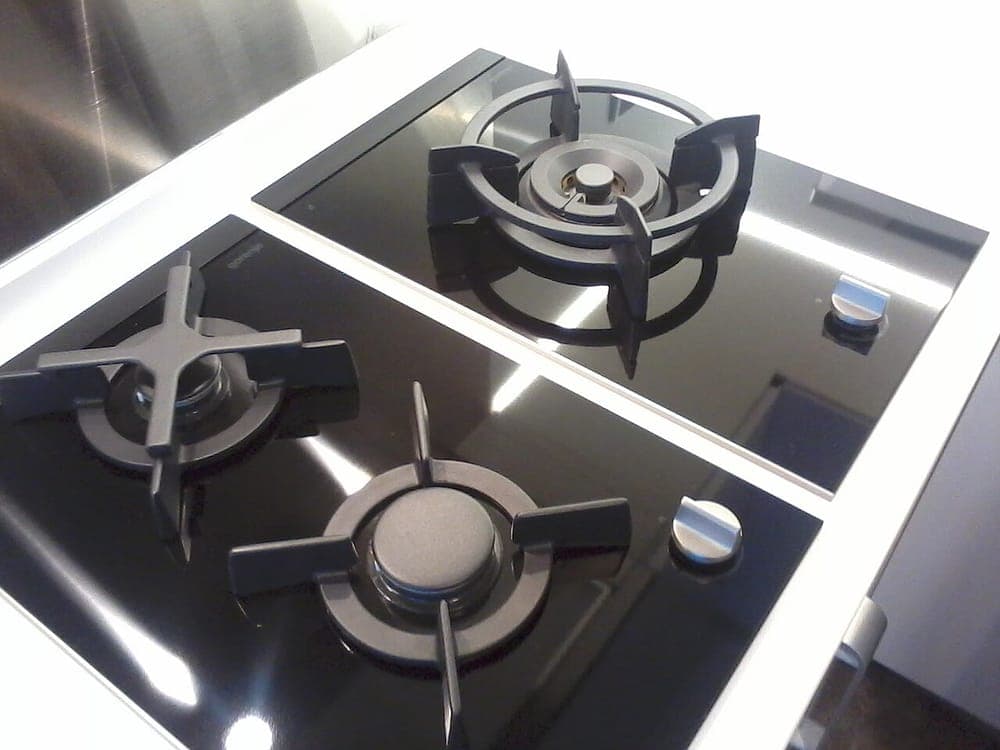 Steelmade PRO Series Flat Top (30" range)A flat top on a kitchen range Steelmade PRO Series Flat Top (30" range)A flat top on a kitchen range | A flat top on a kitchen range | 7.7 | Check price on Amazon |
| 2 |  Presto 07061 Ceramic 22" Electric GriddleFamily breakfasts indoors Presto 07061 Ceramic 22" Electric GriddleFamily breakfasts indoors | Family breakfasts indoors | 8.2 | Check price on Amazon |
| 3 | Steelmade PRO Series Junior Flat Top (30" gas range)Range flat top without the full weight | Range flat top without the full weight | 7.5 | Check price on Amazon |
#ad We publish no prices: there is no verified price feed on this site, so the retailer’s page is the only price. How this is funded
The honest answer first
You can make a good burger on an electric griddle. Getting a genuine lacy, deeply-browned smash-burger crust is hard, and the reason is physics rather than product quality.
We would rather say that than sell you a griddle for a job it struggles with.
Why 1500 watts fights you
A smash-burger crust requires two things from the surface: a high temperature, and fast recovery once a cold ball of beef is pressed flat against it.
That second one is the problem. The moment the patty lands, that patch of plate loses heat rapidly. If the heat source cannot put it back quickly, the patty sits in its own released moisture and steams — and steamed beef is gray, not brown.
1500 watts is about 5,100 BTU per hour equivalent. A gas griddle delivering 78 BTU per square inch has an order of magnitude more heat available to the area under the patty. That is the whole difference.
Getting the most out of an electric griddle
If an electric griddle is what you have, these genuinely help:
- Preheat for far longer than feels necessary. Fifteen minutes at maximum. You are banking every joule the plate can hold, because recovery during the cook will be slow.
- Cook two at a time, not six. Fewer cold patties means less total heat drawn out at once. This is the single most effective adjustment.
- Wait between batches. Give the plate a couple of minutes to recover. Rushing the second batch is why it is worse than the first.
- Make smaller, thinner patties. Less thermal load, more edge, faster browning relative to the mass.
- Use almost no oil. Oil between beef and plate slows conduction and encourages frying rather than contact browning. On non-stick you need essentially none.
- Press properly. Heavy, flat, once, ten seconds. Maximum contact is more important here than anywhere, because you have less heat to work with.
- Use a dome for the cheese, since the patty will still finish before the cheese melts.
That will get you a solidly browned, juicy burger. It will not get you the lace.
The indoor route that actually works
It solves both halves of the problem at once. It inherits your range’s full burner output rather than being capped at an outlet, and a 3/8-inch plate has more thermal mass than any freestanding griddle cooktop in our guide — so the surface barely drops when the patty lands.
For indoor smash burgers specifically, this is not a compromise. It is arguably better than most outdoor griddles, because thickness is the one specification where it beats everything.
The requirements are a gas or electric coil range that can take 51–62 lb, and serious extraction — this cook makes a lot of smoke.
If you are buying for burgers
Have a yard? Buy a gas griddle with high heat density. Nothing indoors matches it for convenience plus capability.
No yard, gas range? Buy a steel plate. It is the best indoor answer.
No yard, no gas range? An electric griddle, with realistic expectations and the technique above. A good burger is a perfectly good outcome.
The full technique guide applies on any surface.
The picks in detail
Specifications are linked to their source on every card. Scores are ours, derived from those specifications.
#1 · A flat top on a kitchen range
Steelmade PRO Series Flat Top (30" range)
3/8-inch steel at roughly 62 lb, sized for a 30-inch gas or electric coil range — a genuine indoor flat top rather than a griddle pan.
#ad We publish no prices: there is no verified price feed on this site, so the retailer’s page is the only price. How this is funded
Key specifications
- Steel thickness
- 3/8 in
- Weight
- ~62.0 lb
- Fits
- 30 in gas or electric coil range
- Surface
- Bare steel — needs seasoning
- Format
- Range-top insert
- Made in
- USA
Specifications from Steelmade product page.
Scores
- Cooking area5.5
- Heat output5.5
- Zone control5.0
- Surface care6.0
- Portability3.0
What works
- 3/8 in is thicker than any freestanding griddle top in this guide — it is the most stable surface here
- Turns an existing range into an indoor flat top without a new appliance or a propane tank
- No outdoor storage, no cover, no weather exposure
What to know
- 62 lb on a range top is a serious load — check your range can take it before buying
- Needs real kitchen ventilation; a flat top produces a lot of smoke
- Covers your burners, so it is the whole cooktop while it is on
#2 · Family breakfasts indoors
Presto 07061 Ceramic 22" Electric Griddle
A 1500 W, 22-inch ceramic griddle whose handles come off so it fits a standard 18-inch cabinet — the storage problem solved properly.
#ad We publish no prices: there is no verified price feed on this site, so the retailer’s page is the only price. How this is funded
Key specifications
- Power
- 1500 W
- Surface
- 22 in, PFAS-free textured ceramic
- Base
- Heavy cast aluminum
- Cleaning
- Fully immersible with the heat control removed
- Storage
- Detachable handles; fits most 18 in cabinets
- Control
- Control Master automatic heat control
Specifications from Walmart listing.
Scores
- Cooking area6.0
- Heat output4.0
- Zone control3.0
- Surface care8.5
- Portability8.0
What works
- The detachable handles are not a gimmick — storage is the reason most electric griddles end up in a basement
- Fully immersible once the control is off, which no gas griddle can offer
- PFAS-free ceramic rather than a conventional non-stick coating
What to know
- 1500 W is the ceiling for a standard US outlet — no electric griddle sears like a propane one
- Ceramic is a wear surface; it will not outlive a steel top
- Cast aluminum spreads heat well but holds far less of it than 10-gauge steel
#3 · Range flat top without the full weight
Steelmade PRO Series Junior Flat Top (30" gas range)
5/16-inch steel at roughly 51 lb — eleven pounds lighter than the Original, for ranges and cooks that cannot take 62 lb.
#ad We publish no prices: there is no verified price feed on this site, so the retailer’s page is the only price. How this is funded
Key specifications
- Steel thickness
- 5/16 in
- Weight
- ~51 lb
- Fits
- 30 in gas range
- Surface
- Bare steel — needs seasoning
- Format
- Range-top insert
- Made in
- USA
Specifications from Steelmade product page.
Scores
- Cooking area5.5
- Heat output5.5
- Zone control5.0
- Surface care6.0
- Portability4.0
What works
- 51 lb is meaningfully easier to lift on and off than the 62 lb Original
- 5/16 in is still thicker than any freestanding griddle cooktop here
- Gas-range specific, so the burner cutouts suit the heat source
What to know
- Gas ranges only — no electric coil option like the Original
- Still 51 lb, which is a two-handed lift at an awkward height
- Thinner than the Original, so slightly less thermal mass
Common questions
Can you make smash burgers on an electric griddle?
How do I get the best smash burger from an electric griddle?
What is the best indoor option for smash burgers?
Why are my electric griddle burgers gray instead of brown?
Sources
Every specification on this page came from one of these. If you find one of them has changed, tell us and we will correct it.
Read next
Smash burgers on a griddle
The complete smash burger method, why each step is what it is, and the five mistakes that produce gray patties.
The best griddles for smash burgers
Griddles ranked for smash burgers by heat density — the spec that decides whether a cold patty sears or steams.
Stovetop griddles
Steel plates for gas and electric coil ranges: thickness, weight, what fits, and why ventilation becomes the real limit.

Smash burger presses
Why mass decides whether a press works, why a domed face ruins the patty, and the one-press rule.
Electric vs gas griddle
1500 watts against 34,000 BTU — what the gap means in practice, and the things electric genuinely does better.
Griddle BTU, explained
Why total BTU is close to meaningless, how heat density reorders the category, and which griddles actually recover under load.