The outdoor griddle world ignores indoors almost completely, which is strange, because a large share of the people searching for a flat top do not have a yard to put one in. This hub is for them.
It starts with one number. A standard US household circuit gives an appliance roughly 1500 watts, which is about 5,100 BTU per hour of equivalent heat. The smallest propane griddle in our outdoor guide, a single-burner 17-inch tabletop, produces 12,500 BTU. An electric griddle has, at most, something like 40% of the heat of the smallest gas griddle you can buy.
That is not a flaw in any particular product. It is the wall, and no amount of marketing gets past it.
What that means in practice
Electric griddles are excellent at everything that cooks at or below about 400 °F across a broad surface: pancakes, eggs, bacon, grilled sandwiches, quesadillas, breakfast for six at once. They are poor at anything needing a hard sear and fast recovery — a proper smash burger crust being the obvious casualty.
The honest framing is that an electric griddle is a breakfast and sandwich machine that can sear adequately, not a searing machine that can also do breakfast. Our electric picks are chosen on that basis, and the smash-burger question gets its own page because the answer is genuinely nuanced.
The three indoor routes, in order of capability
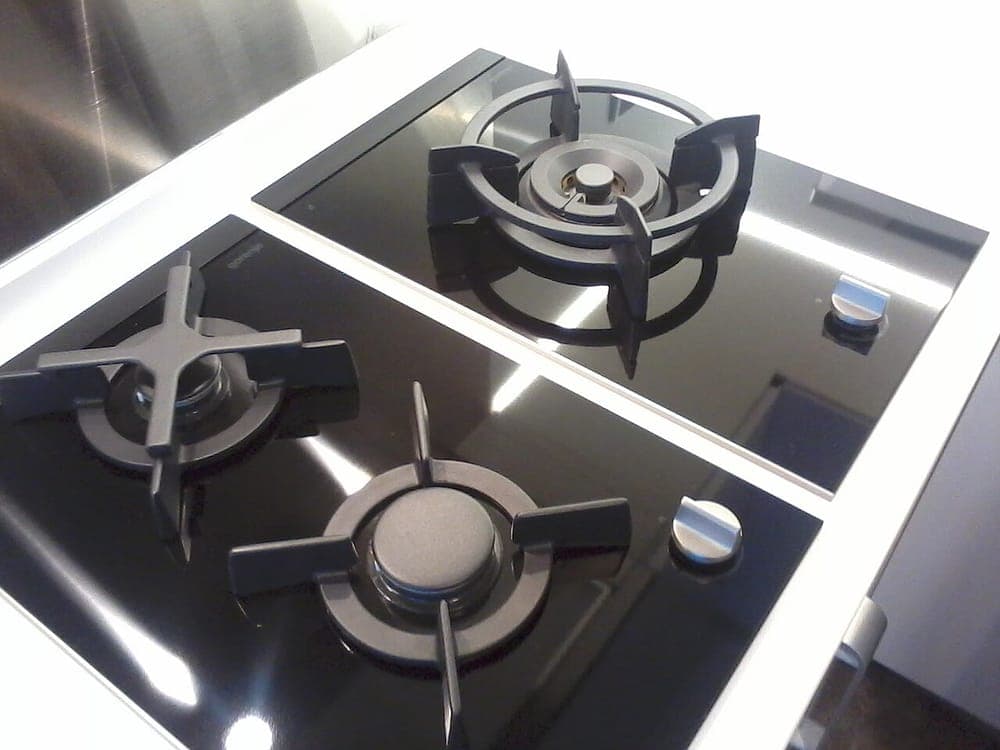
A stovetop flat top — a thick steel plate that sits across your range burners. It inherits your cooktop’s full heat output, which on a gas range is far more than 1500 watts, and a 3/8-inch plate has more thermal mass than any freestanding griddle cooktop we list. It is the most capable indoor option by a distance. Stovetop griddles.
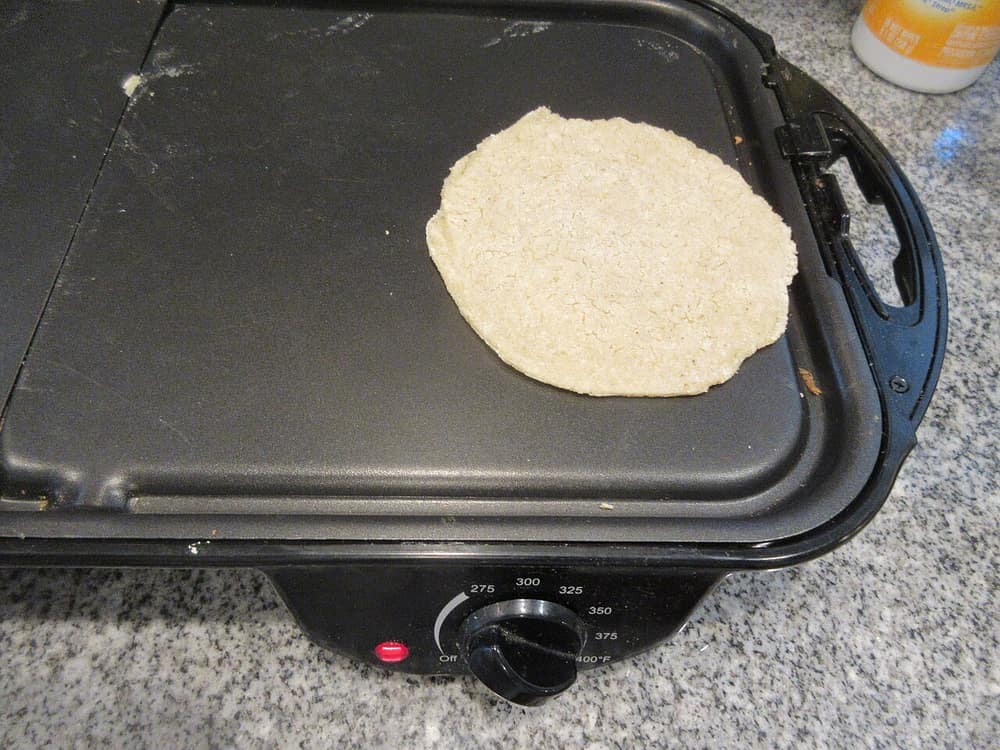
A countertop electric griddle — self-contained, thermostatically controlled, immersible for cleaning, and capped at the outlet. Indoor electric picks.
A table-top electric griddle — designed to run at the table rather than on a counter, usually with a lower temperature floor for gentle cooking. A genuinely different use case rather than a smaller version of the above.
Ventilation is the real constraint, not power
A flat top produces a lot of smoke, and 1500 watts of smoke in a kitchen is still a lot of smoke. The practical ceiling on indoor griddling is usually your extraction, not your outlet. A stovetop plate under a proper range hood works well; the same plate on an unvented kitchen island does not.
The question with a hard answer
No, you cannot use a propane griddle indoors. Not in a garage with the door open, not in a screened porch, not “just this once”. Propane combustion produces carbon monoxide, which is colorless, odorless and kills people every year in exactly these circumstances.
We give that question its own page with the reasoning, and that page deliberately carries no buy button. It is a safety answer, not a sales opportunity.
What decides price
Surface area, coating quality and temperature control. The cheapest electric griddles use single-layer non-stick and a simple thermostat; the expensive ones use multi-layer ceramic coatings and hold a set temperature far more tightly, with a meaningfully lower minimum for gentle cooking. Wattage barely varies, because it cannot.
The useful secondary feature is storage: an electric griddle that does not fit in a cupboard ends up in a basement. Electric griddle temperature control covers what the dial numbers actually mean.
No. Propane combustion produces carbon monoxide, which is colorless and odorless. That applies in a garage with the door open and on a screened porch too. Use an electric griddle or a stovetop flat top under proper extraction instead.
Why are electric griddles so much less powerful than gas ones?+
A standard US household circuit limits an appliance to about 1500 watts, roughly 5,100 BTU per hour equivalent. Even the smallest single-burner propane griddle produces 12,500 BTU. The outlet is the ceiling, and no electric griddle gets past it.
Can an electric griddle make a proper smash burger?+
It can make a good burger, but a true lacy smash-burger crust needs surface heat and fast recovery that 1500 watts struggles to deliver once a cold patty lands. A thick stovetop flat top on a gas range is a far better indoor route if the crust is the point.
What is the most capable indoor flat top?+
A thick steel plate across a gas range. It inherits the cooktop's full heat output rather than being capped at 1500 watts, and a 3/8-inch plate holds more heat than any freestanding griddle cooktop. The constraint becomes your kitchen ventilation, not your power supply.