How to remove rust from a griddle
Rust looks like the end of a griddle and almost never is. Steel is forgiving — this is an afternoon, not a funeral.

We earn a commission if you buy through our links, at no extra cost to you. That is how this site is paid for, and it does not decide what we recommend — full disclosure.
Quick picks
Ranked on published specifications using our scoring rubric. Tap a row for the full write-up.
| # | Product | Best for | Score | Price |
|---|---|---|---|---|
| 1 | 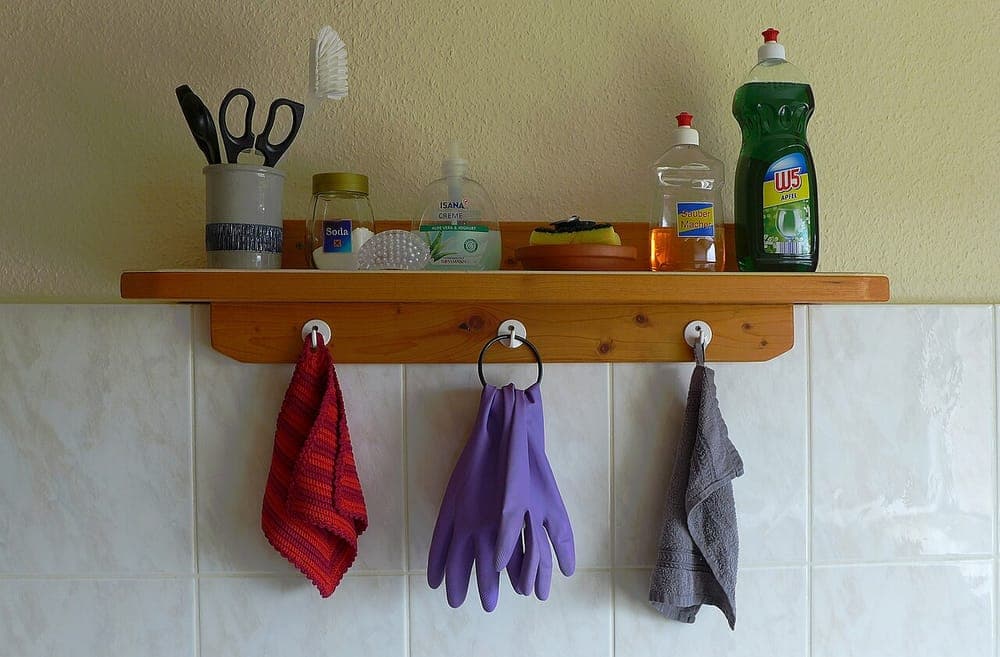 Griddle Cleaning KitThe deep clean, not the daily one Griddle Cleaning KitThe deep clean, not the daily one | The deep clean, not the daily one | 7.7 | Check price on Amazon |
| 2 |  Griddle ScraperThe 60 seconds after every cook Griddle ScraperThe 60 seconds after every cook | The 60 seconds after every cook | 8.5 | Check price on Amazon |
| 3 |  Griddle Seasoning & ConditionerA convenient blend, not a magic one Griddle Seasoning & ConditionerA convenient blend, not a magic one | A convenient blend, not a magic one | 7.6 | Check price on Amazon |
| 4 |  Griddle Cover (match your width)The single cheapest way to stop rust Griddle Cover (match your width)The single cheapest way to stop rust | The single cheapest way to stop rust | 8.9 | Check price on Amazon |
#ad We publish no prices: there is no verified price feed on this site, so the retailer’s page is the only price. How this is funded
The good news first
A bare or rust-resistant steel cooktop is almost always fully recoverable, no matter how bad it looks. Surface rust, pitting, an entire plate gone orange — all of it comes back with abrasion and re-seasoning.
This is steel’s real advantage over coated surfaces, and it is why we recommend steel to anyone willing to do the maintenance. A worn ceramic coating cannot be restored; rusted steel can, indefinitely.
The one thing that is not recoverable is warping. Check for that before you start work, because it changes whether the effort is worth it.
What you need
- A pumice/cleaning block or heavy scouring pads — compared here.
- A stiff flat scraper.
- Paper towels and tongs.
- Seasoning oil — which one.
- Heat-resistant gloves.
- An afternoon.
The process
- Heat the griddle gently. Warm, not hot. Warm steel abrades more easily and it drives off any moisture.
- Scrape off whatever is loose — flaking seasoning, loose scale.
- Abrade the rust back to clean metal. Work the block or pad over the rusted areas with oil as a lubricant. Keep going until the orange is gone and you are looking at gray steel. On a badly rusted plate this is the long part.
- Flush the debris out — the step people skip. Abrasion produces a slurry of rust particles, block grit and oil, and a lot of it ends up in the grease channel and the drain. If you leave it there it comes back into your food on the next cook. Scrape the channel out, wipe it, and flush the drain path.
- Wipe the plate completely clean and dry. Bare steel with no seasoning will start rusting again within minutes, so do not stop here.
- Re-season from scratch. Three to five very thin coats, each heated until the smoking stops. The full process.
- Cook something fatty.
How far down to go
To clean gray metal in the rusted areas, and no further. You do not need to strip the entire plate back if only part of it rusted — abrade the affected areas and blend into the sound seasoning around them.
You also do not need to remove pitting. Pits are where rust has eaten into the steel, and grinding them out would mean removing a lot of material. Clean the rust out of the pits, re-season, and accept slightly textured steel. It cooks fine.
On a rust-resistant top
A Weber Slate can still rust if neglected long enough. The process is the same but be more conservative — you are abrading a treated surface rather than bare steel, so take off the rust and stop.
Then prevent it recurring
Rust removal is an afternoon. Rust prevention is sixty seconds a cook plus a cover. The ratio is worth internalizing.
- Thin oil film after every cook, while the plate is still warm.
- A vented, correctly sized cover. Unvented covers trap condensation and make things worse.
- A heavier protective coat before any long storage period.
The picks in detail
Specifications are linked to their source on every card. Scores are ours, derived from those specifications.
#1 · The deep clean, not the daily one
Griddle Cleaning Kit
Worth owning for the occasional reset — a cleaning brick, a scouring pad and a handle — but it is not what you reach for after a normal cook.
#ad We publish no prices: there is no verified price feed on this site, so the retailer’s page is the only price. How this is funded
Key specifications
- Typically includes
- Cleaning brick or pumice block, pad, handle
- Use for
- Carbon build-up and flaking seasoning, not daily residue
- Frequency
- A few times a year at most
- Important
- A brick strips seasoning — you must re-season after
- Daily tool instead
- A scraper and water
- Avoid
- Soap on a seasoned plate, except during a full strip-and-reseason
Specifications from Blackstone cleaning accessories.
Scores
- Effectiveness8.5
- Frequency5.0
- Completeness7.5
- Value7.5
What works
- The right answer when seasoning has gone patchy or flaky
- A pumice brick conforms to the plate and reaches the corners
- Cheaper and faster than stripping a top with a grinder
What to know
- Using it routinely destroys the seasoning you are trying to build
- Bricks crumble and the grit needs flushing out of the grease channel
- Most kits are sold as if they were daily tools; they are not
#2 · The 60 seconds after every cook
Griddle Scraper
A stiff, flat scraper used while the plate is still hot is the entire daily cleaning routine — everything else is an occasional job.
#ad We publish no prices: there is no verified price feed on this site, so the retailer’s page is the only price. How this is funded
Key specifications
- Blade
- Stiff and dead straight — a curved blade misses the middle
- Width
- Wide enough to clear a lane in one pass
- Handle
- Long enough to stay out of the heat
- When to use
- While the plate is still hot, right after cooking
- Pairs with
- Water, squirted on to steam-lift the residue
- What fails first
- The blade's leading edge, which rounds off
Specifications from Blackstone cleaning accessories.
Scores
- Stiffness9.0
- Edge8.5
- Handle7.5
- Value9.0
What works
- A hot plate releases residue that a cold plate will not — timing matters more than the tool
- One stiff scraper replaces an entire cleaning kit for daily use
- Nothing to wear out but the edge
What to know
- A rounded or flexible blade skates over the fond instead of lifting it
- Short-handled scrapers put your knuckles over a 400 °F plate
- Does not address rust or a flaking seasoning layer
#3 · A convenient blend, not a magic one
Griddle Seasoning & Conditioner
A blended conditioner is a reasonable convenience, but it does nothing a high-smoke-point oil applied thinly does not already do.
#ad We publish no prices: there is no verified price feed on this site, so the retailer’s page is the only price. How this is funded
Key specifications
- What it is
- A blend of oils and waxes with a high smoke point
- What it does
- The same polymerization any seasoning oil does
- Real advantage
- Consistency and a usable application viscosity
- Alternative
- Grapeseed, canola or avocado oil applied very thinly
- Application rule
- Thin to the point of looking dry, then heat until it stops smoking
- Common mistake
- Too much product — thick coats stay sticky and then flake
Specifications from Blackstone accessories.
Scores
- Effectiveness8.0
- Convenience8.5
- Smoke point8.5
- Value6.5
What works
- Formulated to the right viscosity, which makes a genuinely thin coat easy
- One product for seasoning and post-cook conditioning
- Removes the guesswork about smoke point
What to know
- Costs considerably more per application than a bottle of grapeseed oil
- Does not chemically do anything a suitable oil does not
- Marketed as a requirement; it is a convenience
#4 · The single cheapest way to stop rust
Griddle Cover (match your width)
The accessory that decides whether a bare-steel griddle survives its first wet season — buy it sized to your griddle's width, not approximately.
#ad We publish no prices: there is no verified price feed on this site, so the retailer’s page is the only price. How this is funded
Key specifications
- Match on
- Griddle width: 17, 22, 28 or 36 in
- Also match
- Hood vs no hood — a hood changes the height
- Critical feature
- Vents, so trapped moisture can escape
- Critical feature
- Straps or a cinch, or wind lifts it off
- What fails first
- Seams and the elastic hem
- Common mistake
- A cover that fits loosely holds water against the top
Scores
- Fit9.0
- Durability7.0
- Rust protection9.5
- Value9.0
What works
- A vented, correctly sized cover prevents more griddle deaths than any other single purchase
- Cheap relative to the surface it protects
- Works with the hard cover rather than instead of it — the hard cover keeps rain off the plate, the soft cover keeps it off the cart
What to know
- An unvented cover is worse than no cover: it traps condensation against bare steel
- Sizes are not interchangeable between brands even at the same stated width
- Covers are consumables — UV destroys them in a few seasons
Common questions
Can a rusted griddle be saved?
How do you get rust off a griddle top?
Do I need to remove pitting from a rusted griddle?
What is the step most people skip when removing rust?
Sources
Every specification on this page came from one of these. If you find one of them has changed, tell us and we will correct it.
Read next
How to stop a griddle rusting
The oil-and-cover routine, why vents matter more than people think, and how to store a griddle over a wet season.
Seasoning a griddle for the first time
The complete first-seasoning process step by step, the three ways it goes wrong, and what a correct result actually looks like.
Griddle warping
What causes warping, why it is permanent, how to live with it, and which specs resist it.
Griddle scrapers and stones
What makes a good scraper, what stones and bricks are actually for, and why confusing the two ruins seasoning.
Griddle covers, by size and burner count
Covers sized by width, hood configuration and burner count, why vents are non-negotiable, and what wears out first.
How to deep clean a griddle
When a full reset is justified, the complete process, and the re-seasoning that has to follow it.