Breakfast on a griddle
The cook a flat top was made for — and the one where zones stop being a spec and become the whole point.

We earn a commission if you buy through our links, at no extra cost to you. That is how this site is paid for, and it does not decide what we recommend — full disclosure.
Quick picks
Ranked on published specifications using our scoring rubric. Tap a row for the full write-up.
| # | Product | Best for | Score | Price |
|---|---|---|---|---|
| 1 | 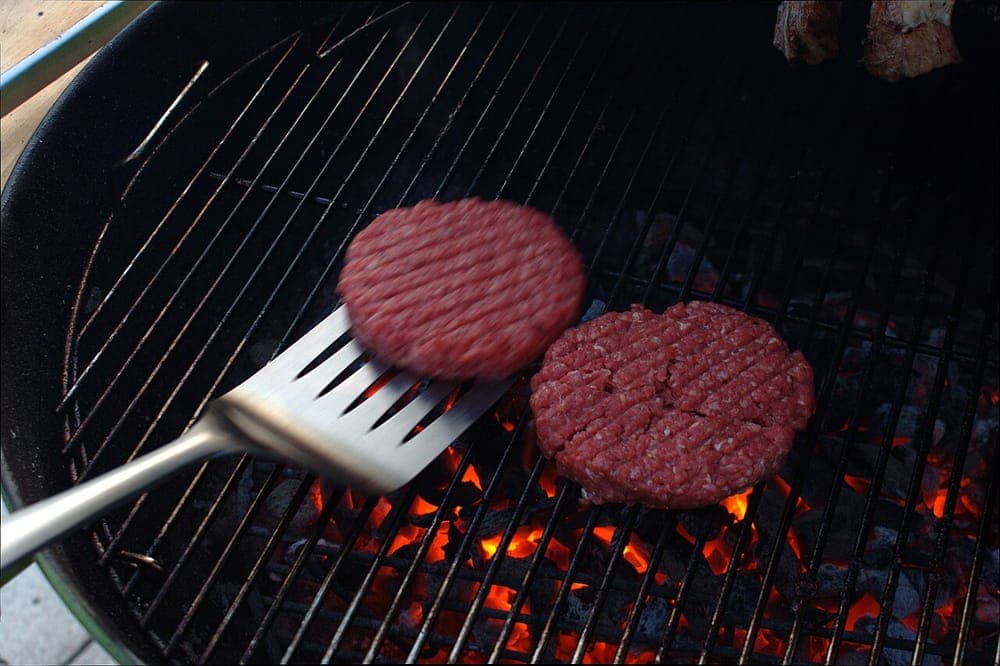 Griddle Spatula PairThe two tools you actually use Griddle Spatula PairThe two tools you actually use | The two tools you actually use | 8.7 | Check price on Amazon |
| 2 | 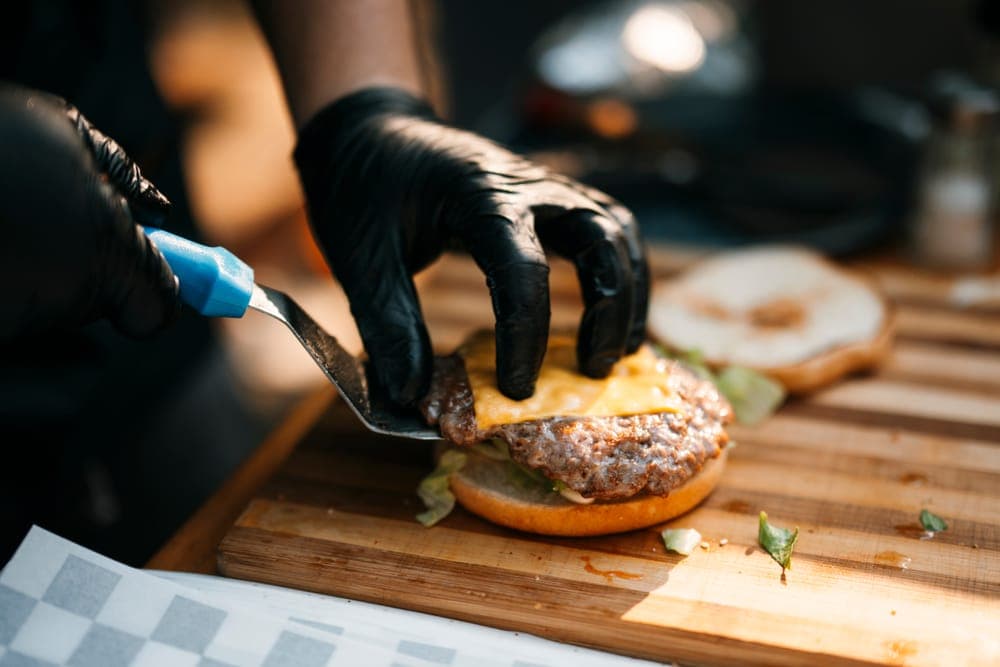 Squeeze Bottle SetOil control, which is most of the technique Squeeze Bottle SetOil control, which is most of the technique | Oil control, which is most of the technique | 8.3 | Check price on Amazon |
| 3 |  Melting DomeCheese, and steaming anything Melting DomeCheese, and steaming anything | Cheese, and steaming anything | 8.4 | Check price on Amazon |
| 4 | 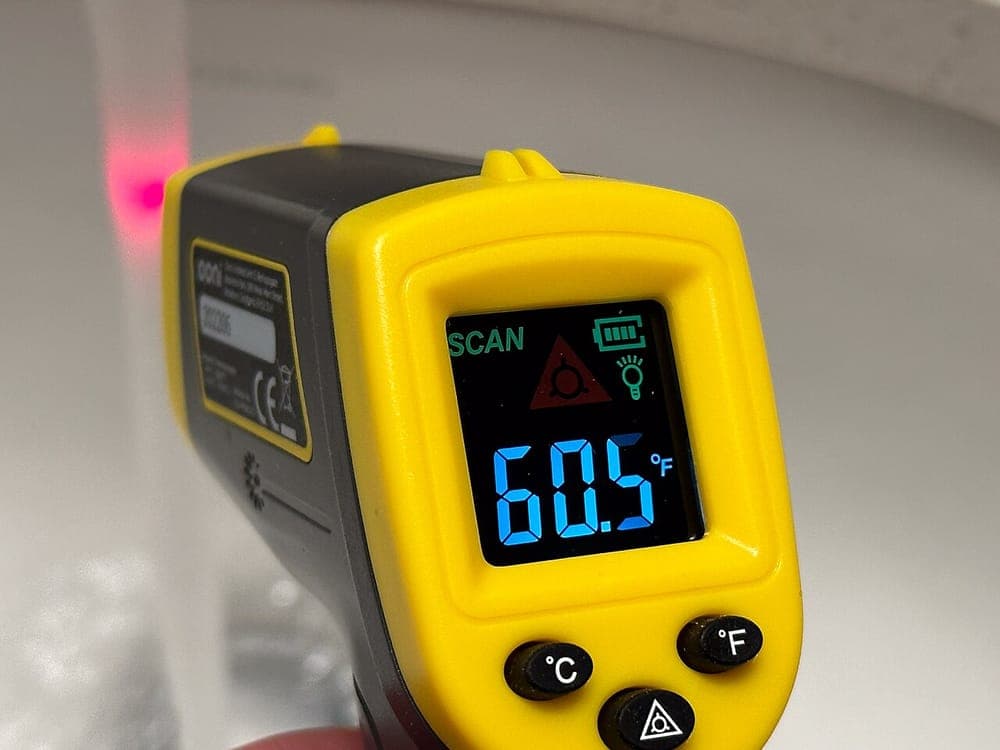 Infrared Surface ThermometerKnowing what your plate is actually doing Infrared Surface ThermometerKnowing what your plate is actually doing | Knowing what your plate is actually doing | 8.3 | Check price on Amazon |
#ad We publish no prices: there is no verified price feed on this site, so the retailer’s page is the only price. How this is funded
Why breakfast is the flagship griddle cook
A full breakfast is four or five components, each wanting a different temperature, all needing to arrive hot at the same time.
In a kitchen that means several pans and staging. On a griddle it is one surface with multiple zones, and everything cooks in parallel — which is exactly what a flat top is for, and why it is the cook most griddle owners end up doing most often.
The zone plan
On a four-zone griddle:
| Zone | Temp | What |
|---|---|---|
| 1 (hottest) | 375–400 °F | Hash browns, sausages |
| 2 | ~350 °F | Pancakes, French toast |
| 3 | ~325 °F | Bacon, then eggs |
| 4 (coolest) | 200–225 °F | Holding, toasting |
On two zones, run hot (375 °F) and moderate (325 °F), use the cool edges and corners as your holding area, and cook in two passes.
The order of operations
Sequence matters, because bacon fat is an ingredient.
- Bacon first, at 325 °F. It takes the longest and it renders the fat everything else will cook in. Start it cold-ish — bacon laid on a moderate plate renders better than bacon hitting a screaming one.
- Hash browns onto the hot zone while the bacon renders, in the bacon fat if you can push some over. Press them down and then leave them alone — crust needs undisturbed contact.
- Sausages on the hot zone too, turning occasionally.
- Bacon off to the holding zone when done.
- Pancakes onto the middle zone. Barely greased — excess butter mottles the face.
- Eggs last, onto the now-free 325 °F zone. They take two to three minutes and do not hold well, so they should be the final thing.
- Buns, muffins and tortillas on the holding zone throughout, whenever there is a gap.
Component notes
Eggs
300–325 °F. Hotter and the whites get rubbery edges before the yolk sets. For fried eggs, a dome for ten seconds steams the top so you can set the white without flipping. Scrambled want constant movement and a lower heat than you think.
Bacon
325 °F, and do not rush it. Fat needs time to render; high heat scorches the meat while the fat is still solid. The rendered fat is also the best cooking medium on the plate.
Pancakes
350–375 °F, flip when bubbles form across the surface and the edges look set, once. Why electric griddles do these well.
Hash browns
375–400 °F, pressed down, and then genuinely left alone for several minutes. Moving them is the reason most home hash browns do not crisp. Squeeze the moisture out of grated potato first — wet potato steams.
Timing it so everything lands together
Work backwards from the eggs, which take two to three minutes and cannot wait.
- T-20: bacon down.
- T-15: hash browns down, press, leave.
- T-12: sausages down.
- T-8: bacon off to hold; pancakes down.
- T-5: buns on the hold zone; flip pancakes.
- T-3: eggs down.
- T-0: everything off together.
Cooking for a lot of people
Past about six you are working in waves, and the holding zone becomes the most important part of the griddle rather than a convenience. Crowd cooking, and which griddles handle it.
The picks in detail
Specifications are linked to their source on every card. Scores are ours, derived from those specifications.
#1 · The two tools you actually use
Griddle Spatula Pair
Two stiff, wide, bevelled-edge spatulas do 90% of griddle work — everything beyond that in a 30-piece kit is storage clutter.
#ad We publish no prices: there is no verified price feed on this site, so the retailer’s page is the only price. How this is funded
Key specifications
- What matters
- Blade stiffness — a flexible blade cannot lift a stuck smash burger
- What matters
- A bevelled front edge that gets under fond
- Width
- Wide enough to carry a whole patty, narrow enough to turn in a crowd
- Quantity
- Two — one to lift, one to steady
- Handle
- Riveted, not glued
- What fails first
- The handle rivet and the blade's leading edge
Scores
- Stiffness9.0
- Edge9.0
- Handle7.5
- Value8.5
What works
- A stiff bevelled blade is the difference between turning a smash burger and destroying one
- Two spatulas lets you work food against itself rather than against the plate
- Stainless blades can be scraped and scrubbed without degrading
What to know
- Thin, flexible 'griddle' spatulas sold in big kits are the wrong tool and are what most kits contain
- Long handles get in the way on a tabletop griddle
- Riveted handles collect grease at the joint
#2 · Oil control, which is most of the technique
Squeeze Bottle Set
Two bottles — one oil, one water — are the most underrated griddle tools there are, because dosing oil by eye is how food sticks or swims.
#ad We publish no prices: there is no verified price feed on this site, so the retailer’s page is the only price. How this is funded
Key specifications
- How many
- Two minimum: oil and water
- Tip
- Narrow, so you can lay a thin line rather than a puddle
- Water bottle use
- Steam-lifting residue and steaming under a dome
- Material
- Heat-tolerant — bottles sit near a hot plate
- Caps
- Must seal; open bottles collect everything
- Label them
- Oil and water look identical in an opaque bottle
Specifications from Blackstone accessories.
Scores
- Control9.0
- Material7.0
- Sealing7.5
- Value9.5
What works
- A thin controlled line of oil is the difference between a seared crust and a fried one
- The water bottle makes daily cleanup a 60-second job
- Trivially cheap for how much technique they unlock
What to know
- Wide-tip bottles over-dose oil and defeat the purpose
- Cheap plastic deforms if left on a hot side shelf
- Oil goes rancid in a bottle left outside for months
#3 · Cheese, and steaming anything
Melting Dome
A dome plus a squirt of water turns a dry griddle into a steamer for thirty seconds — it is how cheese melts before the patty overcooks.
#ad We publish no prices: there is no verified price feed on this site, so the retailer’s page is the only price. How this is funded
Key specifications
- What it does
- Traps steam so cheese melts in seconds, not minutes
- Diameter
- Larger than your patty plus the cheese overhang
- Material
- Stainless holds up; aluminum warps
- Handle
- Must stand off the dome — it gets hot immediately
- Technique
- Squirt water beside the food, then cover
- Also good for
- Steaming vegetables and reheating buns
Scores
- Seal8.5
- Material8.0
- Handle7.0
- Value9.0
What works
- Solves the real smash-burger problem: the patty cooks in 90 seconds, cheese does not melt in 90 seconds
- Doubles as a steamer for anything on the plate
- Cheap and essentially unbreakable in stainless
What to know
- Aluminum domes warp and then do not seal
- A dome with a flush handle is unusable without a glove
- One dome covers one burger; cooking six means working in rounds
#4 · Knowing what your plate is actually doing
Infrared Surface Thermometer
The only way to know a griddle's real surface temperature — and the fastest way to find the hot spots every griddle has.
#ad We publish no prices: there is no verified price feed on this site, so the retailer’s page is the only price. How this is funded
Key specifications
- Type
- Infrared, non-contact — not a probe thermometer
- Range needed
- At least 100–600 °F
- Use
- Read several points; a griddle is never one temperature
- Limitation
- Reads surfaces, not the inside of food
- Accuracy caveat
- Shiny bare steel reads low; a seasoned plate reads true
- Pairs with
- A probe thermometer for doneness
Scores
- Usefulness9.0
- Accuracy7.5
- Range8.0
- Value8.5
What works
- Turns 'medium heat' from a guess into a number
- Finding your plate's hot spots takes about 30 seconds and changes how you cook on it forever
- Non-contact, so there is nothing to clean
What to know
- Reads surface only — it cannot tell you a burger is done
- Emissivity error on bare, shiny steel can read 50 °F or more low
- One more battery device living near a hot griddle
Common questions
What order should you cook breakfast on a griddle?
What temperature for eggs and bacon on a griddle?
Why don't my hash browns crisp on the griddle?
Can you cook a full breakfast on a two-burner griddle?
Sources
Every specification on this page came from one of these. If you find one of them has changed, tell us and we will correct it.
Read next

Griddle temperature chart
Temperatures for everything you cook on a flat top, the reasoning behind each, and how to check without a thermometer.
Finding your griddle's hot spots
Why every griddle heats unevenly, how to map yours with a nine-point grid, and how to cook with the map.

Griddle cooking for a crowd
How to plan and run a wave-based griddle cook for a crowd, and why the holding zone matters more than surface area.

The best electric griddles for pancakes
Why pancakes favor electric griddles, the temperature that matters, and how to get an even batch.
How many burners do you need?
What one, two, three and four zones actually buy you, why insulation matters, and the picks at each burner count.
Your first five griddle cooks
Five first cooks in a deliberate order, what each teaches, and the beginner mistakes to skip past.