Finding your griddle's hot spots
Every griddle has them. Thirty seconds of measuring turns a defect into a feature.
We earn a commission if you buy through our links, at no extra cost to you. That is how this site is paid for, and it does not decide what we recommend — full disclosure.
Quick picks
Ranked on published specifications using our scoring rubric. Tap a row for the full write-up.
| # | Product | Best for | Score | Price |
|---|---|---|---|---|
| 1 | 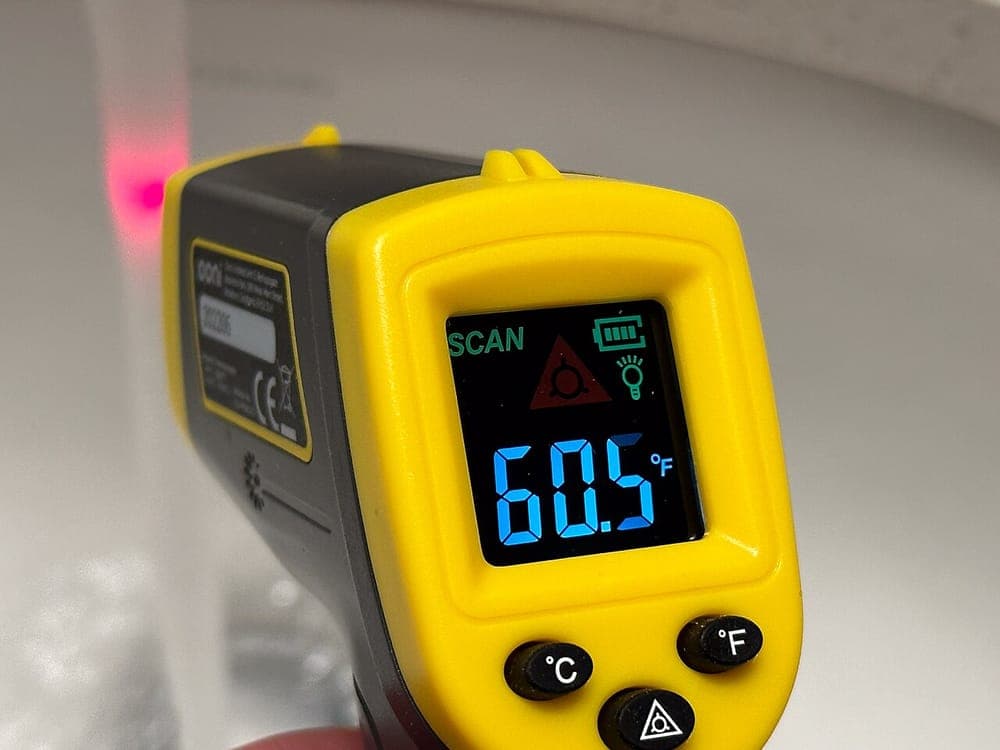 Infrared Surface ThermometerKnowing what your plate is actually doing Infrared Surface ThermometerKnowing what your plate is actually doing | Knowing what your plate is actually doing | 8.3 | Check price on Amazon |
| 2 |  Griddle Wind GuardExposed patios and coastal wind Griddle Wind GuardExposed patios and coastal wind | Exposed patios and coastal wind | 7.9 | Check price on Amazon |
| 3 | 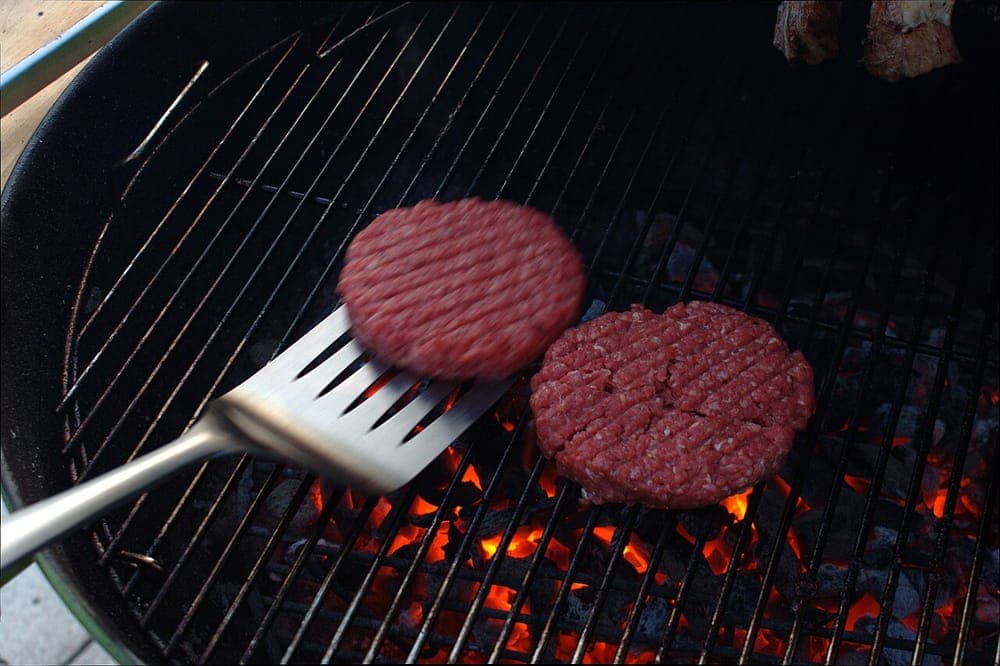 Griddle Spatula PairThe two tools you actually use Griddle Spatula PairThe two tools you actually use | The two tools you actually use | 8.7 | Check price on Amazon |
#ad We publish no prices: there is no verified price feed on this site, so the retailer’s page is the only price. How this is funded
Every griddle has them
This is physics, not a manufacturing defect, and it is true of the most expensive griddle in our guide as much as the cheapest.
- Burners sit under specific areas. Directly above a burner is hotter than the gap between two burners.
- Edges lose heat on three sides. The perimeter of any plate runs cooler than its center, because it is radiating and convecting into open air.
- Corners are worst, losing heat on two adjacent edges at once.
- Burner design varies. H-burners spread differently from straight tube burners, so the pattern differs by griddle.
It is more pronounced on a plate over a gas grill, because those burners were spaced for grates with gas flowing between them rather than for a solid surface.
How to map yours
- Heat the empty griddle with all burners on the same setting — medium is a good reference — for ten to fifteen minutes so it stabilizes.
- Take nine readings with an infrared thermometer in a 3×3 grid: three across the back, three across the middle, three across the front.
- Write them down. On paper, on your phone, taped inside the cabinet — anywhere you will see it again.
- Repeat on high if you want, since the pattern can shift with output.
That is it. Thirty seconds of measuring, and you will cook differently forever.
The emissivity caveat matters here: a bare shiny plate reads low. For a relative map that is fine — you are comparing areas with each other — but the absolute numbers on an unseasoned plate will be off.
How to use the map
The point is not to fix the unevenness. It is to use it.
- Hottest spots — searing. Steaks and smash burgers go here, and this is where the first patty of a batch should land.
- Middle temperatures — the main cooking area for most things.
- Coolest areas, usually edges and corners — your holding zone, free. Even a single-burner griddle has somewhere cooler to park cooked food.
- Just off a hot spot — toasting buns, warming tortillas, melting cheese on something already cooked.
A griddle with a known hot-spot map effectively has more zones than it has burners. On a single-burner tabletop, that is the difference between one temperature and a usable gradient.
Things that change the map
- Wind shifts it dramatically — the upwind side cools far faster. A wind guard helps, and on a windy day expect your map to be wrong.
- Cold food creates temporary cold spots exactly where you put it.
- A low tank reduces output as pressure drops, flattening the whole map.
- A warped plate changes contact with the burners and therefore the pattern permanently — warping.
When unevenness is actually a problem
A normal map shows maybe 50–75 °F between the hottest and coolest points on a well-heated griddle. That is useful.
Significantly more than that, or a burner that produces a cold zone where a hot one should be, suggests a genuine fault — a partially blocked burner tube, a failing regulator, or an orifice problem. That is worth investigating rather than cooking around.
Reducing it, if you want to
- Preheat longer. More time conducting heat sideways evens the plate out.
- A thicker plate conducts more evenly — one of the arguments for thick cooktops and steel inserts.
- A hood, closed during preheat, traps heat and evens the surface.
- Shelter from wind.
You will never eliminate it. Knowing where it is beats fighting it.
The picks in detail
Specifications are linked to their source on every card. Scores are ours, derived from those specifications.
#1 · Knowing what your plate is actually doing
Infrared Surface Thermometer
The only way to know a griddle's real surface temperature — and the fastest way to find the hot spots every griddle has.
#ad We publish no prices: there is no verified price feed on this site, so the retailer’s page is the only price. How this is funded
Key specifications
- Type
- Infrared, non-contact — not a probe thermometer
- Range needed
- At least 100–600 °F
- Use
- Read several points; a griddle is never one temperature
- Limitation
- Reads surfaces, not the inside of food
- Accuracy caveat
- Shiny bare steel reads low; a seasoned plate reads true
- Pairs with
- A probe thermometer for doneness
Scores
- Usefulness9.0
- Accuracy7.5
- Range8.0
- Value8.5
What works
- Turns 'medium heat' from a guess into a number
- Finding your plate's hot spots takes about 30 seconds and changes how you cook on it forever
- Non-contact, so there is nothing to clean
What to know
- Reads surface only — it cannot tell you a burger is done
- Emissivity error on bare, shiny steel can read 50 °F or more low
- One more battery device living near a hot griddle
#2 · Exposed patios and coastal wind
Griddle Wind Guard
Wind is the reason a griddle that hits 500 °F in the garage struggles to hold 350 °F outside — a guard is the fix, and it is a cheap one.
#ad We publish no prices: there is no verified price feed on this site, so the retailer’s page is the only price. How this is funded
Key specifications
- Match on
- Griddle width and whether you have a hood
- Covers
- Three sides — a one-sided baffle does little
- Why it matters
- Wind strips heat off the plate faster than the burners replace it
- Also protects
- The burners from blowing out at low settings
- Material
- Stainless, or it rusts where the griddle does not
- Storage
- Should fold or clip off, or it fights the cover
Scores
- Coverage8.0
- Material7.5
- Storage6.5
- Value8.5
What works
- The cheapest real fix for 'my griddle will not get hot enough'
- Keeps low-setting burners from blowing out mid-cook
- Independent of brand if you match the width
What to know
- One more thing to remove before the cover goes on
- Mild steel guards rust and then stain the cart
- Does nothing about a griddle that is genuinely under-powered for its size
#3 · The two tools you actually use
Griddle Spatula Pair
Two stiff, wide, bevelled-edge spatulas do 90% of griddle work — everything beyond that in a 30-piece kit is storage clutter.
#ad We publish no prices: there is no verified price feed on this site, so the retailer’s page is the only price. How this is funded
Key specifications
- What matters
- Blade stiffness — a flexible blade cannot lift a stuck smash burger
- What matters
- A bevelled front edge that gets under fond
- Width
- Wide enough to carry a whole patty, narrow enough to turn in a crowd
- Quantity
- Two — one to lift, one to steady
- Handle
- Riveted, not glued
- What fails first
- The handle rivet and the blade's leading edge
Scores
- Stiffness9.0
- Edge9.0
- Handle7.5
- Value8.5
What works
- A stiff bevelled blade is the difference between turning a smash burger and destroying one
- Two spatulas lets you work food against itself rather than against the plate
- Stainless blades can be scraped and scrubbed without degrading
What to know
- Thin, flexible 'griddle' spatulas sold in big kits are the wrong tool and are what most kits contain
- Long handles get in the way on a tabletop griddle
- Riveted handles collect grease at the joint
Common questions
Why does my griddle heat unevenly?
How do I find my griddle's hot spots?
How do I use a hot-spot map?
How uneven is too uneven?
Sources
Every specification on this page came from one of these. If you find one of them has changed, tell us and we will correct it.
Read next

Griddle temperature chart
Temperatures for everything you cook on a flat top, the reasoning behind each, and how to check without a thermometer.
Griddle thermometers
Why infrared beats a probe for griddles, what range you need, and the emissivity error that reads bare steel low.
Griddle wind guards
Why wind costs you more heat than you would expect, what a guard must cover to work, and when you do not need one.
How many burners do you need?
What one, two, three and four zones actually buy you, why insulation matters, and the picks at each burner count.
Griddle warping
What causes warping, why it is permanent, how to live with it, and which specs resist it.
The best griddle plates for gas grills
Steel griddle inserts for gas grills and ranges, compared on thickness, drainage and what you give up.