Griddle wind guards
If your griddle hits 500 °F in the garage and struggles outside, the problem is not the griddle.

We earn a commission if you buy through our links, at no extra cost to you. That is how this site is paid for, and it does not decide what we recommend — full disclosure.
Quick picks
Ranked on published specifications using our scoring rubric. Tap a row for the full write-up.
| # | Product | Best for | Score | Price |
|---|---|---|---|---|
| 1 | Griddle Wind GuardExposed patios and coastal wind | Exposed patios and coastal wind | 7.9 | Check price on Amazon |
| 2 |  Griddle Hard Cover / HoodRain, and roasting Griddle Hard Cover / HoodRain, and roasting | Rain, and roasting | 8.1 | Check price on Amazon |
| 3 | 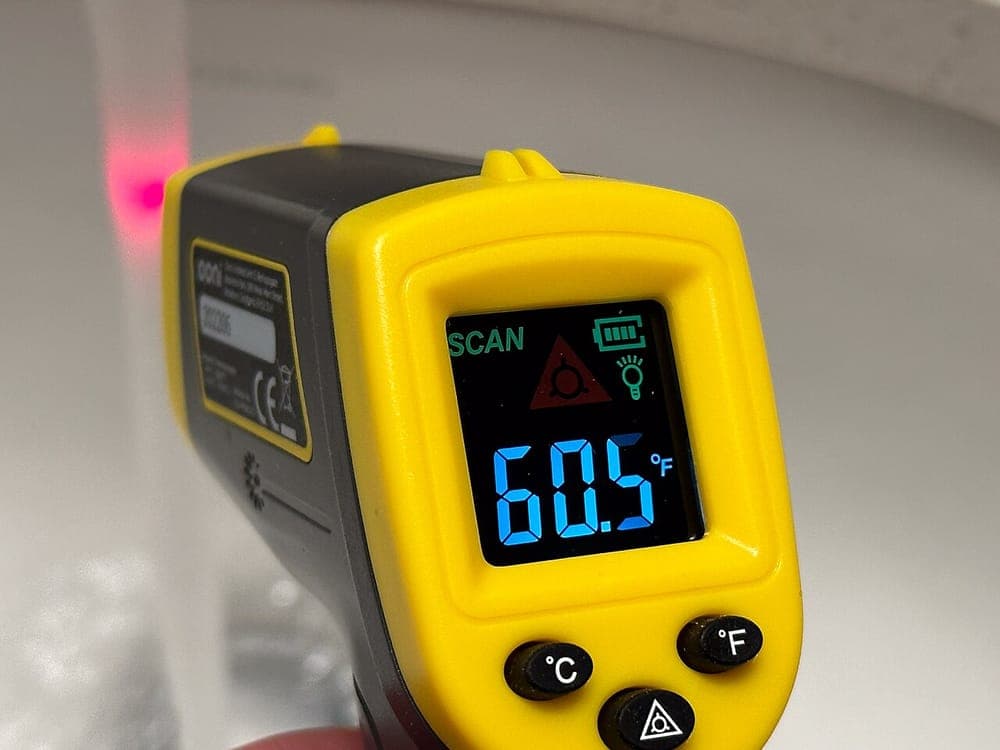 Infrared Surface ThermometerKnowing what your plate is actually doing Infrared Surface ThermometerKnowing what your plate is actually doing | Knowing what your plate is actually doing | 8.3 | Check price on Amazon |
#ad We publish no prices: there is no verified price feed on this site, so the retailer’s page is the only price. How this is funded
Why wind matters more than you would think
A griddle plate loses heat to the air continuously. Still air forms a boundary layer against the steel that slows that loss considerably.
Moving air destroys the boundary layer and carries heat away far faster. The practical result: a griddle that reaches 500 °F in a sheltered garage can struggle to hold 350 °F on an exposed patio on a breezy day.
There is a second effect. Wind can blow burners out at low settings, or push the flame off to one side so a zone cooks unevenly or stops working altogether.
This is the first thing to check
“My griddle will not get hot enough” has two common causes, and people usually blame the wrong one.
Wind is cheap to fix and is the first thing to rule out. Genuinely low heat density is a property of the griddle — our guide ranges from 45.5 to 82.3 BTU per square inch, which is nearly double, so a griddle at the bottom of that range is not faulty, it is specified that way. The ranking.
An infrared thermometer distinguishes them in thirty seconds: check the plate on a calm day and a windy one.
What a guard has to do to work
Cover three sides
A single baffle on one side does very little, because wind is rarely considerate enough to come from the direction you blocked. Back and both ends is what makes a real difference.
Match the width and hood
Same sizing problem as a cover: it must match your griddle’s width, and whether it has a hood changes what will fit.
Stainless
A guard sits on a griddle in all weather. Mild steel rusts and then stains the cart it is attached to — which is exactly the kind of problem you did not have before you bought the accessory.
Come off, or fold
A guard that does not fold or detach fights your cover and your storage. Ideally it clips off in seconds.
When you do not need one
- A sheltered patio with walls or fencing on two or three sides already.
- A griddle with a hood you cook with closed — the hood is doing the same job.
- A high-heat-density griddle in mild conditions, where the margin absorbs the loss.
What a guard does not fix
It does not add heat. If a griddle is under-powered for its surface area, a guard reduces losses but cannot create output that is not there.
It also does nothing about uneven heating caused by burner layout — that is hot spots, which is a different problem with a different answer.
The improvised version
Before buying, try repositioning. Moving a griddle so a wall or fence is upwind is free and often enough, and it tells you whether wind is actually your problem before you spend anything.
The picks in detail
Specifications are linked to their source on every card. Scores are ours, derived from those specifications.
#1 · Exposed patios and coastal wind
Griddle Wind Guard
Wind is the reason a griddle that hits 500 °F in the garage struggles to hold 350 °F outside — a guard is the fix, and it is a cheap one.
#ad We publish no prices: there is no verified price feed on this site, so the retailer’s page is the only price. How this is funded
Key specifications
- Match on
- Griddle width and whether you have a hood
- Covers
- Three sides — a one-sided baffle does little
- Why it matters
- Wind strips heat off the plate faster than the burners replace it
- Also protects
- The burners from blowing out at low settings
- Material
- Stainless, or it rusts where the griddle does not
- Storage
- Should fold or clip off, or it fights the cover
Scores
- Coverage8.0
- Material7.5
- Storage6.5
- Value8.5
What works
- The cheapest real fix for 'my griddle will not get hot enough'
- Keeps low-setting burners from blowing out mid-cook
- Independent of brand if you match the width
What to know
- One more thing to remove before the cover goes on
- Mild steel guards rust and then stain the cart
- Does nothing about a griddle that is genuinely under-powered for its size
#2 · Rain, and roasting
Griddle Hard Cover / Hood
A hinged hood does two jobs a soft cover cannot: it keeps rain off the plate between cooks and it traps heat so you can roast rather than only sear.
#ad We publish no prices: there is no verified price feed on this site, so the retailer’s page is the only price. How this is funded
Key specifications
- Two types
- Hinged hood (stays on) vs lift-off hard cover
- Hood enables
- Trapped-heat cooking — roasting, melting, reheating
- Hard cover enables
- Flat storage and stacking
- Match on
- Griddle width and generation — mounts changed between model years
- Not a substitute for
- A soft cover over the whole cart
- Watch for
- Hood clearance under a low patio roof or overhang
Scores
- Weather protection8.5
- Cooking benefit8.5
- Fit6.5
- Value8.0
What works
- A hood turns a griddle into something that can finish thick food without burning the outside
- Rain protection between cooks without wrestling a fabric cover
- Makes the griddle usable in light weather
What to know
- Adds height, which matters under a low overhang and for cover fit
- Hinged hoods trap grease vapor and need their own cleaning
- Mounts are model-year specific, so a used hood may not fit
#3 · Knowing what your plate is actually doing
Infrared Surface Thermometer
The only way to know a griddle's real surface temperature — and the fastest way to find the hot spots every griddle has.
#ad We publish no prices: there is no verified price feed on this site, so the retailer’s page is the only price. How this is funded
Key specifications
- Type
- Infrared, non-contact — not a probe thermometer
- Range needed
- At least 100–600 °F
- Use
- Read several points; a griddle is never one temperature
- Limitation
- Reads surfaces, not the inside of food
- Accuracy caveat
- Shiny bare steel reads low; a seasoned plate reads true
- Pairs with
- A probe thermometer for doneness
Scores
- Usefulness9.0
- Accuracy7.5
- Range8.0
- Value8.5
What works
- Turns 'medium heat' from a guess into a number
- Finding your plate's hot spots takes about 30 seconds and changes how you cook on it forever
- Non-contact, so there is nothing to clean
What to know
- Reads surface only — it cannot tell you a burger is done
- Emissivity error on bare, shiny steel can read 50 °F or more low
- One more battery device living near a hot griddle
Common questions
Does a wind guard actually help a griddle?
How much heat does wind cost a griddle?
What should a griddle wind guard cover?
Can a wind guard fix an under-powered griddle?
Sources
Every specification on this page came from one of these. If you find one of them has changed, tell us and we will correct it.
Read next
What griddle owners actually complain about
The four recurring real-world griddle complaints, what causes each, and which specs and accessories actually prevent them.
Griddle BTU, explained
Why total BTU is close to meaningless, how heat density reorders the category, and which griddles actually recover under load.
Griddle thermometers
Why infrared beats a probe for griddles, what range you need, and the emissivity error that reads bare steel low.
Griddle hard covers vs hoods
Hinged hoods against lift-off hard covers: weather protection, trapped-heat cooking, clearance and fit.
Finding your griddle's hot spots
Why every griddle heats unevenly, how to map yours with a nine-point grid, and how to cook with the map.
Griddle covers, by size and burner count
Covers sized by width, hood configuration and burner count, why vents are non-negotiable, and what wears out first.