Griddle temperature chart
The page worth printing and taping inside the cabinet door.

We earn a commission if you buy through our links, at no extra cost to you. That is how this site is paid for, and it does not decide what we recommend — full disclosure.
Quick picks
Ranked on published specifications using our scoring rubric. Tap a row for the full write-up.
| # | Product | Best for | Score | Price |
|---|---|---|---|---|
| 1 | 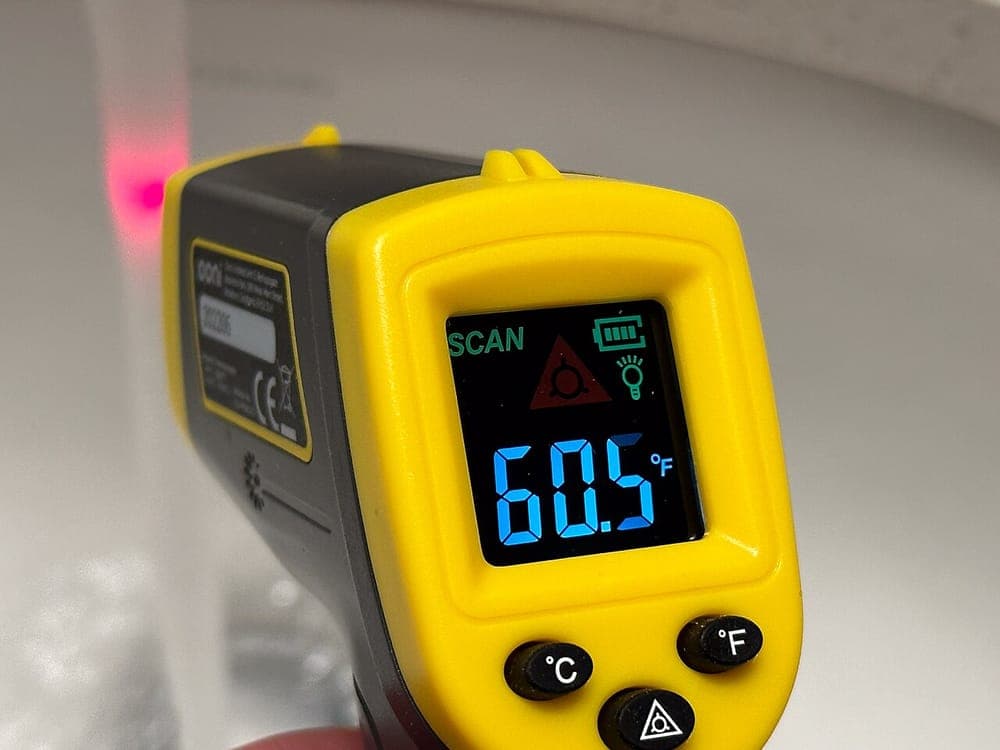 Infrared Surface ThermometerKnowing what your plate is actually doing Infrared Surface ThermometerKnowing what your plate is actually doing | Knowing what your plate is actually doing | 8.3 | Check price on Amazon |
| 2 | 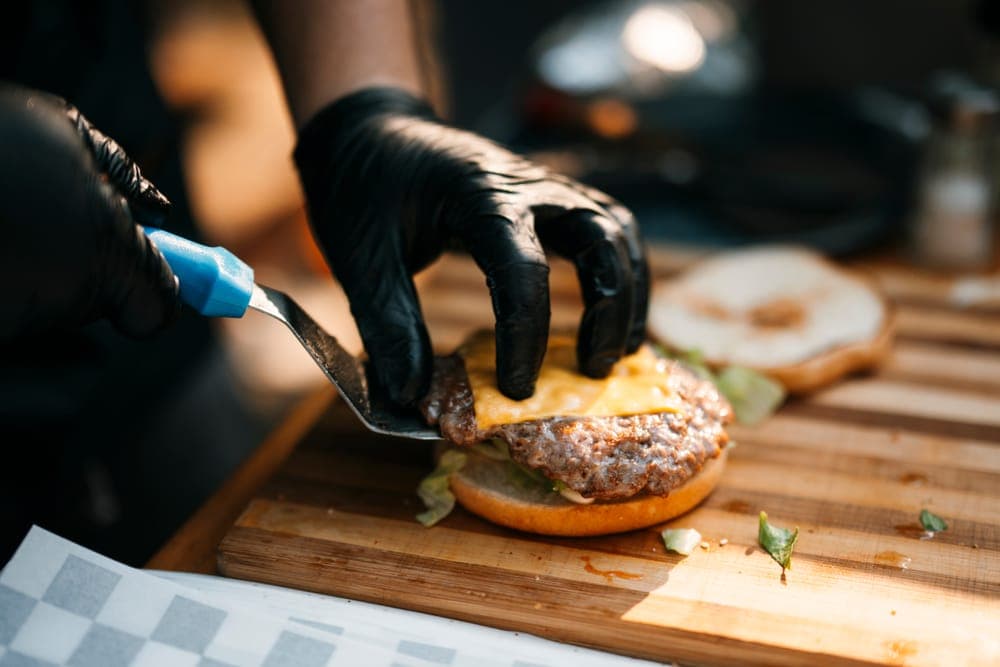 Squeeze Bottle SetOil control, which is most of the technique Squeeze Bottle SetOil control, which is most of the technique | Oil control, which is most of the technique | 8.3 | Check price on Amazon |
| 3 |  Melting DomeCheese, and steaming anything Melting DomeCheese, and steaming anything | Cheese, and steaming anything | 8.4 | Check price on Amazon |
#ad We publish no prices: there is no verified price feed on this site, so the retailer’s page is the only price. How this is funded
The chart
| Food | Surface temp | Why |
|---|---|---|
| Holding cooked food | 200–250 °F | Above food-safe, below cooking |
| Eggs, scrambled or fried | 300–325 °F | Protein sets gently; hotter gives rubbery edges |
| Bacon | 325 °F | Fat renders before the meat scorches |
| Pancakes | 350–375 °F | Browns as the center sets |
| French toast | 325–350 °F | Egg custard needs time; hotter burns the sugar |
| Grilled sandwiches | 350–375 °F | Bread browns while cheese melts through |
| Hash browns | 375–400 °F | Hot enough to crisp, not so hot the inside stays raw |
| Onions, sweating | 300–325 °F | Soften and sweeten without browning |
| Onions, caramelizing | 275–300 °F | Low and slow; sugars develop over 20+ minutes |
| Vegetables, browning | 400 °F | Char before they go soft |
| Chicken, diced | 375–400 °F | Browns while cooking through |
| Fajita strips | 425–450 °F | Fast char on thin strips |
| Steak | 450–500 °F+ | Crust before the inside overcooks |
| Smash burgers | 450–500 °F+ | Maximum browning in 90 seconds |
| Thick formed burgers | 375–400 °F | Needs time through; searing heat burns the face |
| Toasting buns | 325–350 °F | Color without drying |
| Fried rice | 425–450 °F | Hot enough to fry rather than steam |
| Fish fillets | 375–400 °F | Sets and releases without sticking |
Why most griddle problems are temperature problems
Two failure modes account for nearly everything that goes wrong on a flat top.
Too cool: food releases moisture into a surface that cannot evaporate it fast enough, so it sits in liquid and steams. Gray burgers, soggy hash browns, fish that falls apart.
Too hot: the outside is done before the inside. Burnt pancake faces with raw middles, scorched bacon with unrendered fat, a black steak crust at rare.
The chart above is the map between those.
Checking without a thermometer
The water-drop test, which is genuinely reliable with practice:
- Drop sits and evaporates slowly — under about 300 °F.
- Drop sizzles and vanishes in a second or two — roughly 325–375 °F.
- Drop beads up and dances across the surface — above about 400 °F (the Leidenfrost effect).
- Drop vanishes instantly with a crack — 450 °F and above.
An infrared thermometer is better, and costs little. Note the emissivity caveat: bare shiny steel reads low; a seasoned plate reads true.
Use zones rather than one temperature
The chart is most useful when you stop thinking of the griddle as having a temperature. With two or more burners you can run several of these numbers at once.
A full breakfast: bacon at 325 °F on one zone, eggs at 300 °F on another, pancakes at 350 °F on a third, finished food holding at 225 °F on the fourth. That is one cook, not four. Why zones matter.
The numbers are starting points
Every griddle has hot spots, so the number under one part of the plate is not the number under another. Wind, ambient temperature and tank level all shift things.
Use the chart to know what you are aiming at, then adjust to what the food tells you. Food is the real instrument; this is the reference.
If you want the numbers to be directly actionable, a thermostatically controlled griddle or an electric one lets you set a temperature rather than a valve position.
The picks in detail
Specifications are linked to their source on every card. Scores are ours, derived from those specifications.
#1 · Knowing what your plate is actually doing
Infrared Surface Thermometer
The only way to know a griddle's real surface temperature — and the fastest way to find the hot spots every griddle has.
#ad We publish no prices: there is no verified price feed on this site, so the retailer’s page is the only price. How this is funded
Key specifications
- Type
- Infrared, non-contact — not a probe thermometer
- Range needed
- At least 100–600 °F
- Use
- Read several points; a griddle is never one temperature
- Limitation
- Reads surfaces, not the inside of food
- Accuracy caveat
- Shiny bare steel reads low; a seasoned plate reads true
- Pairs with
- A probe thermometer for doneness
Scores
- Usefulness9.0
- Accuracy7.5
- Range8.0
- Value8.5
What works
- Turns 'medium heat' from a guess into a number
- Finding your plate's hot spots takes about 30 seconds and changes how you cook on it forever
- Non-contact, so there is nothing to clean
What to know
- Reads surface only — it cannot tell you a burger is done
- Emissivity error on bare, shiny steel can read 50 °F or more low
- One more battery device living near a hot griddle
#2 · Oil control, which is most of the technique
Squeeze Bottle Set
Two bottles — one oil, one water — are the most underrated griddle tools there are, because dosing oil by eye is how food sticks or swims.
#ad We publish no prices: there is no verified price feed on this site, so the retailer’s page is the only price. How this is funded
Key specifications
- How many
- Two minimum: oil and water
- Tip
- Narrow, so you can lay a thin line rather than a puddle
- Water bottle use
- Steam-lifting residue and steaming under a dome
- Material
- Heat-tolerant — bottles sit near a hot plate
- Caps
- Must seal; open bottles collect everything
- Label them
- Oil and water look identical in an opaque bottle
Specifications from Blackstone accessories.
Scores
- Control9.0
- Material7.0
- Sealing7.5
- Value9.5
What works
- A thin controlled line of oil is the difference between a seared crust and a fried one
- The water bottle makes daily cleanup a 60-second job
- Trivially cheap for how much technique they unlock
What to know
- Wide-tip bottles over-dose oil and defeat the purpose
- Cheap plastic deforms if left on a hot side shelf
- Oil goes rancid in a bottle left outside for months
#3 · Cheese, and steaming anything
Melting Dome
A dome plus a squirt of water turns a dry griddle into a steamer for thirty seconds — it is how cheese melts before the patty overcooks.
#ad We publish no prices: there is no verified price feed on this site, so the retailer’s page is the only price. How this is funded
Key specifications
- What it does
- Traps steam so cheese melts in seconds, not minutes
- Diameter
- Larger than your patty plus the cheese overhang
- Material
- Stainless holds up; aluminum warps
- Handle
- Must stand off the dome — it gets hot immediately
- Technique
- Squirt water beside the food, then cover
- Also good for
- Steaming vegetables and reheating buns
Scores
- Seal8.5
- Material8.0
- Handle7.0
- Value9.0
What works
- Solves the real smash-burger problem: the patty cooks in 90 seconds, cheese does not melt in 90 seconds
- Doubles as a steamer for anything on the plate
- Cheap and essentially unbreakable in stainless
What to know
- Aluminum domes warp and then do not seal
- A dome with a flush handle is unusable without a glove
- One dome covers one burger; cooking six means working in rounds
Common questions
What temperature should a griddle be for burgers?
What temperature is right for eggs and pancakes?
How do you check griddle temperature without a thermometer?
Why does food steam instead of searing on my griddle?
Sources
Every specification on this page came from one of these. If you find one of them has changed, tell us and we will correct it.
Read next
Finding your griddle's hot spots
Why every griddle heats unevenly, how to map yours with a nine-point grid, and how to cook with the map.
Griddle thermometers
Why infrared beats a probe for griddles, what range you need, and the emissivity error that reads bare steel low.
Smash burgers on a griddle
The complete smash burger method, why each step is what it is, and the five mistakes that produce gray patties.

Breakfast on a griddle
A full griddle breakfast: the zone plan, the order of operations, and timings so everything lands together.
Electric griddle temperature control
How electric griddle thermostats actually work, why the plate swings around the set point, and which temperatures to use.
How many burners do you need?
What one, two, three and four zones actually buy you, why insulation matters, and the picks at each burner count.