Electric griddle temperature control
A thermostat does not hold a temperature. It cycles around one — and knowing that changes how you cook.

We earn a commission if you buy through our links, at no extra cost to you. That is how this site is paid for, and it does not decide what we recommend — full disclosure.
Quick picks
Ranked on published specifications using our scoring rubric. Tap a row for the full write-up.
| # | Product | Best for | Score | Price |
|---|---|---|---|---|
| 1 | 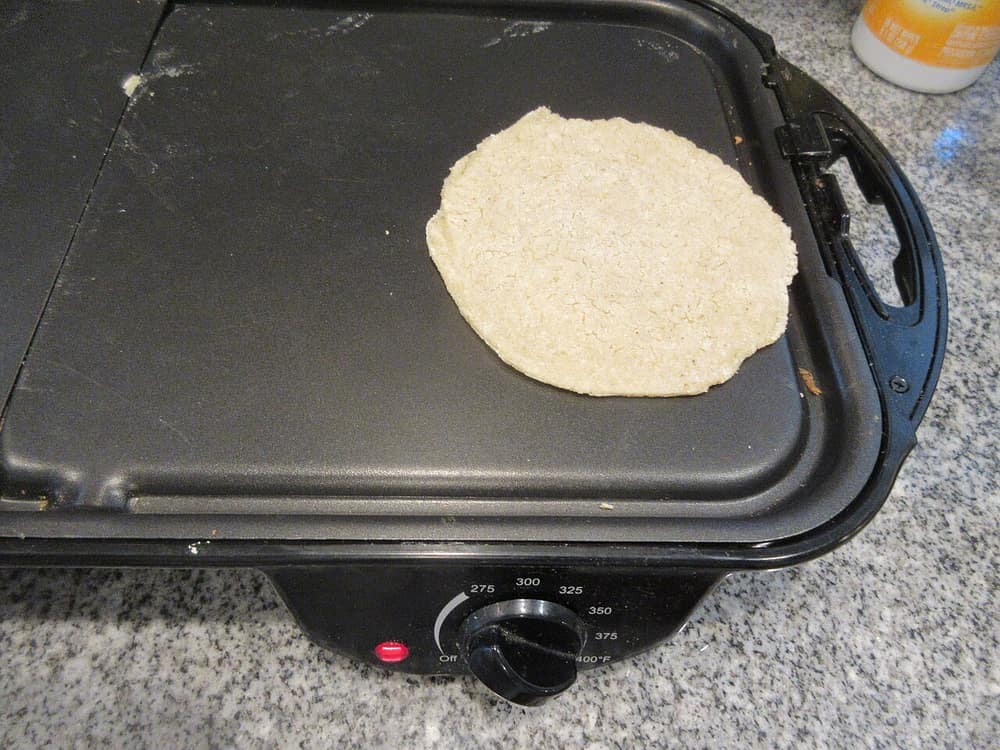 Zojirushi EA-DCC10 Gourmet SizzlerTable cooking and precise low heat Zojirushi EA-DCC10 Gourmet SizzlerTable cooking and precise low heat | Table cooking and precise low heat | 7.9 | Check price on Amazon |
| 2 |  Presto 07061 Ceramic 22" Electric GriddleFamily breakfasts indoors Presto 07061 Ceramic 22" Electric GriddleFamily breakfasts indoors | Family breakfasts indoors | 8.2 | Check price on Amazon |
| 3 | 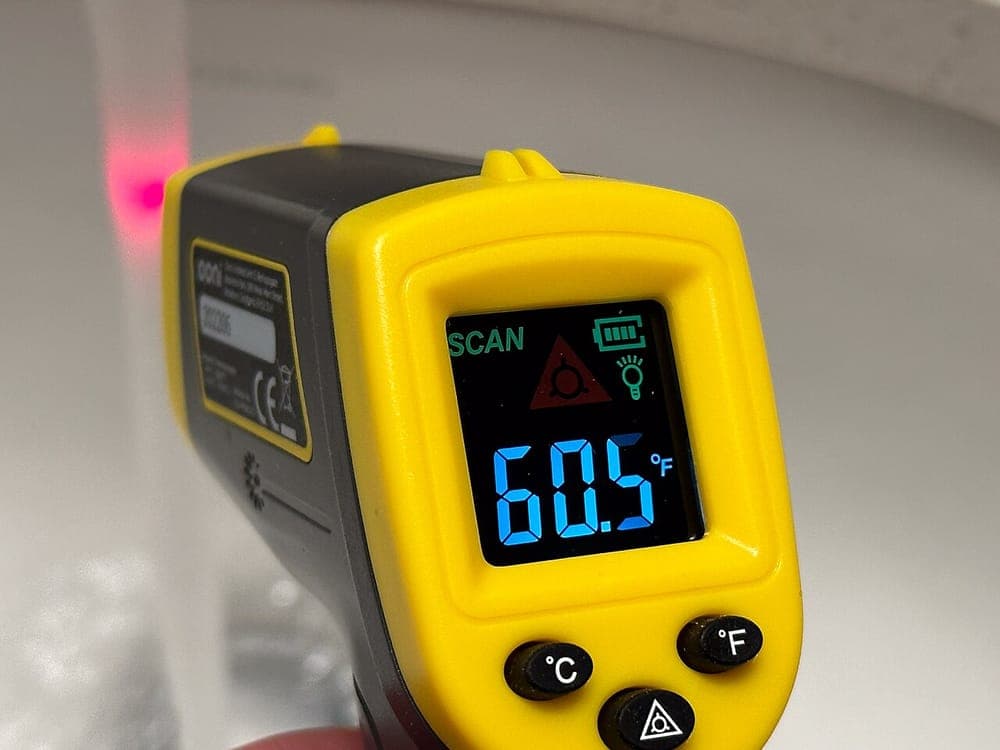 Infrared Surface ThermometerKnowing what your plate is actually doing Infrared Surface ThermometerKnowing what your plate is actually doing | Knowing what your plate is actually doing | 8.3 | Check price on Amazon |
#ad We publish no prices: there is no verified price feed on this site, so the retailer’s page is the only price. How this is funded
How the thermostat actually works
It does not hold your set temperature. It cycles around it.
The element heats until a sensor reads above the set point, then switches off. The plate cools until the sensor reads below, and the element switches on again. The surface oscillates in a band around the number you dialed in.
How wide that band is depends on the quality of the thermostat and the thermal mass of the plate. A heavier plate swings less, because it takes longer to lose and gain heat — which is why the Presto’s heavy cast-aluminum base is a genuine performance feature and not just a durability one.
What that means in practice
- Give it ten minutes to settle. The first cycle overshoots, because the element has been running continuously from cold. Cooking during the first few minutes gives inconsistent results.
- Expect the first item to differ. Same reason — this is true on every griddle ever made.
- A big cold load triggers a long on-cycle. Put a lot of cold food down and the thermostat reads low and runs the element hard, which can overshoot once the food is cooked.
- The sensor is in one place. It reads its own location, not the corner where you are cooking.
The numbers are not all equivalent
Some griddles have dials with actual temperatures; others have 1–5 or Low/Medium/High. Numbered dials are not necessarily accurate either — they describe the sensor’s target, and the surface where you are cooking may differ by a useful margin.
An infrared thermometer resolves this in thirty seconds, and it is as useful on an electric griddle as on a gas one. Note the emissivity caveat: dark matte non-stick reads accurately; shiny surfaces read low.
Temperatures worth knowing
| What | Temperature |
|---|---|
| Holding / keep warm | 175–225 °F |
| Eggs, gentle | 300–325 °F |
| Bacon | ~325 °F |
| Pancakes | 350–375 °F |
| Grilled sandwiches | 350–375 °F |
| Vegetables, browning | ~400 °F |
| Searing, maximum | 400–425 °F on most electrics |
Note the top of that range. The Zojirushi tops out at 425 °F, which is below the 450 °F-plus a smash-burger crust wants — a hard ceiling rather than a dial you can push past. The full chart.
The floor matters more than the ceiling
Every electric griddle reaches 400 °F. Far fewer go genuinely low.
The Zojirushi’s Keep Warm at 176 °F is a real holding temperature — food sits at serving temperature without continuing to cook. Most griddles bottom out well above that, where “low” is still a cooking temperature.
For comparison, the Traeger Flatrock’s stated range does not go below 350 °F. A low floor is genuinely something electric does better than gas.
Working with the cycling
- Preheat ten minutes and let it settle through a full cycle.
- Cook in smaller batches so you do not trigger a long recovery cycle.
- Use the whole plate. Even on one element, edges run cooler — that is your low zone.
- Set and leave. Chasing the dial fights the thermostat; it needs a few minutes to respond to any change.
- Learn your griddle’s offset. If 375 on the dial reads 350 on the plate, adjust once and remember it.
The picks in detail
Specifications are linked to their source on every card. Scores are ours, derived from those specifications.
#1 · Table cooking and precise low heat
Zojirushi EA-DCC10 Gourmet Sizzler
1,350 W over a 19 × 12½-inch titanium-ceramic plate with a Keep Warm setting at 176 °F — built for cooking at the table, not for searing.
#ad We publish no prices: there is no verified price feed on this site, so the retailer’s page is the only price. How this is funded
Key specifications
- Power
- 1,350 W at 120 V
- Cooking surface
- 19 × 12½ in
- Overall
- 23⅝ × 15 × 4⅜ in
- Surface
- Titanium- and ceramic-enhanced triple-layer non-stick
- Heat range
- Keep Warm (176 °F) to 425 °F
- Cleaning
- Fully immersible body guard and cooking plate
Specifications from Zojirushi product page.
Scores
- Cooking area4.5
- Heat output3.5
- Zone control5.0
- Surface care9.0
- Portability7.5
What works
- A real 176 °F Keep Warm setting — most electric griddles bottom out far higher
- Triple-layer titanium-ceramic coating is more durable than single-layer non-stick
- Designed to live on the table, which is a genuinely different use case from a counter appliance
What to know
- 1,350 W is lower than the Presto's 1500 W, and the 425 °F ceiling is low for searing
- 237 sq in of surface is small for a family
- Priced as a premium appliance for performance that is deliberately gentle
#2 · Family breakfasts indoors
Presto 07061 Ceramic 22" Electric Griddle
A 1500 W, 22-inch ceramic griddle whose handles come off so it fits a standard 18-inch cabinet — the storage problem solved properly.
#ad We publish no prices: there is no verified price feed on this site, so the retailer’s page is the only price. How this is funded
Key specifications
- Power
- 1500 W
- Surface
- 22 in, PFAS-free textured ceramic
- Base
- Heavy cast aluminum
- Cleaning
- Fully immersible with the heat control removed
- Storage
- Detachable handles; fits most 18 in cabinets
- Control
- Control Master automatic heat control
Specifications from Walmart listing.
Scores
- Cooking area6.0
- Heat output4.0
- Zone control3.0
- Surface care8.5
- Portability8.0
What works
- The detachable handles are not a gimmick — storage is the reason most electric griddles end up in a basement
- Fully immersible once the control is off, which no gas griddle can offer
- PFAS-free ceramic rather than a conventional non-stick coating
What to know
- 1500 W is the ceiling for a standard US outlet — no electric griddle sears like a propane one
- Ceramic is a wear surface; it will not outlive a steel top
- Cast aluminum spreads heat well but holds far less of it than 10-gauge steel
#3 · Knowing what your plate is actually doing
Infrared Surface Thermometer
The only way to know a griddle's real surface temperature — and the fastest way to find the hot spots every griddle has.
#ad We publish no prices: there is no verified price feed on this site, so the retailer’s page is the only price. How this is funded
Key specifications
- Type
- Infrared, non-contact — not a probe thermometer
- Range needed
- At least 100–600 °F
- Use
- Read several points; a griddle is never one temperature
- Limitation
- Reads surfaces, not the inside of food
- Accuracy caveat
- Shiny bare steel reads low; a seasoned plate reads true
- Pairs with
- A probe thermometer for doneness
Scores
- Usefulness9.0
- Accuracy7.5
- Range8.0
- Value8.5
What works
- Turns 'medium heat' from a guess into a number
- Finding your plate's hot spots takes about 30 seconds and changes how you cook on it forever
- Non-contact, so there is nothing to clean
What to know
- Reads surface only — it cannot tell you a burger is done
- Emissivity error on bare, shiny steel can read 50 °F or more low
- One more battery device living near a hot griddle
Common questions
How accurate are electric griddle temperature dials?
Why does my electric griddle temperature fluctuate?
How hot do electric griddles get?
What temperature should I use on an electric griddle?
Sources
Every specification on this page came from one of these. If you find one of them has changed, tell us and we will correct it.
Read next
Griddle temperature chart
Temperatures for everything you cook on a flat top, the reasoning behind each, and how to check without a thermometer.
The best electric griddles
Electric griddles compared on surface, coating quality, temperature control and storage — since wattage barely varies.
Griddle thermometers
Why infrared beats a probe for griddles, what range you need, and the emissivity error that reads bare steel low.
The best electric griddles for pancakes
Why pancakes favor electric griddles, the temperature that matters, and how to get an even batch.
Finding your griddle's hot spots
Why every griddle heats unevenly, how to map yours with a nine-point grid, and how to cook with the map.
The best indoor electric griddles
Indoor griddles compared, why smoke rather than power is the real limit, and how to cook flat-top food in a kitchen.