Your first five griddle cooks
In order, because each one teaches something the next one needs — and the first one also seasons the plate.
We earn a commission if you buy through our links, at no extra cost to you. That is how this site is paid for, and it does not decide what we recommend — full disclosure.
Quick picks
Ranked on published specifications using our scoring rubric. Tap a row for the full write-up.
| # | Product | Best for | Score | Price |
|---|---|---|---|---|
| 1 | 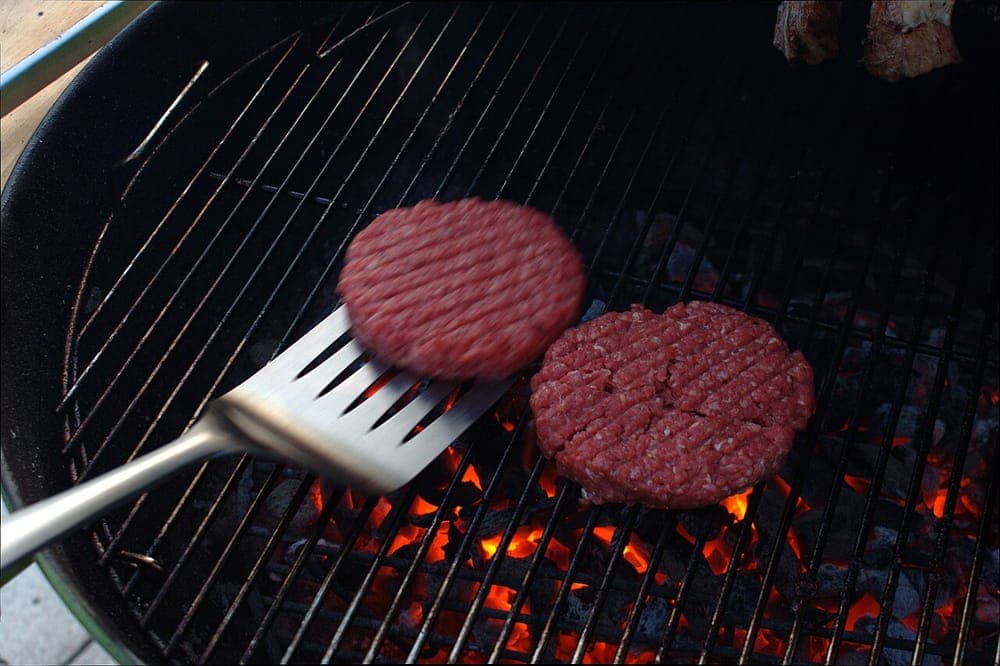 Griddle Spatula PairThe two tools you actually use Griddle Spatula PairThe two tools you actually use | The two tools you actually use | 8.7 | Check price on Amazon |
| 2 | 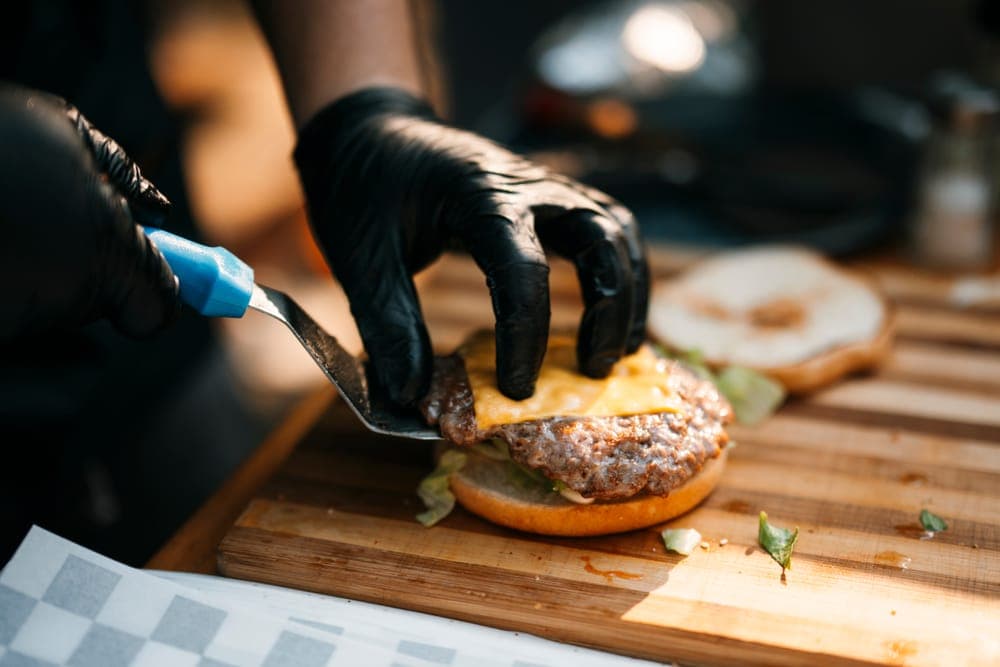 Squeeze Bottle SetOil control, which is most of the technique Squeeze Bottle SetOil control, which is most of the technique | Oil control, which is most of the technique | 8.3 | Check price on Amazon |
| 3 |  Melting DomeCheese, and steaming anything Melting DomeCheese, and steaming anything | Cheese, and steaming anything | 8.4 | Check price on Amazon |
| 4 | 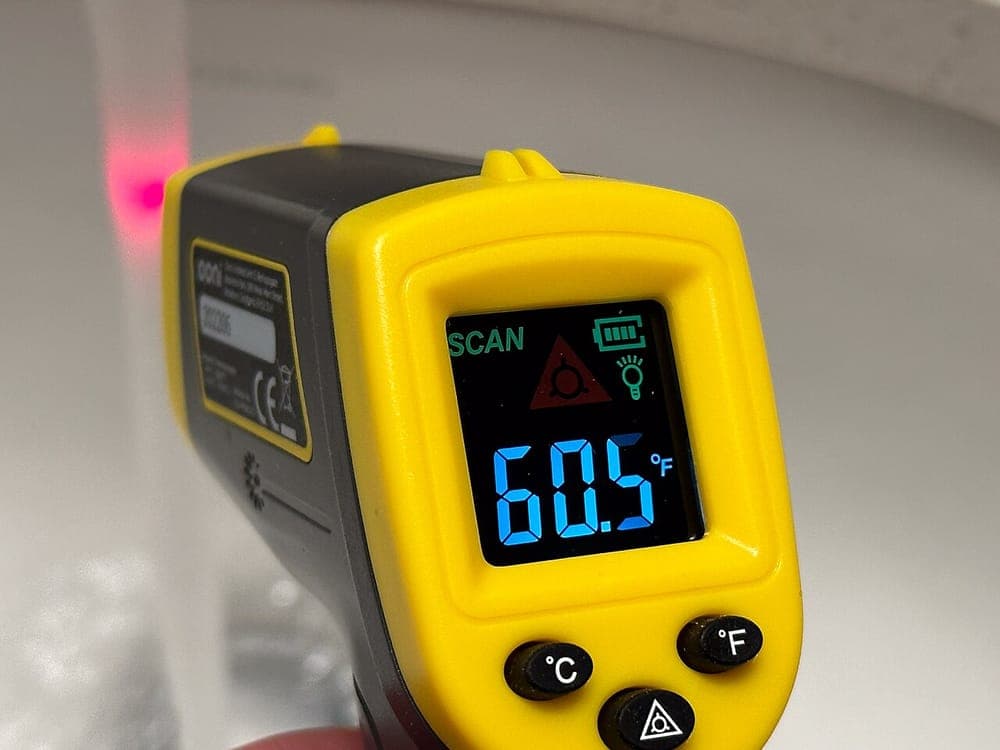 Infrared Surface ThermometerKnowing what your plate is actually doing Infrared Surface ThermometerKnowing what your plate is actually doing | Knowing what your plate is actually doing | 8.3 | Check price on Amazon |
#ad We publish no prices: there is no verified price feed on this site, so the retailer’s page is the only price. How this is funded
Before the first cook
Season the griddle if it is bare steel. Three to five very thin coats. Skip this and your first cook sticks catastrophically, which is a discouraging way to start.
If it is pre-seasoned or coated, you can cook immediately.
1. Bacon
Teaches: patience, and what rendering looks like. Bonus: it lays down another seasoning layer while you cook.
Lay strips on a moderate plate (around 325 °F), not a hot one. Let the fat render out slowly and turn occasionally. If it scorches while the fat is still white, the plate is too hot.
What you learn: griddle cooking rewards moderate heat more often than people expect, and the rendered fat is a resource — leave it on the plate for the next thing.
2. Fried eggs
Teaches: temperature control, in the cook that punishes getting it wrong.
300–325 °F, in the bacon fat. Too hot gives rubbery brown edges and a raw yolk; too cool and the white spreads thin and never sets properly.
A dome for ten seconds steams the top so the white sets without flipping.
What you learn: the difference between 300 °F and 375 °F is obvious in the result, which is the single most useful lesson available.
3. Grilled cheese
Teaches: patience and the value of weight.
Butter the outside of the bread, not the plate. 350 °F. Press it down with a spatula or a press for even contact, and leave it alone for two to three minutes a side.
What you learn: moving food is usually the mistake. Browning needs undisturbed contact, and weight improves it.
4. Smash burgers
Teaches: maximum heat, maximum contact, and the scrape.
Plate as hot as it goes. Loose balls, press once hard, hold ten seconds, never press again. Wait for lacy brown edges, then scrape — do not lift.
What you learn: the scrape. This is the technique that separates a griddle cook from someone with a griddle, and it is worth getting right early. Full method.
5. A full breakfast
Teaches: zones, and timing.
Bacon, eggs, pancakes and hash browns, all at once in different zones, everything landing together. This is the cook that makes the griddle make sense.
What you learn: that the appliance is not one cooking surface, it is three or four. The timing plan.
Five beginner mistakes to skip past
- Too much oil. A thin film, not a puddle. Over-oiling turns searing into frying, and it is the most common error.
- Moving food too soon. Browning needs undisturbed contact. If it sticks, it is usually not ready to move.
- Everything on high. Most griddle cooking happens at 325–400 °F. High is for searing, which is a minority of what you will do.
- Skipping the after-cook routine. Sixty seconds, every time. The routine.
- Not knowing where the hot spots are. Thirty seconds with a thermometer answers it permanently. Mapping them.
After those five
Dinners for range, and the temperature chart as your reference. Then it is just cooking — and the surface gets better every time you use it.
The picks in detail
Specifications are linked to their source on every card. Scores are ours, derived from those specifications.
#1 · The two tools you actually use
Griddle Spatula Pair
Two stiff, wide, bevelled-edge spatulas do 90% of griddle work — everything beyond that in a 30-piece kit is storage clutter.
#ad We publish no prices: there is no verified price feed on this site, so the retailer’s page is the only price. How this is funded
Key specifications
- What matters
- Blade stiffness — a flexible blade cannot lift a stuck smash burger
- What matters
- A bevelled front edge that gets under fond
- Width
- Wide enough to carry a whole patty, narrow enough to turn in a crowd
- Quantity
- Two — one to lift, one to steady
- Handle
- Riveted, not glued
- What fails first
- The handle rivet and the blade's leading edge
Scores
- Stiffness9.0
- Edge9.0
- Handle7.5
- Value8.5
What works
- A stiff bevelled blade is the difference between turning a smash burger and destroying one
- Two spatulas lets you work food against itself rather than against the plate
- Stainless blades can be scraped and scrubbed without degrading
What to know
- Thin, flexible 'griddle' spatulas sold in big kits are the wrong tool and are what most kits contain
- Long handles get in the way on a tabletop griddle
- Riveted handles collect grease at the joint
#2 · Oil control, which is most of the technique
Squeeze Bottle Set
Two bottles — one oil, one water — are the most underrated griddle tools there are, because dosing oil by eye is how food sticks or swims.
#ad We publish no prices: there is no verified price feed on this site, so the retailer’s page is the only price. How this is funded
Key specifications
- How many
- Two minimum: oil and water
- Tip
- Narrow, so you can lay a thin line rather than a puddle
- Water bottle use
- Steam-lifting residue and steaming under a dome
- Material
- Heat-tolerant — bottles sit near a hot plate
- Caps
- Must seal; open bottles collect everything
- Label them
- Oil and water look identical in an opaque bottle
Specifications from Blackstone accessories.
Scores
- Control9.0
- Material7.0
- Sealing7.5
- Value9.5
What works
- A thin controlled line of oil is the difference between a seared crust and a fried one
- The water bottle makes daily cleanup a 60-second job
- Trivially cheap for how much technique they unlock
What to know
- Wide-tip bottles over-dose oil and defeat the purpose
- Cheap plastic deforms if left on a hot side shelf
- Oil goes rancid in a bottle left outside for months
#3 · Cheese, and steaming anything
Melting Dome
A dome plus a squirt of water turns a dry griddle into a steamer for thirty seconds — it is how cheese melts before the patty overcooks.
#ad We publish no prices: there is no verified price feed on this site, so the retailer’s page is the only price. How this is funded
Key specifications
- What it does
- Traps steam so cheese melts in seconds, not minutes
- Diameter
- Larger than your patty plus the cheese overhang
- Material
- Stainless holds up; aluminum warps
- Handle
- Must stand off the dome — it gets hot immediately
- Technique
- Squirt water beside the food, then cover
- Also good for
- Steaming vegetables and reheating buns
Scores
- Seal8.5
- Material8.0
- Handle7.0
- Value9.0
What works
- Solves the real smash-burger problem: the patty cooks in 90 seconds, cheese does not melt in 90 seconds
- Doubles as a steamer for anything on the plate
- Cheap and essentially unbreakable in stainless
What to know
- Aluminum domes warp and then do not seal
- A dome with a flush handle is unusable without a glove
- One dome covers one burger; cooking six means working in rounds
#4 · Knowing what your plate is actually doing
Infrared Surface Thermometer
The only way to know a griddle's real surface temperature — and the fastest way to find the hot spots every griddle has.
#ad We publish no prices: there is no verified price feed on this site, so the retailer’s page is the only price. How this is funded
Key specifications
- Type
- Infrared, non-contact — not a probe thermometer
- Range needed
- At least 100–600 °F
- Use
- Read several points; a griddle is never one temperature
- Limitation
- Reads surfaces, not the inside of food
- Accuracy caveat
- Shiny bare steel reads low; a seasoned plate reads true
- Pairs with
- A probe thermometer for doneness
Scores
- Usefulness9.0
- Accuracy7.5
- Range8.0
- Value8.5
What works
- Turns 'medium heat' from a guess into a number
- Finding your plate's hot spots takes about 30 seconds and changes how you cook on it forever
- Non-contact, so there is nothing to clean
What to know
- Reads surface only — it cannot tell you a burger is done
- Emissivity error on bare, shiny steel can read 50 °F or more low
- One more battery device living near a hot griddle
Common questions
What should I cook first on a new griddle?
What are the most common beginner griddle mistakes?
Why does my food stick to the griddle?
What is the most important griddle technique to learn?
Sources
Every specification on this page came from one of these. If you find one of them has changed, tell us and we will correct it.
Read next
Seasoning a griddle for the first time
The complete first-seasoning process step by step, the three ways it goes wrong, and what a correct result actually looks like.

Breakfast on a griddle
A full griddle breakfast: the zone plan, the order of operations, and timings so everything lands together.
Smash burgers on a griddle
The complete smash burger method, why each step is what it is, and the five mistakes that produce gray patties.

Cleaning a griddle after every cook
The complete after-cook routine, why timing matters more than tools, and the three things never to use on a seasoned surface.

Griddle temperature chart
Temperatures for everything you cook on a flat top, the reasoning behind each, and how to check without a thermometer.
The best griddles for beginners
First griddles ranked on how forgiving they are: rust resistance, pre-seasoning and the mistakes each one punishes.