Griddle dinner ideas
Burgers and breakfast are the obvious ones. These are the dinners a flat top does better than your kitchen.
We earn a commission if you buy through our links, at no extra cost to you. That is how this site is paid for, and it does not decide what we recommend — full disclosure.
Quick picks
Ranked on published specifications using our scoring rubric. Tap a row for the full write-up.
| # | Product | Best for | Score | Price |
|---|---|---|---|---|
| 1 | 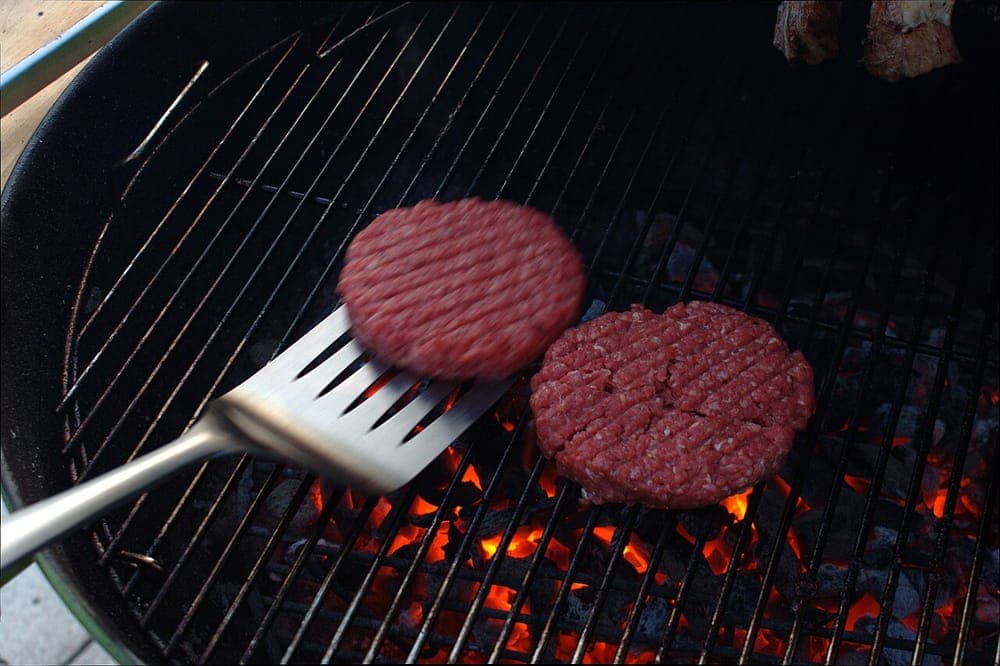 Griddle Spatula PairThe two tools you actually use Griddle Spatula PairThe two tools you actually use | The two tools you actually use | 8.7 | Check price on Amazon |
| 2 | 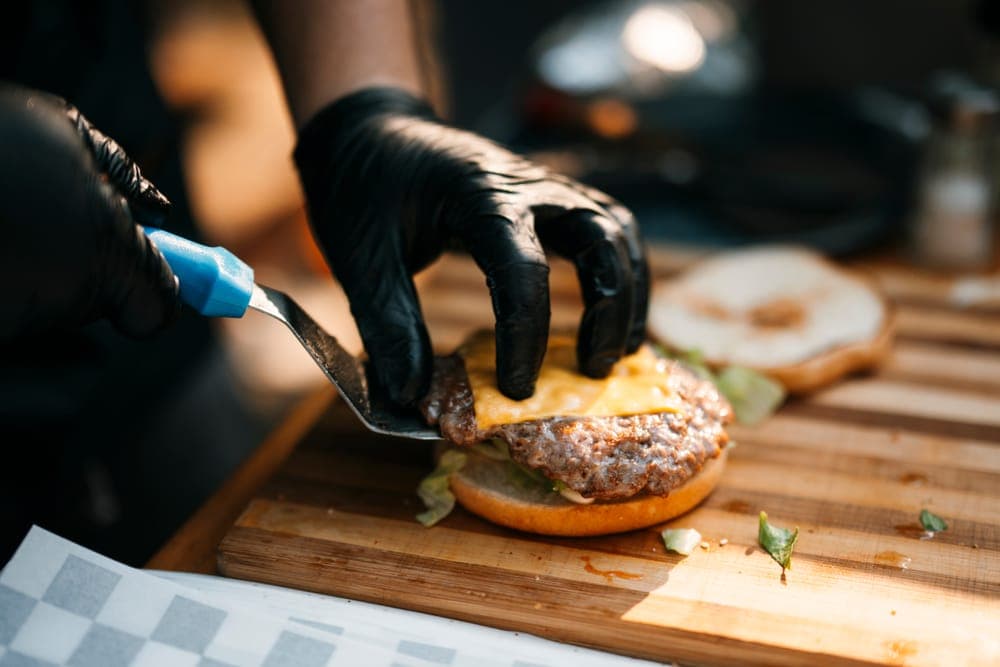 Squeeze Bottle SetOil control, which is most of the technique Squeeze Bottle SetOil control, which is most of the technique | Oil control, which is most of the technique | 8.3 | Check price on Amazon |
| 3 |  Melting DomeCheese, and steaming anything Melting DomeCheese, and steaming anything | Cheese, and steaming anything | 8.4 | Check price on Amazon |
#ad We publish no prices: there is no verified price feed on this site, so the retailer’s page is the only price. How this is funded
What makes a good griddle dinner
Three things: lots of pieces (surface area is the advantage), fast cooking (the flat top is not for low and slow), and benefit from browning (full contact is the point).
Those three criteria describe a surprisingly large share of weeknight food.
Fajitas
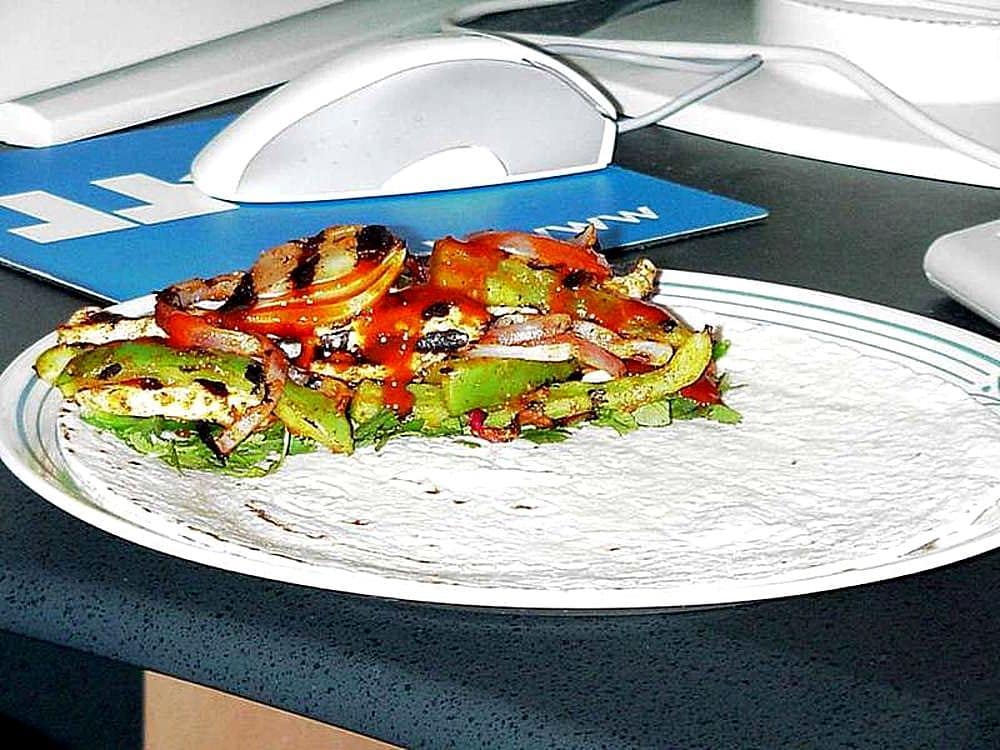
Possibly the single best griddle dinner. Thin strips of steak or chicken with peppers and onions at 425–450 °F, and the tortillas warm on a cooler zone in the same pass.
Technique: cook the protein and vegetables in separate zones rather than mixed. Together they release moisture and steam each other; apart they both char properly, and you combine at the end.
Fried rice
A griddle outperforms most domestic kitchens here. A wok on a domestic burner is always overcrowded, so rice steams. A flat top gives you the surface area to actually fry it.
Technique: day-old cold rice, spread thin, left alone to crisp before stirring. Egg cooked separately on another zone and folded in at the end.
Philly cheesesteaks
Thinly sliced beef, onions and peppers, chopped and worked on the plate with two spatulas, then cheese melted over it under a dome and scooped into a toasted roll.
Technique: the two-spatula chop is the whole thing. It is a griddle technique with no real kitchen equivalent.
Smashed potatoes
Parboil small potatoes, flatten them with the heel of a spatula or a burger press, and crisp both faces.
Technique: parboil thoroughly first. The griddle is crisping the outside, not cooking the inside.
Quesadillas
Full contact on both faces, several at once, cheese melting evenly. Something a pan does one at a time.
Technique: 350–375 °F, and weight them down — a press or another pan — for even contact.
Chicken thighs, diced
Boneless thighs cut into pieces at 375–400 °F brown far better than whole chicken does on a flat top, because every piece has faces touching metal.
Technique: skin side down first if there is skin, and let the fat render out as your cooking medium.
Shrimp
90 seconds a side at 425 °F. Easy, fast, and they do not fall through anything.
Technique: dry them thoroughly. Wet shrimp steam and go rubbery.
Patty melts
The griddle’s own dish — a smashed patty, caramelized onions and cheese between two slices of buttered rye, all cooked on the same surface.
Technique: start the onions at 275–300 °F twenty minutes before anything else. Caramelization is the slow part.
Pork chops, thin-cut
Thin chops at 400 °F suit a flat top; thick ones want a grill.
Teppanyaki-style dinner
Steak or chicken, shrimp, mushrooms, onions, zucchini and fried rice, cooked in zones and served as it comes off. It is what the flat top format was built around.
Technique: genuine zone discipline — each component gets its own area and temperature. This is where burner count earns its keep.
The common thread
All of these use the flat top’s two real advantages: a lot of surface, and several temperatures at once. If a recipe needs neither, it is probably better in your kitchen. What a griddle is good at.
The picks in detail
Specifications are linked to their source on every card. Scores are ours, derived from those specifications.
#1 · The two tools you actually use
Griddle Spatula Pair
Two stiff, wide, bevelled-edge spatulas do 90% of griddle work — everything beyond that in a 30-piece kit is storage clutter.
#ad We publish no prices: there is no verified price feed on this site, so the retailer’s page is the only price. How this is funded
Key specifications
- What matters
- Blade stiffness — a flexible blade cannot lift a stuck smash burger
- What matters
- A bevelled front edge that gets under fond
- Width
- Wide enough to carry a whole patty, narrow enough to turn in a crowd
- Quantity
- Two — one to lift, one to steady
- Handle
- Riveted, not glued
- What fails first
- The handle rivet and the blade's leading edge
Scores
- Stiffness9.0
- Edge9.0
- Handle7.5
- Value8.5
What works
- A stiff bevelled blade is the difference between turning a smash burger and destroying one
- Two spatulas lets you work food against itself rather than against the plate
- Stainless blades can be scraped and scrubbed without degrading
What to know
- Thin, flexible 'griddle' spatulas sold in big kits are the wrong tool and are what most kits contain
- Long handles get in the way on a tabletop griddle
- Riveted handles collect grease at the joint
#2 · Oil control, which is most of the technique
Squeeze Bottle Set
Two bottles — one oil, one water — are the most underrated griddle tools there are, because dosing oil by eye is how food sticks or swims.
#ad We publish no prices: there is no verified price feed on this site, so the retailer’s page is the only price. How this is funded
Key specifications
- How many
- Two minimum: oil and water
- Tip
- Narrow, so you can lay a thin line rather than a puddle
- Water bottle use
- Steam-lifting residue and steaming under a dome
- Material
- Heat-tolerant — bottles sit near a hot plate
- Caps
- Must seal; open bottles collect everything
- Label them
- Oil and water look identical in an opaque bottle
Specifications from Blackstone accessories.
Scores
- Control9.0
- Material7.0
- Sealing7.5
- Value9.5
What works
- A thin controlled line of oil is the difference between a seared crust and a fried one
- The water bottle makes daily cleanup a 60-second job
- Trivially cheap for how much technique they unlock
What to know
- Wide-tip bottles over-dose oil and defeat the purpose
- Cheap plastic deforms if left on a hot side shelf
- Oil goes rancid in a bottle left outside for months
#3 · Cheese, and steaming anything
Melting Dome
A dome plus a squirt of water turns a dry griddle into a steamer for thirty seconds — it is how cheese melts before the patty overcooks.
#ad We publish no prices: there is no verified price feed on this site, so the retailer’s page is the only price. How this is funded
Key specifications
- What it does
- Traps steam so cheese melts in seconds, not minutes
- Diameter
- Larger than your patty plus the cheese overhang
- Material
- Stainless holds up; aluminum warps
- Handle
- Must stand off the dome — it gets hot immediately
- Technique
- Squirt water beside the food, then cover
- Also good for
- Steaming vegetables and reheating buns
Scores
- Seal8.5
- Material8.0
- Handle7.0
- Value9.0
What works
- Solves the real smash-burger problem: the patty cooks in 90 seconds, cheese does not melt in 90 seconds
- Doubles as a steamer for anything on the plate
- Cheap and essentially unbreakable in stainless
What to know
- Aluminum domes warp and then do not seal
- A dome with a flush handle is unusable without a glove
- One dome covers one burger; cooking six means working in rounds
Common questions
What can you cook on a griddle for dinner besides burgers?
Why do fajitas work so well on a griddle?
Is a griddle good for fried rice?
How do you cook a patty melt on a griddle?
Sources
Every specification on this page came from one of these. If you find one of them has changed, tell us and we will correct it.
Read next

What to cook on a griddle
The full-contact principle, what a flat top genuinely wins at, what it loses at, and the surprising successes.
Your first five griddle cooks
Five first cooks in a deliberate order, what each teaches, and the beginner mistakes to skip past.

Griddle temperature chart
Temperatures for everything you cook on a flat top, the reasoning behind each, and how to check without a thermometer.
Smash burgers on a griddle
The complete smash burger method, why each step is what it is, and the five mistakes that produce gray patties.
How many burners do you need?
What one, two, three and four zones actually buy you, why insulation matters, and the picks at each burner count.

Griddle cooking for a crowd
How to plan and run a wave-based griddle cook for a crowd, and why the holding zone matters more than surface area.