Are flat-top griddles worth it?
Yes for some cooking, no for other cooking, and definitely not for three specific kinds of buyer.
We earn a commission if you buy through our links, at no extra cost to you. That is how this site is paid for, and it does not decide what we recommend — full disclosure.
Quick picks
Ranked on published specifications using our scoring rubric. Tap a row for the full write-up.
| # | Product | Best for | Score | Price |
|---|---|---|---|---|
| 1 |  Blackstone 28" Original GriddleMost households Blackstone 28" Original GriddleMost households | Most households | 8.4 | Check price on Amazon |
| 2 |  Weber Slate 30" GriddleOccasional cooks who hate rust Weber Slate 30" GriddleOccasional cooks who hate rust | Occasional cooks who hate rust | 8.5 | Check price on Amazon |
| 3 | 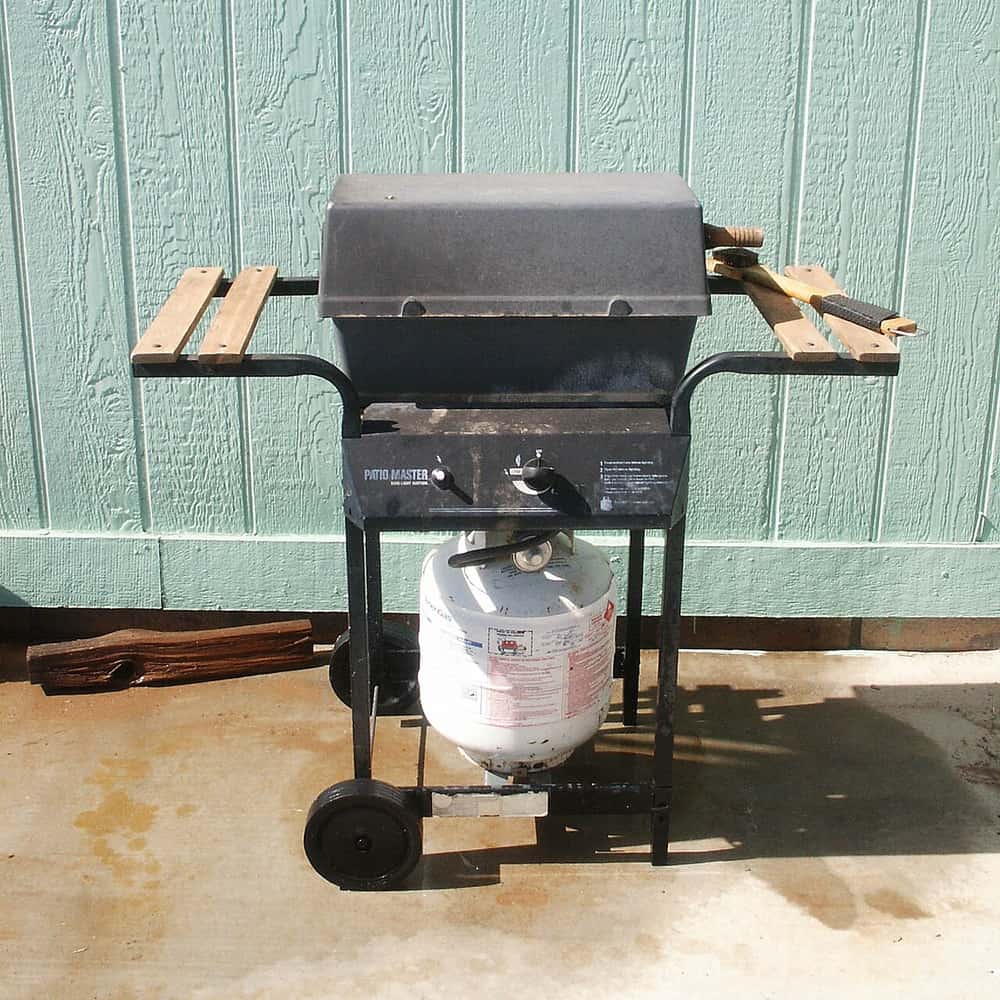 Steelmade Flat Top for Outdoor GrillTurning a gas grill into a griddle Steelmade Flat Top for Outdoor GrillTurning a gas grill into a griddle | Turning a gas grill into a griddle | 7.9 | Check price on Amazon |
#ad We publish no prices: there is no verified price feed on this site, so the retailer’s page is the only price. How this is funded
What a griddle genuinely wins at
Full contact. Everything a flat top does better than a grate comes down to the fact that the entire underside of the food touches hot metal.
- Smash burgers. Effectively impossible on a grate, and the signature flat-top cook.
- Breakfast at scale. Eggs, bacon, hash browns and pancakes going simultaneously in different zones.
- Anything small or diced. Onions, peppers, mushrooms, fried rice, fajitas — all of which fall through a grate.
- Volume. 525 square inches of continuous surface holds far more food than a grill of the same footprint.
What it genuinely loses at
- Grilled flavor. That comes from fat dripping onto heat, vaporizing and returning through the food. A solid plate cannot do it, and no ridged surface fakes it.
- Fat rendering away. On a griddle the fat stays with the food until it drains, so cooking is fattier by nature.
- Thick cuts. Without a hood you have only conducted heat from one side, so anything thick cooks slowly and unevenly.
- Low and slow. Not what a flat top is for at all.
The full griddle-versus-grill comparison works this through properly.
The ongoing costs nobody mentions
- Time, every cook. About sixty seconds of hot-scraping and oiling, every single time. Skip it and you own a rust project.
- A cover, which is not optional on bare steel.
- Propane, at a real rate — four burners at 60,000 BTU for an hour is meaningful consumption.
- Oil, continuously, for both cooking and maintenance.
- Footprint, permanently. A 36-inch cart is a piece of patio furniture you did not choose for aesthetics.
Three people who should not buy one
- Anyone who mostly cooks steaks and chops. You want a grill. A griddle sears them well, but you will miss the flavor and you already own the right tool.
- Anyone who will not do the routine. Be honest. If the answer is no, either buy a coated or rust-resistant surface or do not buy at all — a neglected bare steel griddle is a bad purchase, not a cheap one.
- Anyone without outdoor space. Propane griddles cannot be used indoors, ever — see the safety page. If you have no yard or balcony you can legally and safely cook on, you want electric or a stovetop plate, not this.
The cheap way to find out
If you own a gas grill, buy a steel griddle plate for it. You get a real flat-top cooking surface — often thicker than a dedicated griddle’s — for a fraction of the cost, with no new appliance and no new footprint.
Cook on it for a season. If you find yourself using it constantly, buy the dedicated griddle knowing exactly why. If it gathers dust, you have saved yourself a cart.
The picks in detail
Specifications are linked to their source on every card. Scores are ours, derived from those specifications.
#1 · Most households
Blackstone 28" Original Griddle
The size most people should actually buy: 525 square inches and two zones covers a family of four with headroom, on a footprint that fits a normal patio.
#ad We publish no prices: there is no verified price feed on this site, so the retailer’s page is the only price. How this is funded
Key specifications
- Cooking area
- 525 sq in (28¾ × 18¼ in)
- Burners
- 2, stainless H-burners
- Total output
- 34,000 BTU
- Cooktop
- 10-gauge rolled carbon steel
- Ignition
- Piezo
- Zones
- 2, independently controlled
Specifications from BBQGuys spec sheet.
Scores
- Cooking area7.5
- Heat output7.0
- Zone control7.0
- Surface care6.5
- Portability5.0
What works
- The 10-gauge plate is thicker than most griddles at this size, which is what keeps temperature steady when cold food hits it
- Two zones is genuinely enough: one hot side for searing, one moderate side for holding
- Fits a standard patio and a standard cover, which the 36 often does not
What to know
- Only two zones — you cannot run a dedicated warming zone and two cooking temperatures at once
- 34,000 BTU over 525 sq in is modest heat density; recovery after a big load is slower than the 36
- Bare carbon steel needs seasoning and a cover, same as every Blackstone
#2 · Occasional cooks who hate rust
Weber Slate 30" Griddle
Three zones over 540 square inches on a rust-resistant top — the best griddle here for someone who cooks once a fortnight and does not want to fight their surface.
#ad We publish no prices: there is no verified price feed on this site, so the retailer’s page is the only price. How this is funded
Key specifications
- Cooking area
- 540 sq in
- Burners
- 3, stainless steel
- Total output
- 36,000 BTU
- Cooktop
- Rust-resistant carbon steel, pre-seasoned
- Dimensions
- 70.80 W × 39.50 H × 23.50 D in
- Weight
- 140.34 lb
Specifications from P.C. Richard spec sheet.
Scores
- Cooking area7.5
- Heat output7.0
- Zone control8.5
- Surface care9.5
- Portability4.0
What works
- Three zones at 540 sq in beats the Blackstone 28's two zones at 525 sq in — more control for the same footprint
- Rust resistance is the difference between a griddle that survives a wet autumn and one that does not
- Four swivel casters, so it actually moves on a patio
What to know
- 140 lb means 'moves on a patio', not 'goes in the truck'
- 66.7 BTU per sq in is middling — fine for everyday cooking, slower than the Traeger for a heavy sear
- The rust-resistant coating is not invincible; it still wants a cover
#3 · Turning a gas grill into a griddle
Steelmade Flat Top for Outdoor Grill
3/16-inch American steel that drops onto an existing gas grill — the maker states it is 50% thicker than most dedicated griddle tops.
#ad We publish no prices: there is no verified price feed on this site, so the retailer’s page is the only price. How this is funded
Key specifications
- Steel thickness
- 3/16 in
- Made in
- USA
- Drainage
- ½ in front drain holes along the front edge
- Fits
- An existing gas grill
- Surface
- Bare steel — needs seasoning
- Maker's claim
- 50% thicker than most dedicated griddles
Specifications from Steelmade product page.
Scores
- Cooking area6.0
- Heat output6.0
- Zone control5.5
- Surface care6.0
- Portability7.5
What works
- Thickness is the whole argument: a thicker plate holds temperature when cold food lands
- No new appliance, no new footprint, no second propane tank
- Front drain holes put the grease where you can reach it, unlike rear-drain griddles
What to know
- You lose your grill while the plate is on it
- Your grill's burners were designed for grates, not a solid plate — hot spots follow burner layout
- Bare steel: seasoning and rust prevention are entirely on you
Common questions
Is a flat-top griddle worth buying?
What are the hidden costs of owning a griddle?
Who should not buy a flat-top griddle?
How can I try griddle cooking cheaply?
Sources
Every specification on this page came from one of these. If you find one of them has changed, tell us and we will correct it.
Read next
Griddle vs grill
What a flat top does better than a grate and vice versa, with the foods that decide it — and the cheapest way to have both.
The best griddle plates for gas grills
Steel griddle inserts for gas grills and ranges, compared on thickness, drainage and what you give up.
Can you use a propane griddle indoors?
The unambiguous answer, the reasoning behind it, the edge cases people ask about, and what to use instead.

What to cook on a griddle
The full-contact principle, what a flat top genuinely wins at, what it loses at, and the surprising successes.
The best griddles for beginners
First griddles ranked on how forgiving they are: rust resistance, pre-seasoning and the mistakes each one punishes.
What drives griddle prices
What you pay more for, what you get free, and the real total cost of ownership including the accessories you will need.