Can you leave a griddle outside?
Yes — almost everyone does. Whether that ends well comes down to three decisions, none of them expensive.

We earn a commission if you buy through our links, at no extra cost to you. That is how this site is paid for, and it does not decide what we recommend — full disclosure.
Quick picks
Ranked on published specifications using our scoring rubric. Tap a row for the full write-up.
| # | Product | Best for | Score | Price |
|---|---|---|---|---|
| 1 | 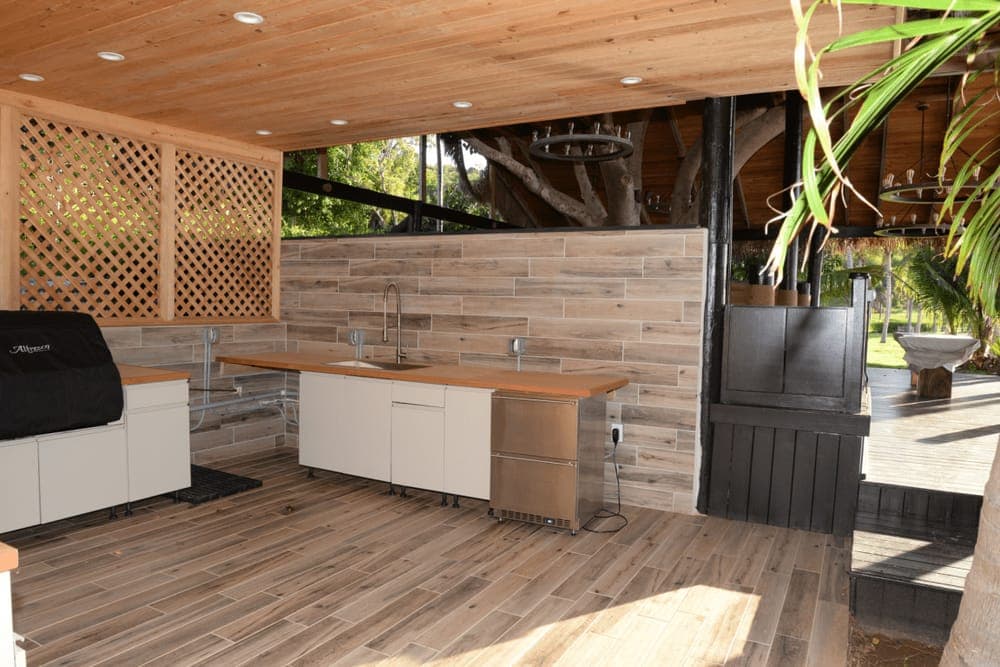 Griddle Cover (match your width)The single cheapest way to stop rust Griddle Cover (match your width)The single cheapest way to stop rust | The single cheapest way to stop rust | 8.9 | Check price on Amazon |
| 2 | Griddle Hard Cover / HoodRain, and roasting | Rain, and roasting | 8.1 | Check price on Amazon |
| 3 |  Griddle Seasoning & ConditionerA convenient blend, not a magic one Griddle Seasoning & ConditionerA convenient blend, not a magic one | A convenient blend, not a magic one | 7.6 | Check price on Amazon |
| 4 |  Griddle Carry BagTabletop griddles that travel Griddle Carry BagTabletop griddles that travel | Tabletop griddles that travel | 7.6 | Check price on Amazon |
#ad We publish no prices: there is no verified price feed on this site, so the retailer’s page is the only price. How this is funded
Yes, you can leave a griddle outside, and nearly every owner does — but only with a dry, oiled cooktop under a vented cover that is strapped down. An uncovered griddle on an exposed patio will show rust within weeks in wet weather, and a cover with no vents is actively worse than no cover at all. The griddle does not mind the cold. It minds water sitting on bare steel.
What actually rusts, and where it starts
Rust does not appear evenly across a plate. It starts exactly where water collects and lingers:
- The grease channel and the corners — the low points, where rain runs to and then sits.
- Under the plate’s edges and around fasteners — crevices you never oil and never dry.
- The cart welds and the shelf brackets — painted steel, and paint chips.
- Any spot where food residue was left — residue holds moisture against the steel like a sponge.
That last one matters more than the weather. A plate put away dirty will rust under the residue even in a dry garage. The sixty-second after-cook routine is the actual prerequisite for storing a griddle anywhere.
Rain: the plate is fine, the neglect is not
A single rain shower on a clean, well-seasoned, oiled plate does very little. Seasoning is polymerized oil — a real, bonded, hydrophobic film. Water beads and runs off it.
The damage comes from repetition and from the gaps in that film. Every cook leaves thin spots, every scrape takes a little off, and water finds those places. Left through a wet autumn, a plate that looked fine in September is orange in November.
Do not cook in the rain either — not because of the griddle, but because water hitting a 450 °F plate is a thermal-shock event and the leading cause of a warped cooktop.
Winter: cold is harmless, thaw cycles are not
Freezing temperatures do nothing to carbon steel. Two things about winter do matter.
First, freeze-thaw cycles pump moisture around. Water trapped under a non-vented cover condenses on the cold plate every time the temperature swings, so the steel spends the whole season damp. That is how people end up with a griddle that was covered all winter and rusted anyway.
Second, disconnect and store the propane cylinder separately, upright and outdoors — never in a garage, basement or shed. Then store the griddle with the hose and regulator protected; rodents chew hoses over winter, and that is a replacement part, not a cleaning problem.
If you cook through the winter, a cold plate also needs a longer warm-up than you expect — preheat times by size, and why a cold cylinder delivers less gas.
The three decisions
1. A vented cover, matched and strapped
This is the whole answer in one purchase, and it is the cheapest thing on this page.
Vented is non-negotiable: trapped moisture has to be able to leave, or the cover becomes a humidity chamber. Matched means to the griddle’s width — 17, 22, 28 or 36 inches — and to whether it has a hood, because a hood changes the height; a loose cover holds water against the top. Strapped or cinched, because a cover that blows off in October is a cover you discover in December. Covers by size and burner count.
2. A dry, oiled plate every single time
Scrape while the plate is still hot, steam-lift the residue with water, scrape again, dry it with heat or a towel, then lay on the thinnest possible film of oil or conditioner.
Thin is the operative word. A heavy coat does not protect better — it stays tacky, collects dust, and then flakes off in sheets. Wipe until the surface looks almost dry. The prevention routine in full.
3. A second layer directly over the cooktop
In a genuinely wet climate, a hinged hood or a lift-off hard cover over the plate itself adds a layer the soft cover cannot: it keeps rain off the steel even when the outer cover is wet through. The two types are not interchangeable — hoods versus hard covers explains which mounts on what. Neither replaces the soft cover over the whole cart.
When to bring it in instead
Tabletop griddles are a different case, because they can actually be moved. A 17 or 22-inch griddle in a lined carry bag stores in a garage or a closet, which removes the problem entirely rather than managing it. If you own a tabletop and have anywhere to put it, that is strictly better than any cover.
A cart griddle is not going anywhere. Garage storage sounds appealing and usually is not: an unventilated garage can hold more humidity than an open patio, and a griddle wheeled in wet will sit wet. Covered outdoors with a dry, oiled plate beats shut in a damp garage.
And if your honest answer is that the routine will not happen, buy that into the hardware instead — a rust-resistant cooktop tolerates neglect that destroys bare steel, which is the argument in Blackstone vs Weber Slate, and it is reflected in how long a griddle actually lasts.
The picks in detail
Specifications are linked to their source on every card. Scores are ours, derived from those specifications.
#1 · The single cheapest way to stop rust
Griddle Cover (match your width)
The accessory that decides whether a bare-steel griddle survives its first wet season — buy it sized to your griddle's width, not approximately.
#ad We publish no prices: there is no verified price feed on this site, so the retailer’s page is the only price. How this is funded
Key specifications
- Match on
- Griddle width: 17, 22, 28 or 36 in
- Also match
- Hood vs no hood — a hood changes the height
- Critical feature
- Vents, so trapped moisture can escape
- Critical feature
- Straps or a cinch, or wind lifts it off
- What fails first
- Seams and the elastic hem
- Common mistake
- A cover that fits loosely holds water against the top
Scores
- Fit9.0
- Durability7.0
- Rust protection9.5
- Value9.0
What works
- A vented, correctly sized cover prevents more griddle deaths than any other single purchase
- Cheap relative to the surface it protects
- Works with the hard cover rather than instead of it — the hard cover keeps rain off the plate, the soft cover keeps it off the cart
What to know
- An unvented cover is worse than no cover: it traps condensation against bare steel
- Sizes are not interchangeable between brands even at the same stated width
- Covers are consumables — UV destroys them in a few seasons
#2 · Rain, and roasting
Griddle Hard Cover / Hood
A hinged hood does two jobs a soft cover cannot: it keeps rain off the plate between cooks and it traps heat so you can roast rather than only sear.
#ad We publish no prices: there is no verified price feed on this site, so the retailer’s page is the only price. How this is funded
Key specifications
- Two types
- Hinged hood (stays on) vs lift-off hard cover
- Hood enables
- Trapped-heat cooking — roasting, melting, reheating
- Hard cover enables
- Flat storage and stacking
- Match on
- Griddle width and generation — mounts changed between model years
- Not a substitute for
- A soft cover over the whole cart
- Watch for
- Hood clearance under a low patio roof or overhang
Scores
- Weather protection8.5
- Cooking benefit8.5
- Fit6.5
- Value8.0
What works
- A hood turns a griddle into something that can finish thick food without burning the outside
- Rain protection between cooks without wrestling a fabric cover
- Makes the griddle usable in light weather
What to know
- Adds height, which matters under a low overhang and for cover fit
- Hinged hoods trap grease vapor and need their own cleaning
- Mounts are model-year specific, so a used hood may not fit
#3 · A convenient blend, not a magic one
Griddle Seasoning & Conditioner
A blended conditioner is a reasonable convenience, but it does nothing a high-smoke-point oil applied thinly does not already do.
#ad We publish no prices: there is no verified price feed on this site, so the retailer’s page is the only price. How this is funded
Key specifications
- What it is
- A blend of oils and waxes with a high smoke point
- What it does
- The same polymerization any seasoning oil does
- Real advantage
- Consistency and a usable application viscosity
- Alternative
- Grapeseed, canola or avocado oil applied very thinly
- Application rule
- Thin to the point of looking dry, then heat until it stops smoking
- Common mistake
- Too much product — thick coats stay sticky and then flake
Specifications from Blackstone accessories.
Scores
- Effectiveness8.0
- Convenience8.5
- Smoke point8.5
- Value6.5
What works
- Formulated to the right viscosity, which makes a genuinely thin coat easy
- One product for seasoning and post-cook conditioning
- Removes the guesswork about smoke point
What to know
- Costs considerably more per application than a bottle of grapeseed oil
- Does not chemically do anything a suitable oil does not
- Marketed as a requirement; it is a convenience
#4 · Tabletop griddles that travel
Griddle Carry Bag
Only worth it for a 17 or 22-inch tabletop — it keeps a greasy plate out of your trunk lining and the legs from scratching everything.
#ad We publish no prices: there is no verified price feed on this site, so the retailer’s page is the only price. How this is funded
Key specifications
- Match on
- Exact griddle model, including hood
- Must have
- A wipeable or removable liner — the plate is never fully clean
- Must have
- Reinforced base; the corners take the weight
- Useful
- An outside pocket for the regulator hose
- Not for
- Cart griddles — those take a cover, not a bag
- What fails first
- The zipper, then the base seam
Scores
- Fit7.0
- Protection8.0
- Durability7.0
- Value7.5
What works
- Keeps grease residue off a car interior, which is the real reason to buy one
- Protects the hood latch and legs in transit
- Makes a tabletop griddle genuinely one-trip portable
What to know
- Model-specific; a bag for a 17 will not take a 22
- A bag with no wipeable liner becomes permanently greasy
- Pointless for a griddle that never leaves the patio
Common questions
Can you leave a Blackstone griddle outside?
Can you leave a griddle outside in the winter?
Can a griddle get rained on?
Is it better to store a griddle in the garage?
Sources
Every specification on this page came from one of these. If you find one of them has changed, tell us and we will correct it.
Read next
How to stop a griddle rusting
The oil-and-cover routine, why vents matter more than people think, and how to store a griddle over a wet season.
How to remove rust from a griddle
The complete rust removal process for a steel cooktop, how far to abrade, and the debris step most people skip.
Griddle covers, by size and burner count
Covers sized by width, hood configuration and burner count, why vents are non-negotiable, and what wears out first.
Griddle hard covers vs hoods
Hinged hoods against lift-off hard covers: weather protection, trapped-heat cooking, clearance and fit.
How long does a griddle last?
What actually ends a griddle's life, in the order it fails — and why parts availability matters more than build quality.
Griddle warping
What causes warping, why it is permanent, how to live with it, and which specs resist it.