Why is my griddle not getting hot enough?
Nearly always one of seven things, and the first two take under a minute to rule out.
We earn a commission if you buy through our links, at no extra cost to you. That is how this site is paid for, and it does not decide what we recommend — full disclosure.
Quick picks
Ranked on published specifications using our scoring rubric. Tap a row for the full write-up.
| # | Product | Best for | Score | Price |
|---|---|---|---|---|
| 1 | 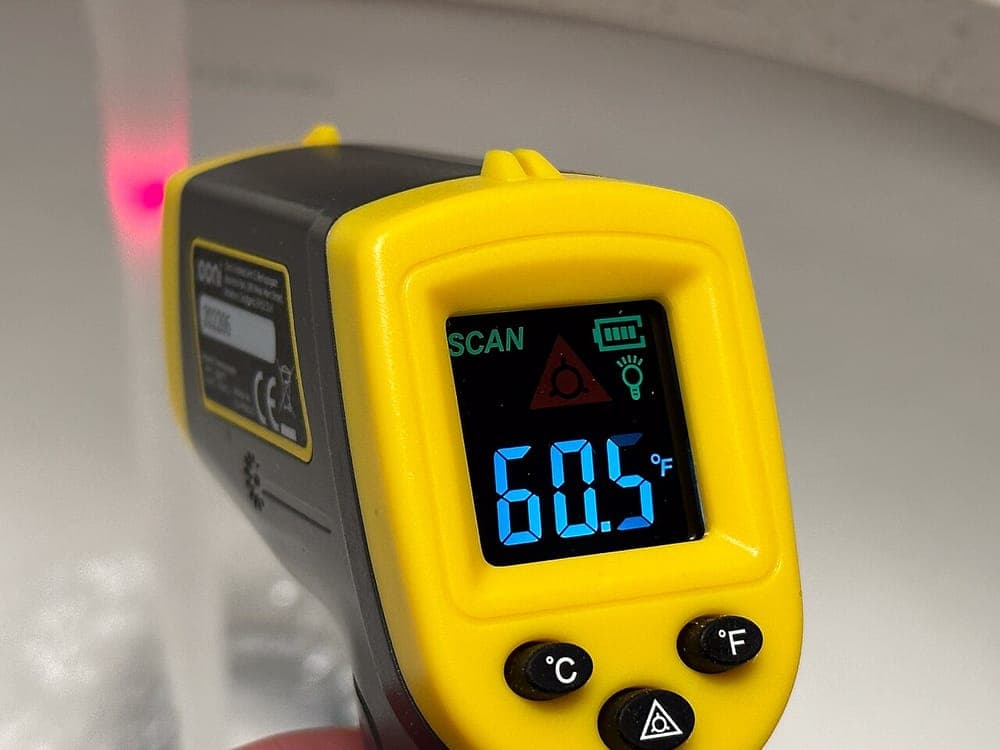 Infrared Surface ThermometerKnowing what your plate is actually doing Infrared Surface ThermometerKnowing what your plate is actually doing | Knowing what your plate is actually doing | 8.3 | Check price on Amazon |
| 2 |  Griddle Wind GuardExposed patios and coastal wind Griddle Wind GuardExposed patios and coastal wind | Exposed patios and coastal wind | 7.9 | Check price on Amazon |
| 3 |  Griddle Hard Cover / HoodRain, and roasting Griddle Hard Cover / HoodRain, and roasting | Rain, and roasting | 8.1 | Check price on Amazon |
#ad We publish no prices: there is no verified price feed on this site, so the retailer’s page is the only price. How this is funded
Start with the regulator. If your burners light but stay low and yellow-tipped no matter where the knobs are, the cylinder valve was almost certainly opened too fast and the regulator’s flow-limiting device has tripped — turn everything off, disconnect, wait a minute, reconnect, then open the cylinder valve slowly before lighting. That single cause accounts for a large share of “my griddle has lost power” complaints, and it is free to rule out.
If that is not it, work down the list below in order. It runs from most common and cheapest to least common.
1. The regulator tripped
Propane regulators include a flow-limiting device that is designed to cut gas flow to a trickle if it sees a sudden rush — the safety response to a cut hose. Opening the cylinder valve quickly with burner knobs open looks exactly like that to the regulator.
The reset is the same on essentially every griddle: close every burner knob, close the cylinder valve, disconnect the regulator, wait a minute, reconnect it, then open the cylinder valve slowly — a quarter turn at a time — with all burners still off. Light only after that. Follow your own manufacturer’s instructions where they differ.
Never modify, drill or bypass a regulator to get more flow. If a regulator is genuinely faulty, replace it with the correct part for your model.
2. The plate was never actually hot
The second most common cause is not a fault at all. A knob position is not a temperature, and a griddle that feels hot to a hovering hand can be 80 degrees below where the recipe needs it.
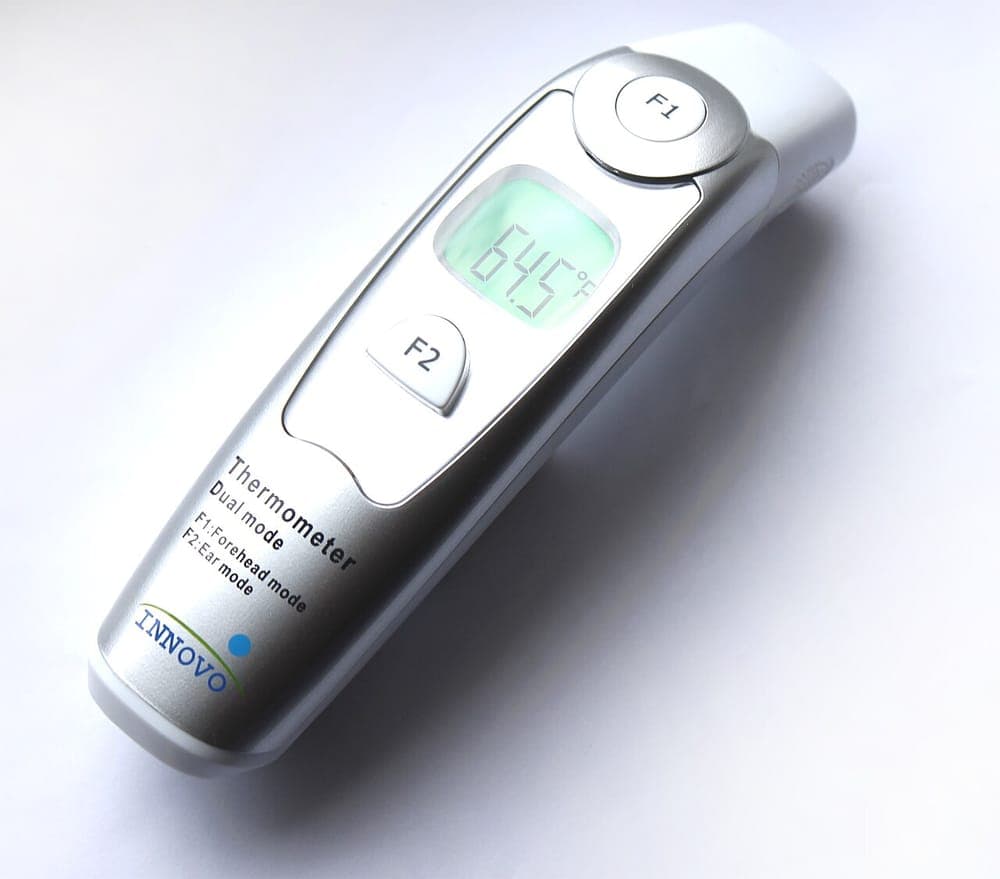
Read the plate with an infrared surface thermometer, in several places, before concluding anything is wrong. A griddle is never one temperature — mapping your own hot spots takes ten minutes and explains a lot of apparently inconsistent cooking. Then check the number against what the food actually wants.
One caveat on the reading: bare shiny steel reads low on an infrared thermometer. A properly seasoned, dark plate reads true.
3. It has not preheated long enough
Thermal mass cuts both ways. The thick plate that holds temperature under a load of cold food also takes real time to reach temperature in the first place, and a big griddle takes longer than a small one.
If you are cooking within five minutes of ignition on a 36-inch griddle, the plate is still climbing. Realistic preheat times by size sets expectations, and plate thickness explains why they vary so much between models.
4. Wind
Wind is the most underrated cause of a griddle that will not get hot. An exposed plate loses heat to moving air faster than the burners can replace it, and on a breezy day the surface can sit a hundred degrees below what the same griddle does in still air — with every knob on high.
A three-sided wind guard matched to your griddle’s width is the fix. A single baffle on one side does very little. What to match on. A hinged hood helps too, by trapping heat over the plate between passes.
5. The cylinder is low, or cold
Propane leaves a cylinder as vapor, and the rate it can do that depends on how much liquid is left and how cold it is. A nearly empty tank on a cold morning simply cannot deliver full flow, and the symptom is exactly the same as a weak burner.
Weigh the cylinder or swap in a known-full one before chasing anything mechanical. If the griddle comes up to temperature on the full tank, that was your answer.
6. Burners, ports or the venturi
Spiders and insects nest in burner tubes, and grease and carbon block burner ports. Both starve the flame.
With the gas off and the griddle cold, look at the flame pattern the next time you light it: it should be mostly blue and even across every port. Yellow, lazy or patchy flames point to a blocked port or an obstructed venturi tube. Clean per your manufacturer’s instructions. If you smell gas at any point, shut the cylinder valve, leave it, and do not light anything.
7. You bought a griddle with low heat density
The last possibility is that nothing is wrong. Total BTU means little without the area it heats, and the spread across this category is enormous — from 45.5 BTU per square inch on a Weber Slate 22 to 82.3 on a Pit Boss Deluxe 4-Burner.
A griddle at the bottom of that range will never sear like one at the top, however long you preheat it. That is a specification, not a fault — the full table is here, and the griddles that do sear properly are ranked on exactly this number.
What to buy to stop guessing
Two of these seven causes are measurement problems rather than hardware problems, which is why the first pick on this page is a thermometer rather than a part. The wind guard addresses the one environmental cause you can control, and a hood addresses it from the other direction.
The picks in detail
Specifications are linked to their source on every card. Scores are ours, derived from those specifications.
#1 · Knowing what your plate is actually doing
Infrared Surface Thermometer
The only way to know a griddle's real surface temperature — and the fastest way to find the hot spots every griddle has.
#ad We publish no prices: there is no verified price feed on this site, so the retailer’s page is the only price. How this is funded
Key specifications
- Type
- Infrared, non-contact — not a probe thermometer
- Range needed
- At least 100–600 °F
- Use
- Read several points; a griddle is never one temperature
- Limitation
- Reads surfaces, not the inside of food
- Accuracy caveat
- Shiny bare steel reads low; a seasoned plate reads true
- Pairs with
- A probe thermometer for doneness
Scores
- Usefulness9.0
- Accuracy7.5
- Range8.0
- Value8.5
What works
- Turns 'medium heat' from a guess into a number
- Finding your plate's hot spots takes about 30 seconds and changes how you cook on it forever
- Non-contact, so there is nothing to clean
What to know
- Reads surface only — it cannot tell you a burger is done
- Emissivity error on bare, shiny steel can read 50 °F or more low
- One more battery device living near a hot griddle
#2 · Exposed patios and coastal wind
Griddle Wind Guard
Wind is the reason a griddle that hits 500 °F in the garage struggles to hold 350 °F outside — a guard is the fix, and it is a cheap one.
#ad We publish no prices: there is no verified price feed on this site, so the retailer’s page is the only price. How this is funded
Key specifications
- Match on
- Griddle width and whether you have a hood
- Covers
- Three sides — a one-sided baffle does little
- Why it matters
- Wind strips heat off the plate faster than the burners replace it
- Also protects
- The burners from blowing out at low settings
- Material
- Stainless, or it rusts where the griddle does not
- Storage
- Should fold or clip off, or it fights the cover
Scores
- Coverage8.0
- Material7.5
- Storage6.5
- Value8.5
What works
- The cheapest real fix for 'my griddle will not get hot enough'
- Keeps low-setting burners from blowing out mid-cook
- Independent of brand if you match the width
What to know
- One more thing to remove before the cover goes on
- Mild steel guards rust and then stain the cart
- Does nothing about a griddle that is genuinely under-powered for its size
#3 · Rain, and roasting
Griddle Hard Cover / Hood
A hinged hood does two jobs a soft cover cannot: it keeps rain off the plate between cooks and it traps heat so you can roast rather than only sear.
#ad We publish no prices: there is no verified price feed on this site, so the retailer’s page is the only price. How this is funded
Key specifications
- Two types
- Hinged hood (stays on) vs lift-off hard cover
- Hood enables
- Trapped-heat cooking — roasting, melting, reheating
- Hard cover enables
- Flat storage and stacking
- Match on
- Griddle width and generation — mounts changed between model years
- Not a substitute for
- A soft cover over the whole cart
- Watch for
- Hood clearance under a low patio roof or overhang
Scores
- Weather protection8.5
- Cooking benefit8.5
- Fit6.5
- Value8.0
What works
- A hood turns a griddle into something that can finish thick food without burning the outside
- Rain protection between cooks without wrestling a fabric cover
- Makes the griddle usable in light weather
What to know
- Adds height, which matters under a low overhang and for cover fit
- Hinged hoods trap grease vapor and need their own cleaning
- Mounts are model-year specific, so a used hood may not fit
Common questions
Why is my griddle not getting hot enough?
How do I reset a griddle regulator?
How hot should a griddle actually get?
Does wind stop a griddle getting hot?
Sources
Every specification on this page came from one of these. If you find one of them has changed, tell us and we will correct it.
Read next
Finding your griddle's hot spots
Why every griddle heats unevenly, how to map yours with a nine-point grid, and how to cook with the map.
How long does a griddle take to heat up?
Why thick plates and big plates take longer, the water-drop test, and the cost of cooking on a plate that is still climbing.
Griddle BTU, explained
Why total BTU is close to meaningless, how heat density reorders the category, and which griddles actually recover under load.
Griddle wind guards
Why wind costs you more heat than you would expect, what a guard must cover to work, and when you do not need one.
Griddle thermometers
Why infrared beats a probe for griddles, what range you need, and the emissivity error that reads bare steel low.
Griddle temperature chart
Temperatures for everything you cook on a flat top, the reasoning behind each, and how to check without a thermometer.