How thick should a griddle be?
The specification that decides whether your surface temperature holds — and the one most listings bury or quote in the wrong unit.
We earn a commission if you buy through our links, at no extra cost to you. That is how this site is paid for, and it does not decide what we recommend — full disclosure.
Quick picks
Ranked on published specifications using our scoring rubric. Tap a row for the full write-up.
| # | Product | Best for | Score | Price |
|---|---|---|---|---|
| 1 | 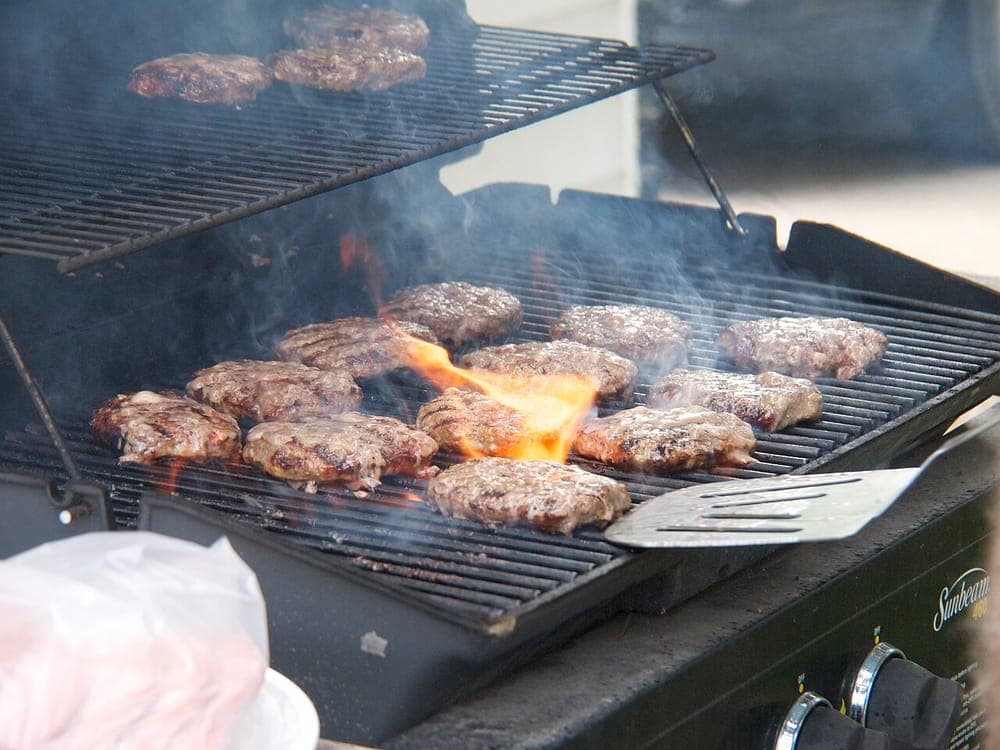 Blackstone 28" Original GriddleMost households Blackstone 28" Original GriddleMost households | Most households | 8.4 | Check price on Amazon |
| 2 | 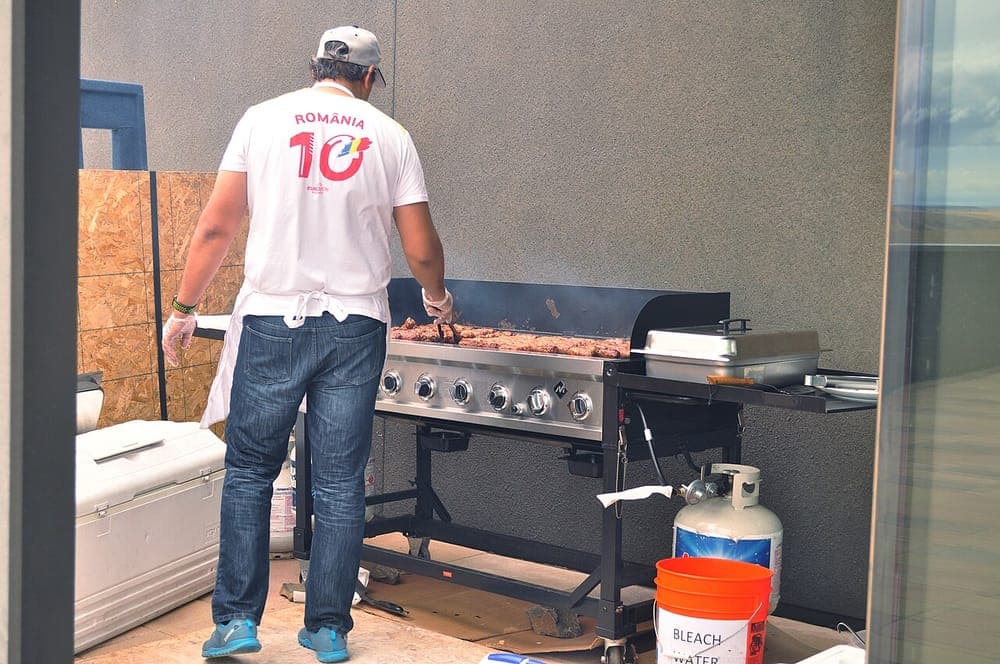 Pit Boss Deluxe 4-Burner GriddleRaw heat per square inch Pit Boss Deluxe 4-Burner GriddleRaw heat per square inch | Raw heat per square inch | 8.5 | Check price on Amazon |
| 3 | 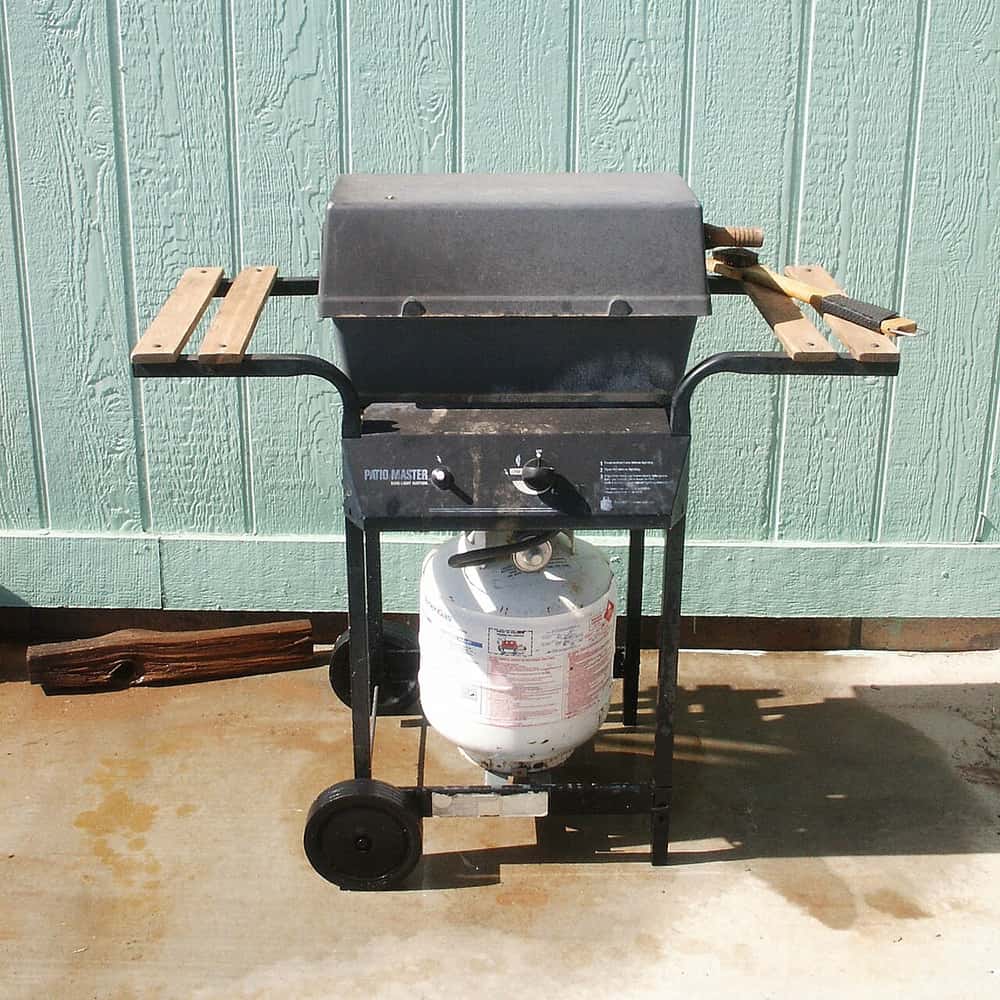 Steelmade Flat Top for Outdoor GrillTurning a gas grill into a griddle Steelmade Flat Top for Outdoor GrillTurning a gas grill into a griddle | Turning a gas grill into a griddle | 7.9 | Check price on Amazon |
| 4 | 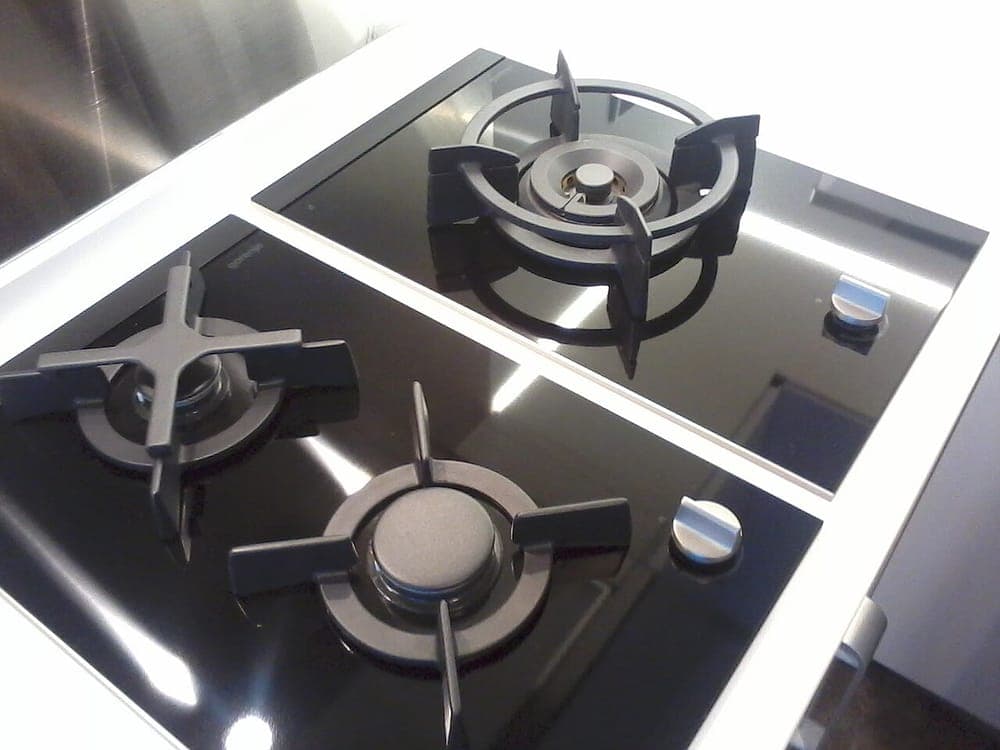 Steelmade PRO Series Flat Top (30" range)A flat top on a kitchen range Steelmade PRO Series Flat Top (30" range)A flat top on a kitchen range | A flat top on a kitchen range | 7.7 | Check price on Amazon |
#ad We publish no prices: there is no verified price feed on this site, so the retailer’s page is the only price. How this is funded
For a freestanding propane griddle, anything from about 3.4 mm (10 gauge) upward is workable and 4.7 mm is noticeably better; for a plate that sits on a grill or a range, buy 3/16 in (4.8 mm) at minimum and 3/8 in (9.5 mm) if your appliance can take the weight. Thickness buys thermal mass, and thermal mass is the only thing standing between a full load of cold food and a collapsed surface temperature.
Every published thickness, in one unit
Griddle listings quote thickness in three different systems — sheet-metal gauge, millimeters and fractional inches — which makes them look incomparable. They are not.
| Product | As published | In millimeters |
|---|---|---|
| Royal Gourmet PD1301 | 3.5 mm porcelain-enameled | 3.5 mm |
| Blackstone 28″ Original | 10-gauge rolled carbon steel | ~3.4 mm |
| Pit Boss Deluxe 4-Burner | 4.7 mm steel | 4.7 mm |
| Steelmade Flat Top for Outdoor Grill | 3/16 in | 4.8 mm |
| Steelmade PRO Junior | 5/16 in | 7.9 mm |
| Steelmade PRO Original | 3/8 in | 9.5 mm |
Two findings fall straight out of that table. Pit Boss’s 4.7 mm plate is about 38% thicker than the 10-gauge plate Blackstone describes as thicker than most griddles in its class — and it is essentially identical to Steelmade’s 3/16 in grill insert. And Steelmade’s PRO Original, at 9.5 mm, carries close to three times the steel of any freestanding griddle here.
Gauge numbers run backwards, and they are not a measurement
“10-gauge” is the single most confusing number in griddle listings, for two reasons.
First, gauge runs backwards: a lower number is a thicker plate. 10 gauge is thicker than 11, 14 or 16. If you are comparing two griddles and one says 10 gauge and the other says 14, the 10 is the heavier plate.
Second, gauge is a reference to a standard table rather than a dimension. On the manufacturers’ standard gauge for steel sheet, 10 gauge is 0.1345 in — 3.416 mm. A listing that says “10 gauge” and a listing that says “3.4 mm” are describing the same plate, and a listing that says “4.7 mm” is describing a meaningfully heavier one.
Be suspicious of any listing that quotes cooktop weight instead of thickness. Weight includes the frame, the rails and the grease channel, so it tells you nothing about the steel under the food.
What thickness actually does
A thick plate is not hotter. Peak temperature is set by the burners, not the steel — which is the heat density argument, and a separate specification.
What a thick plate does is resist change. Steel stores heat. When eight cold patties land on a thin plate, they pull heat out of the small amount of steel directly beneath them faster than the burner can replace it, and the surface temperature in that area falls off a cliff. Food that should be searing sits in released moisture instead, and you get a gray patty rather than a crust.
On a thick plate, the heat comes from the reservoir of steel around and below the food while the burner catches up. The surface temperature dips less and comes back faster.
This is why smash burgers are the test case for plate thickness and why thin plates are perfectly fine for pancakes. Pancake batter is warm, light and spread thin; it barely draws on the plate at all.
The two costs of a thick plate
Thickness is not free, and the trade-offs are predictable.
- Preheat time. More steel takes longer to come up to temperature. Allow longer before the first cook — how long by size and thickness.
- Weight. Steelmade publishes 62 lb for the PRO Original and 51 lb for the Junior. That is a two-handed lift at an awkward height, and on a range top it is a load your appliance has to be able to carry. Check that before buying, not after delivery.
A thicker plate is also harder to warp — the failure that ends a thin cooktop’s life, usually from cold water hitting a hot surface.
What to buy at each level
For a freestanding griddle, the Blackstone 28 at 10 gauge is the sensible floor and the Pit Boss Deluxe at 4.7 mm is the thickest freestanding plate here — which, combined with 62,000 BTU over 753 square inches, is also the highest heat density on this site at 82.3 BTU per square inch.
For a plate that uses an appliance you already own, Steelmade is the whole category: 3/16 in for an outdoor gas grill and 3/8 in for a kitchen range, which is the most thermally stable surface covered anywhere on this site.
The picks in detail
Specifications are linked to their source on every card. Scores are ours, derived from those specifications.
#1 · Most households
Blackstone 28" Original Griddle
The size most people should actually buy: 525 square inches and two zones covers a family of four with headroom, on a footprint that fits a normal patio.
#ad We publish no prices: there is no verified price feed on this site, so the retailer’s page is the only price. How this is funded
Key specifications
- Cooking area
- 525 sq in (28¾ × 18¼ in)
- Burners
- 2, stainless H-burners
- Total output
- 34,000 BTU
- Cooktop
- 10-gauge rolled carbon steel
- Ignition
- Piezo
- Zones
- 2, independently controlled
Specifications from BBQGuys spec sheet.
Scores
- Cooking area7.5
- Heat output7.0
- Zone control7.0
- Surface care6.5
- Portability5.0
What works
- The 10-gauge plate is thicker than most griddles at this size, which is what keeps temperature steady when cold food hits it
- Two zones is genuinely enough: one hot side for searing, one moderate side for holding
- Fits a standard patio and a standard cover, which the 36 often does not
What to know
- Only two zones — you cannot run a dedicated warming zone and two cooking temperatures at once
- 34,000 BTU over 525 sq in is modest heat density; recovery after a big load is slower than the 36
- Bare carbon steel needs seasoning and a cover, same as every Blackstone
#2 · Raw heat per square inch
Pit Boss Deluxe 4-Burner Griddle
62,000 BTU across 753 square inches — 82.3 BTU per square inch, the highest heat density of any griddle in this guide.
#ad We publish no prices: there is no verified price feed on this site, so the retailer’s page is the only price. How this is funded
Key specifications
- Cooking area
- 753 sq in (top 37 × 20 in)
- Burners
- 4, separately controlled stainless
- Total output
- 62,000 BTU
- Cooktop
- 4.7 mm steel, pre-seasoned with organic oil
- Portability
- Fold-and-go
- Includes
- Side shelves and lid
Specifications from Pit Boss product page.
Listings disagree: Sold as 753 sq in (model 10963) and 748 sq in (model 10942), both at 62,000 BTU.
Scores
- Cooking area9.5
- Heat output10.0
- Zone control9.5
- Surface care7.0
- Portability4.5
What works
- 82.3 BTU per square inch is the highest here — it recovers fastest when a full load of cold food goes down
- A 4.7 mm plate is thick for this price class, which is what buys you stable temperature
- Pre-seasoned with organic oil, so it is usable sooner than a bare plate
What to know
- Fold-and-go legs are less stable than a fixed cart under a loaded 753 sq in top
- The sibling SKU is listed at 748 sq in with a slightly different top — check which you are buying
- Still a steel top: seasoning and covering are on you
#3 · Turning a gas grill into a griddle
Steelmade Flat Top for Outdoor Grill
3/16-inch American steel that drops onto an existing gas grill — the maker states it is 50% thicker than most dedicated griddle tops.
#ad We publish no prices: there is no verified price feed on this site, so the retailer’s page is the only price. How this is funded
Key specifications
- Steel thickness
- 3/16 in
- Made in
- USA
- Drainage
- ½ in front drain holes along the front edge
- Fits
- An existing gas grill
- Surface
- Bare steel — needs seasoning
- Maker's claim
- 50% thicker than most dedicated griddles
Specifications from Steelmade product page.
Scores
- Cooking area6.0
- Heat output6.0
- Zone control5.5
- Surface care6.0
- Portability7.5
What works
- Thickness is the whole argument: a thicker plate holds temperature when cold food lands
- No new appliance, no new footprint, no second propane tank
- Front drain holes put the grease where you can reach it, unlike rear-drain griddles
What to know
- You lose your grill while the plate is on it
- Your grill's burners were designed for grates, not a solid plate — hot spots follow burner layout
- Bare steel: seasoning and rust prevention are entirely on you
#4 · A flat top on a kitchen range
Steelmade PRO Series Flat Top (30" range)
3/8-inch steel at roughly 62 lb, sized for a 30-inch gas or electric coil range — a genuine indoor flat top rather than a griddle pan.
#ad We publish no prices: there is no verified price feed on this site, so the retailer’s page is the only price. How this is funded
Key specifications
- Steel thickness
- 3/8 in
- Weight
- ~62.0 lb
- Fits
- 30 in gas or electric coil range
- Surface
- Bare steel — needs seasoning
- Format
- Range-top insert
- Made in
- USA
Specifications from Steelmade product page.
Scores
- Cooking area5.5
- Heat output5.5
- Zone control5.0
- Surface care6.0
- Portability3.0
What works
- 3/8 in is thicker than any freestanding griddle top in this guide — it is the most stable surface here
- Turns an existing range into an indoor flat top without a new appliance or a propane tank
- No outdoor storage, no cover, no weather exposure
What to know
- 62 lb on a range top is a serious load — check your range can take it before buying
- Needs real kitchen ventilation; a flat top produces a lot of smoke
- Covers your burners, so it is the whole cooktop while it is on
Common questions
How thick should a griddle be?
How thick is a Blackstone griddle?
Is a thicker griddle better?
Does a thicker griddle take longer to heat up?
Sources
Every specification on this page came from one of these. If you find one of them has changed, tell us and we will correct it.
- Metal Supermarkets — sheet metal gauge chart (10 gauge steel = 0.1345 in / 3.416 mm)
- BBQGuys — Blackstone 28" (10-gauge rolled carbon steel)
- Pit Boss — Deluxe 4-Burner (4.7 mm cooktop)
- Steelmade — Flat Top for Outdoor Grill (3/16 in)
- Steelmade — PRO Series Flat Top for 30" range (3/8 in, ~62 lb)
- Home Depot — Royal Gourmet PD1301 (3.5 mm porcelain-enameled steel)
Read next
Griddle cooktop materials
Bare steel, rust-resistant steel, ceramic coating and porcelain enamel compared on cooking, maintenance and lifespan.
Griddle BTU, explained
Why total BTU is close to meaningless, how heat density reorders the category, and which griddles actually recover under load.

How long does a griddle take to heat up?
Why thick plates and big plates take longer, the water-drop test, and the cost of cooking on a plate that is still climbing.
Griddle warping
What causes warping, why it is permanent, how to live with it, and which specs resist it.
Steelmade Flat Top
3/16 to 3/8 inch American steel plates for gas grills and 30-inch ranges. Thicker than any freestanding griddle cooktop here.
The best griddle plates for gas grills
Steel griddle inserts for gas grills and ranges, compared on thickness, drainage and what you give up.