How long does a griddle last?
The steel will outlive you. Everything bolted to it will not, and one cheap accessory decides which story you get.

We earn a commission if you buy through our links, at no extra cost to you. That is how this site is paid for, and it does not decide what we recommend — full disclosure.
Quick picks
Ranked on published specifications using our scoring rubric. Tap a row for the full write-up.
| # | Product | Best for | Score | Price |
|---|---|---|---|---|
| 1 | 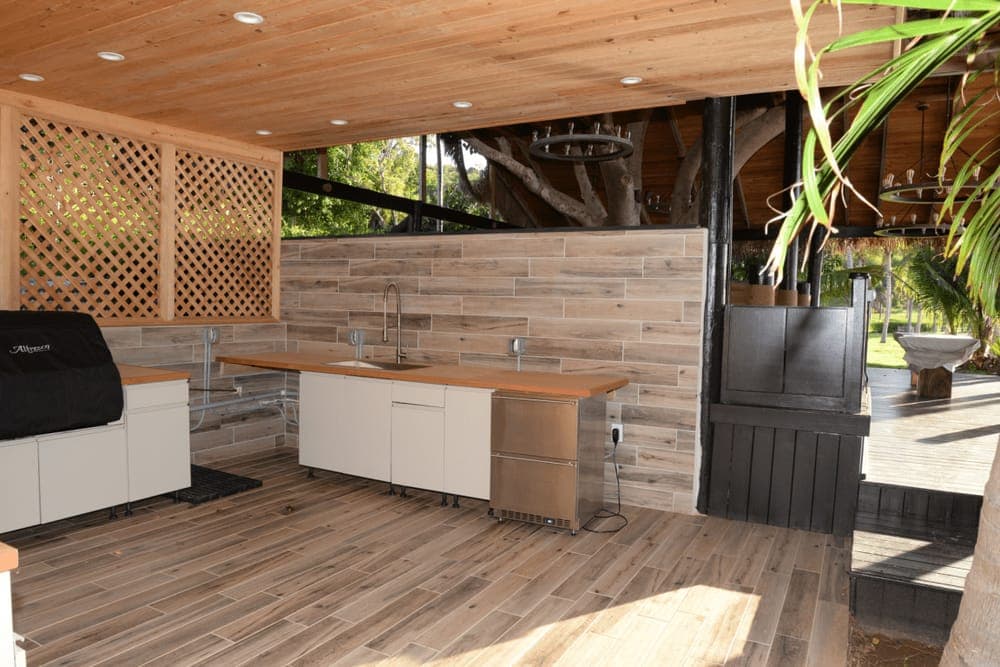 Griddle Cover (match your width)The single cheapest way to stop rust Griddle Cover (match your width)The single cheapest way to stop rust | The single cheapest way to stop rust | 8.9 | Check price on Amazon |
| 2 | Griddle Hard Cover / HoodRain, and roasting | Rain, and roasting | 8.1 | Check price on Amazon |
| 3 |  Griddle Seasoning & ConditionerA convenient blend, not a magic one Griddle Seasoning & ConditionerA convenient blend, not a magic one | A convenient blend, not a magic one | 7.6 | Check price on Amazon |
| 4 | 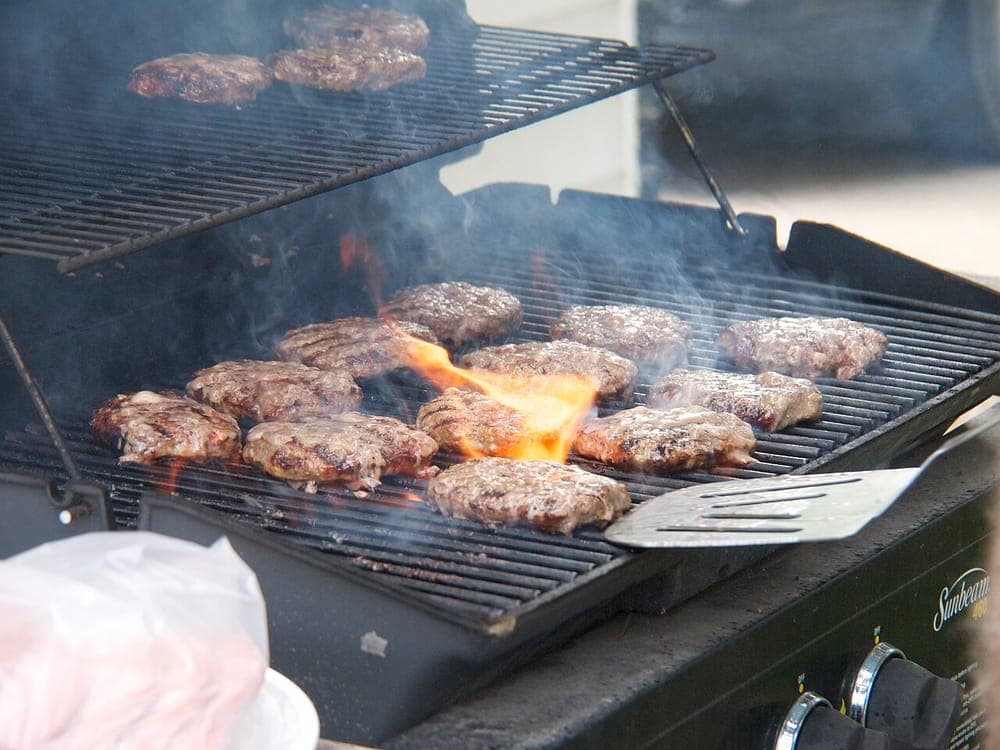 Blackstone 28" Original GriddleMost households Blackstone 28" Original GriddleMost households | Most households | 8.4 | Check price on Amazon |
#ad We publish no prices: there is no verified price feed on this site, so the retailer’s page is the only price. How this is funded
A griddle’s cooktop is the part least likely to end its life. What fails first is the igniter, then the regulator and hose, then the burners, then the cart — and a griddle is usually retired not because something broke but because the surface was left to rust or the part is no longer available. Which means the honest answer is: as long as you cover it and as long as the brand still sells parts for it.
What fails, in order
| Part | Why it fails | Replaceable? |
|---|---|---|
| Igniter | Moisture and grease at the electrode | Yes, cheaply — and a lighter works meanwhile |
| Regulator and hose | Perishing, rodent damage, a tripped limiter mistaken for failure | Yes — use the correct part for the model |
| Burner tubes | Corrosion from inside, blocked ports, insect nests | Yes, if the brand stocks them |
| Grease tray and cup | Corrosion, warping from heat, being left full | Usually |
| Cart, shelves, casters | Rust at welds and fasteners, hardware loosening | Rarely sold separately |
| Cooktop | Rust-through from long neglect, or warping | Sometimes, on the larger brands |
Notice the pattern: everything above the cooktop is an ordinary serviceable part, and every failure mode on the list has moisture in it somewhere.
The cooktop is not the weak point — unless you let it be
Carbon steel does not wear out from cooking. A seasoned plate gets better with use, because every fatty cook lays down another micro-layer, and a plate that has been badly abused can usually be stripped back and brought back to a working surface.
Two things genuinely kill a cooktop. The first is rust-through — years of being stored uncovered and unoiled, usually starting at the grease channel and the corners where water sits. The second is warping, which is a thermal-shock failure, typically from cold water hitting a hot plate.
Coated surfaces are the exception and they fail differently. A ceramic or non-stick cooktop is a wear part: it cannot be re-seasoned, so when its release goes you are buying a replacement plate or living with a sticky one. That is the trade examined in Pit Boss vs Weber Slate.
The cover is the single highest-leverage purchase
Nothing else on this site changes a griddle’s lifespan as much as a cover matched to its width, and nothing else is as cheap.
Three details decide whether a cover helps or hurts. It must be vented, or it traps the moisture it was bought to keep out and holds it against the steel. It must be strapped or cinched, or wind lifts it off and you find out in November. And it must match the griddle’s width and whether it has a hood, because a hood changes the height. Covers by size and burner count.
A hinged hood or a lift-off hard cover adds a second layer directly over the plate — worth having in genuinely wet climates, and the two are not interchangeable. Neither replaces a soft cover over the whole cart.
The rest of longevity is the sixty-second routine: scrape while hot, steam-lift with water, dry, and lay on the thinnest possible film of oil or conditioner. The prevention routine in full — and note that a thick coat of oil is worse than none, because it stays tacky and then flakes rather than curing.
Parts availability is the real lifespan
This is the factor buyers weigh least and should weigh most, because it is the difference between a twenty-minute repair in year five and a new griddle.
Blackstone’s parts and accessory availability is the deepest in the category — covers, hoods, replacement cooktops, burner assemblies and regulators across its sizes, from the manufacturer and a large third-party market. That is the single best argument for the brand and it has nothing to do with how it cooks.
Club-store and store-brand griddles sit at the other end. A griddle sold under a retailer’s own label may be well built and still be unsupported in four years, because the model line is refreshed and the parts are not stocked.
Before buying, search for a replacement burner and a replacement cooktop for the exact model. If neither exists today, neither will exist when you need it.
Is that long enough to be worth it?
A covered, oiled griddle from a brand that still sells parts is a long-term appliance; an uncovered one on an exposed patio is a two-season purchase. The variable is almost entirely you.
If you cook occasionally and know you will not keep up a routine, buy that honesty into the hardware: a rust-resistant cooktop tolerates neglect that destroys bare steel, which is the whole point of Blackstone vs Weber Slate. And if the underlying question is whether to buy one at all, we answered that separately.
The picks in detail
Specifications are linked to their source on every card. Scores are ours, derived from those specifications.
#1 · The single cheapest way to stop rust
Griddle Cover (match your width)
The accessory that decides whether a bare-steel griddle survives its first wet season — buy it sized to your griddle's width, not approximately.
#ad We publish no prices: there is no verified price feed on this site, so the retailer’s page is the only price. How this is funded
Key specifications
- Match on
- Griddle width: 17, 22, 28 or 36 in
- Also match
- Hood vs no hood — a hood changes the height
- Critical feature
- Vents, so trapped moisture can escape
- Critical feature
- Straps or a cinch, or wind lifts it off
- What fails first
- Seams and the elastic hem
- Common mistake
- A cover that fits loosely holds water against the top
Scores
- Fit9.0
- Durability7.0
- Rust protection9.5
- Value9.0
What works
- A vented, correctly sized cover prevents more griddle deaths than any other single purchase
- Cheap relative to the surface it protects
- Works with the hard cover rather than instead of it — the hard cover keeps rain off the plate, the soft cover keeps it off the cart
What to know
- An unvented cover is worse than no cover: it traps condensation against bare steel
- Sizes are not interchangeable between brands even at the same stated width
- Covers are consumables — UV destroys them in a few seasons
#2 · Rain, and roasting
Griddle Hard Cover / Hood
A hinged hood does two jobs a soft cover cannot: it keeps rain off the plate between cooks and it traps heat so you can roast rather than only sear.
#ad We publish no prices: there is no verified price feed on this site, so the retailer’s page is the only price. How this is funded
Key specifications
- Two types
- Hinged hood (stays on) vs lift-off hard cover
- Hood enables
- Trapped-heat cooking — roasting, melting, reheating
- Hard cover enables
- Flat storage and stacking
- Match on
- Griddle width and generation — mounts changed between model years
- Not a substitute for
- A soft cover over the whole cart
- Watch for
- Hood clearance under a low patio roof or overhang
Scores
- Weather protection8.5
- Cooking benefit8.5
- Fit6.5
- Value8.0
What works
- A hood turns a griddle into something that can finish thick food without burning the outside
- Rain protection between cooks without wrestling a fabric cover
- Makes the griddle usable in light weather
What to know
- Adds height, which matters under a low overhang and for cover fit
- Hinged hoods trap grease vapor and need their own cleaning
- Mounts are model-year specific, so a used hood may not fit
#3 · A convenient blend, not a magic one
Griddle Seasoning & Conditioner
A blended conditioner is a reasonable convenience, but it does nothing a high-smoke-point oil applied thinly does not already do.
#ad We publish no prices: there is no verified price feed on this site, so the retailer’s page is the only price. How this is funded
Key specifications
- What it is
- A blend of oils and waxes with a high smoke point
- What it does
- The same polymerization any seasoning oil does
- Real advantage
- Consistency and a usable application viscosity
- Alternative
- Grapeseed, canola or avocado oil applied very thinly
- Application rule
- Thin to the point of looking dry, then heat until it stops smoking
- Common mistake
- Too much product — thick coats stay sticky and then flake
Specifications from Blackstone accessories.
Scores
- Effectiveness8.0
- Convenience8.5
- Smoke point8.5
- Value6.5
What works
- Formulated to the right viscosity, which makes a genuinely thin coat easy
- One product for seasoning and post-cook conditioning
- Removes the guesswork about smoke point
What to know
- Costs considerably more per application than a bottle of grapeseed oil
- Does not chemically do anything a suitable oil does not
- Marketed as a requirement; it is a convenience
#4 · Most households
Blackstone 28" Original Griddle
The size most people should actually buy: 525 square inches and two zones covers a family of four with headroom, on a footprint that fits a normal patio.
#ad We publish no prices: there is no verified price feed on this site, so the retailer’s page is the only price. How this is funded
Key specifications
- Cooking area
- 525 sq in (28¾ × 18¼ in)
- Burners
- 2, stainless H-burners
- Total output
- 34,000 BTU
- Cooktop
- 10-gauge rolled carbon steel
- Ignition
- Piezo
- Zones
- 2, independently controlled
Specifications from BBQGuys spec sheet.
Scores
- Cooking area7.5
- Heat output7.0
- Zone control7.0
- Surface care6.5
- Portability5.0
What works
- The 10-gauge plate is thicker than most griddles at this size, which is what keeps temperature steady when cold food hits it
- Two zones is genuinely enough: one hot side for searing, one moderate side for holding
- Fits a standard patio and a standard cover, which the 36 often does not
What to know
- Only two zones — you cannot run a dedicated warming zone and two cooking temperatures at once
- 34,000 BTU over 525 sq in is modest heat density; recovery after a big load is slower than the 36
- Bare carbon steel needs seasoning and a cover, same as every Blackstone
Common questions
How long does a griddle last?
What usually breaks first on a griddle?
Will a cover really make a griddle last longer?
Can you replace a griddle cooktop?
Sources
Every specification on this page came from one of these. If you find one of them has changed, tell us and we will correct it.
Read next
How to stop a griddle rusting
The oil-and-cover routine, why vents matter more than people think, and how to store a griddle over a wet season.
Can you leave a griddle outside?
Rain, winter and a griddle that lives on the patio: what rusts first, and the vented-cover rule that prevents it.
Griddle covers, by size and burner count
Covers sized by width, hood configuration and burner count, why vents are non-negotiable, and what wears out first.
Are flat-top griddles worth it?
What a griddle genuinely wins at, what it loses at, the ongoing costs nobody mentions, and who should not buy one.
Griddle warping
What causes warping, why it is permanent, how to live with it, and which specs resist it.
Blackstone vs Weber Slate
The category's defining comparison: bare carbon steel and more heat, against a rust-resistant top that forgives neglect.