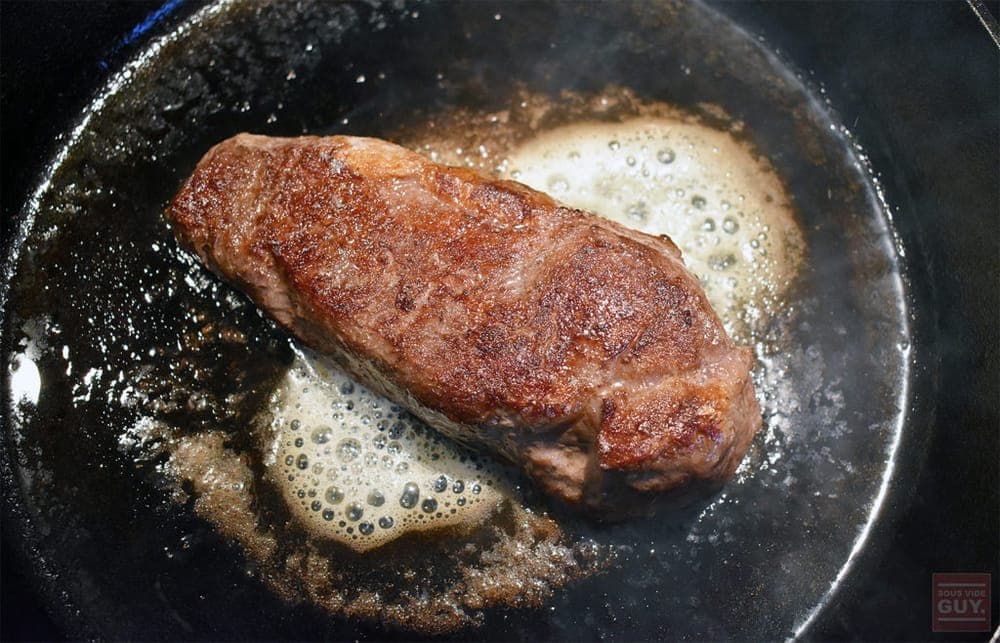
Steak on a griddle
Grill marks are bars of browning separated by bars of nothing. A griddle browns the whole face.
We earn a commission if you buy through our links, at no extra cost to you. That is how this site is paid for, and it does not decide what we recommend — full disclosure.
Quick picks
Ranked on published specifications using our scoring rubric. Tap a row for the full write-up.
| # | Product | Best for | Score | Price |
|---|---|---|---|---|
| 1 | 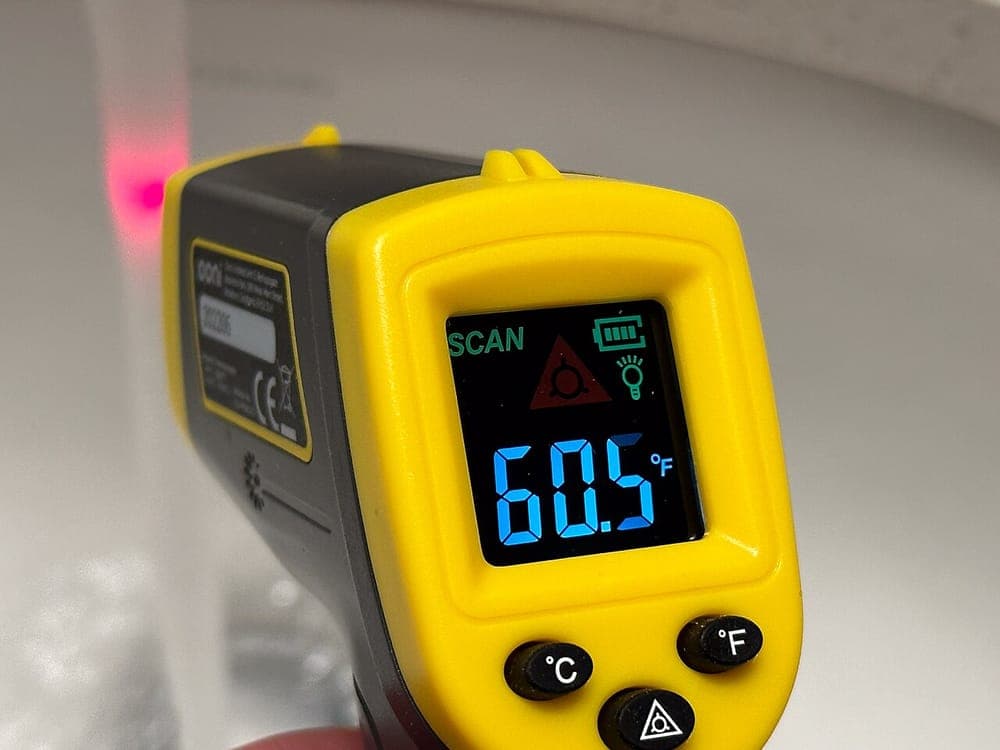 Infrared Surface ThermometerKnowing what your plate is actually doing Infrared Surface ThermometerKnowing what your plate is actually doing | Knowing what your plate is actually doing | 8.3 | Check price on Amazon |
| 2 | 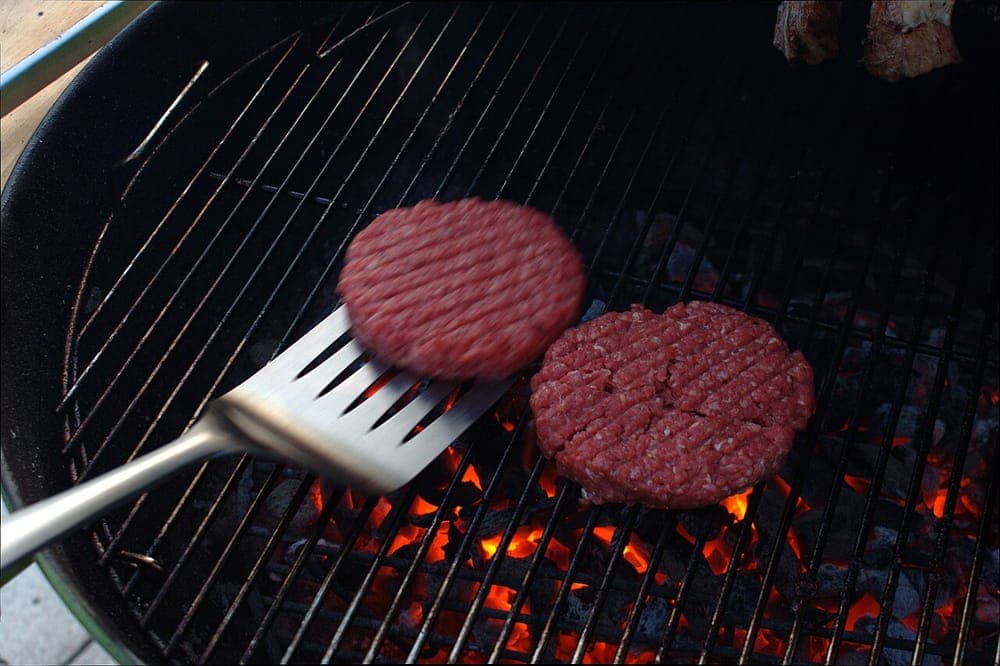 Griddle Spatula PairThe two tools you actually use Griddle Spatula PairThe two tools you actually use | The two tools you actually use | 8.7 | Check price on Amazon |
| 3 |  Traeger Flatrock 2-Zone GriddleSmall-space searing Traeger Flatrock 2-Zone GriddleSmall-space searing | Small-space searing | 8.2 | Check price on Amazon |
#ad We publish no prices: there is no verified price feed on this site, so the retailer’s page is the only price. How this is funded
The case for a flat top
Grill marks look like searing and are mostly its absence. The dark bars are where the grate touched; the pale areas between them are not browned at all.
A griddle browns the entire face. More Maillard reaction means more flavor — and the trade is that you lose the vaporized-fat flavor a grill produces, which is real and which some people prefer.
It is a genuine trade rather than an upgrade. The flat top wins on crust; the grill wins on smoke. The full comparison.
The method
- Dry the surface properly. Pat it dry, and for a thicker steak leave it uncovered in the fridge for a few hours. Surface moisture has to boil off before browning starts, and that time is time the inside is cooking.
- Temper it for 30–45 minutes out of the fridge. A fridge-cold steak draws far more heat out of the plate.
- Salt in advance — either well ahead (40+ minutes, so the moisture it draws is reabsorbed) or immediately before. The window in between is the worst time.
- Plate at 450–500 °F. This is the one cook where heat density matters as much as it does for smash burgers.
- Minimal oil, high smoke point. The steak brings its own fat.
- Down, and leave it. 2–3 minutes without moving it. Crust needs undisturbed contact.
- Flip once. Another 2–3 minutes.
- Sear the fat cap by holding the steak on its edge with tongs. Easy on a flat surface and impossible on a grate.
- Move to a cooler zone to finish if it is thick, rather than continuing on the searing zone.
- Rest 5–10 minutes.
Which cuts suit a griddle
Good: ribeye (fat renders onto the plate and fries the crust), New York strip, sirloin, flank and skirt (thin, fast, maximum surface area), flat iron, hanger.
Less good: very thick cuts over about 1½ inches, which want indirect heat; bone-in cuts, where the bone keeps the meat off the plate; filet, which has little fat and benefits less from a full-face crust.
The pattern: thinner and fattier favors the griddle.
Butter basting, which a griddle makes awkward
The classic pan technique — butter, garlic, thyme, spooned over — relies on fat pooling, and a flat top is designed so fat runs away.
Two workarounds: use the slight dish most plates have in the middle, or add butter in the last thirty seconds and work quickly. It will never be a pan, and that is fine — the crust is the reason you are here.
Doneness
Use a probe thermometer, not time. Pull 5 °F below target since it carries over while resting.
Note this is the one griddle task where an infrared thermometer is the wrong tool — it reads surfaces. You want a probe for the inside and an infrared for the plate.
When to use the grill instead
- Anything over about 1½ inches, which needs indirect heat.
- Bone-in cuts.
- When smoke is what you actually want.
- Very fatty cuts where you would rather the fat drained away.
A combo or a plate on your existing grill gives you both options.
The picks in detail
Specifications are linked to their source on every card. Scores are ours, derived from those specifications.
#1 · Knowing what your plate is actually doing
Infrared Surface Thermometer
The only way to know a griddle's real surface temperature — and the fastest way to find the hot spots every griddle has.
#ad We publish no prices: there is no verified price feed on this site, so the retailer’s page is the only price. How this is funded
Key specifications
- Type
- Infrared, non-contact — not a probe thermometer
- Range needed
- At least 100–600 °F
- Use
- Read several points; a griddle is never one temperature
- Limitation
- Reads surfaces, not the inside of food
- Accuracy caveat
- Shiny bare steel reads low; a seasoned plate reads true
- Pairs with
- A probe thermometer for doneness
Scores
- Usefulness9.0
- Accuracy7.5
- Range8.0
- Value8.5
What works
- Turns 'medium heat' from a guess into a number
- Finding your plate's hot spots takes about 30 seconds and changes how you cook on it forever
- Non-contact, so there is nothing to clean
What to know
- Reads surface only — it cannot tell you a burger is done
- Emissivity error on bare, shiny steel can read 50 °F or more low
- One more battery device living near a hot griddle
#2 · The two tools you actually use
Griddle Spatula Pair
Two stiff, wide, bevelled-edge spatulas do 90% of griddle work — everything beyond that in a 30-piece kit is storage clutter.
#ad We publish no prices: there is no verified price feed on this site, so the retailer’s page is the only price. How this is funded
Key specifications
- What matters
- Blade stiffness — a flexible blade cannot lift a stuck smash burger
- What matters
- A bevelled front edge that gets under fond
- Width
- Wide enough to carry a whole patty, narrow enough to turn in a crowd
- Quantity
- Two — one to lift, one to steady
- Handle
- Riveted, not glued
- What fails first
- The handle rivet and the blade's leading edge
Scores
- Stiffness9.0
- Edge9.0
- Handle7.5
- Value8.5
What works
- A stiff bevelled blade is the difference between turning a smash burger and destroying one
- Two spatulas lets you work food against itself rather than against the plate
- Stainless blades can be scraped and scrubbed without degrading
What to know
- Thin, flexible 'griddle' spatulas sold in big kits are the wrong tool and are what most kits contain
- Long handles get in the way on a tabletop griddle
- Riveted handles collect grease at the joint
#3 · Small-space searing
Traeger Flatrock 2-Zone Griddle
468 square inches at 76.9 BTU per square inch — less surface than a Blackstone 28 but considerably more heat behind it.
#ad We publish no prices: there is no verified price feed on this site, so the retailer’s page is the only price. How this is funded
Key specifications
- Cooking area
- 468 sq in (cooktop 26 × 18 in)
- Burners
- 2 (insulated zones)
- Total output
- 36,000 BTU
- Cooktop
- Carbon steel
- Zones
- 2, insulated
- Format
- Cart
Specifications from Abt spec sheet.
Scores
- Cooking area6.5
- Heat output9.0
- Zone control7.5
- Surface care6.5
- Portability5.0
What works
- Same 36,000 BTU as a Weber Slate 30 across 72 fewer square inches — it sears noticeably harder
- Insulated zone separation in a two-burner body, which rivals do not offer
- A genuinely small footprint for a cart griddle
What to know
- 468 sq in is tight for more than four people
- Two zones only — no dedicated holding area
- Carbon steel maintenance, like the 3-zone
Common questions
Can you cook steak on a flat-top griddle?
What temperature for steak on a griddle?
Which steak cuts work best on a griddle?
Can you butter-baste a steak on a griddle?
Sources
Every specification on this page came from one of these. If you find one of them has changed, tell us and we will correct it.
Read next

Griddle temperature chart
Temperatures for everything you cook on a flat top, the reasoning behind each, and how to check without a thermometer.
Griddle vs grill
What a flat top does better than a grate and vice versa, with the foods that decide it — and the cheapest way to have both.
Griddle thermometers
Why infrared beats a probe for griddles, what range you need, and the emissivity error that reads bare steel low.
Smash burgers on a griddle
The complete smash burger method, why each step is what it is, and the five mistakes that produce gray patties.
The best griddles for smash burgers
Griddles ranked for smash burgers by heat density — the spec that decides whether a cold patty sears or steams.

Griddle vs plancha
What 'plancha' actually implies about thickness, heat and technique — and when the distinction matters to a buyer.