Griddle vs plancha
Two names for a flat cooking plate, with real differences in what each word tends to imply.

We earn a commission if you buy through our links, at no extra cost to you. That is how this site is paid for, and it does not decide what we recommend — full disclosure.
Quick picks
Ranked on published specifications using our scoring rubric. Tap a row for the full write-up.
| # | Product | Best for | Score | Price |
|---|---|---|---|---|
| 1 | 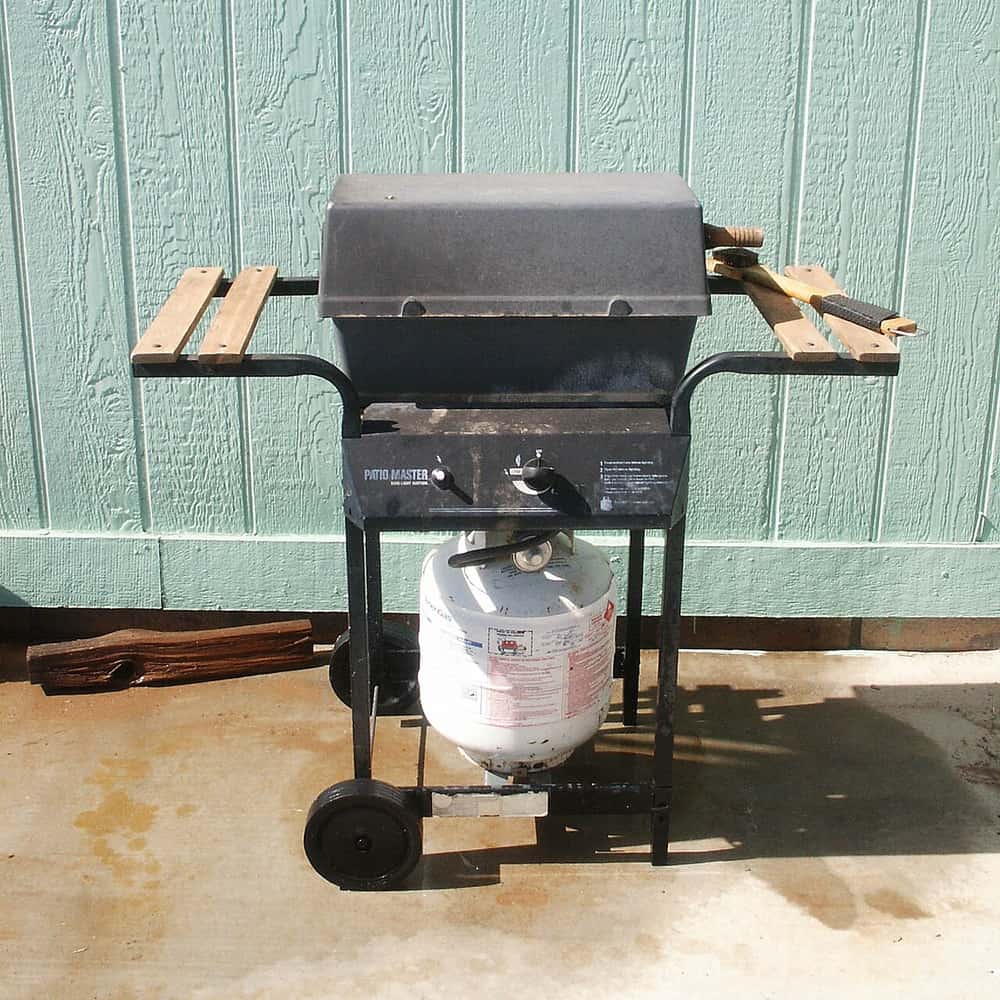 Steelmade Flat Top for Outdoor GrillTurning a gas grill into a griddle Steelmade Flat Top for Outdoor GrillTurning a gas grill into a griddle | Turning a gas grill into a griddle | 7.9 | Check price on Amazon |
| 2 |  Blackstone 28" Original GriddleMost households Blackstone 28" Original GriddleMost households | Most households | 8.4 | Check price on Amazon |
| 3 |  Traeger Flatrock 2-Zone GriddleSmall-space searing Traeger Flatrock 2-Zone GriddleSmall-space searing | Small-space searing | 8.2 | Check price on Amazon |
#ad We publish no prices: there is no verified price feed on this site, so the retailer’s page is the only price. How this is funded
Start with the honest answer
A plancha is a flat metal cooking plate heated from below. So is a griddle. In the strictest sense they are the same appliance, and a lot of marketing uses the words interchangeably.
But the words carry different connotations, and those connotations map onto real differences in how the equipment is usually built and used. Worth knowing before you buy something labeled one or the other.
What “plancha” tends to imply
- A thicker plate. Planchas are typically heavy, often in the range of the thick steel inserts rather than the rolled plate on a mass-market griddle. Thickness means thermal mass, and thermal mass means the surface barely moves when food lands.
- Higher working temperatures. The plancha tradition is very hot, very fast cooking — prawns, squid, thin cuts, vegetables — rather than the broad moderate heat of a diner griddle.
- Little or no grease channel. Many planchas drain to a simple front lip or not at all, because the cooking style produces less rendered fat than bacon and burgers.
- A smaller surface. Often a plate rather than a full cooking station.
What “griddle” tends to imply in the US market
- A full cooking station: cart, shelves, tank holder, grease management.
- A rolled steel plate of moderate thickness — 10-gauge to about 4.7 mm.
- Multiple independently controlled zones.
- A cooking style built around broad moderate heat and volume: breakfast, smash burgers, fajitas.
Does the distinction matter when buying?
Mostly not. Judge the equipment on specifications rather than on the word in the product name: plate thickness, heat per square inch, zone count and drainage.
Where the word is a genuine signal is thickness. If something is sold as a plancha, it is reasonable to expect a heavier plate — and if it is not heavier, the name is doing marketing work rather than describing the product.
If plancha-style cooking is what you want
You want maximum thermal mass above all. In our guide that points at the thick steel plates: 3/16 to 3/8 inch, which is considerably heavier than any freestanding griddle cooktop here.
A plate like that over a gas grill or a gas range gives you a genuinely plancha-like surface at a fraction of the cost of an imported plancha unit. Plates for gas grills.
If you want it in a freestanding griddle, prioritize heat density and plate thickness together: the Pit Boss Deluxe (82.3 BTU per square inch on a 4.7 mm plate) and the Traeger Flatrock 2-Zone (76.9) are the closest in behavior.
The terminology trap
Be careful with “plancha” used as a premium word on a thin plate. Thickness is checkable and the name is not, so check the thickness. How thickness and material interact.
The picks in detail
Specifications are linked to their source on every card. Scores are ours, derived from those specifications.
#1 · Turning a gas grill into a griddle
Steelmade Flat Top for Outdoor Grill
3/16-inch American steel that drops onto an existing gas grill — the maker states it is 50% thicker than most dedicated griddle tops.
#ad We publish no prices: there is no verified price feed on this site, so the retailer’s page is the only price. How this is funded
Key specifications
- Steel thickness
- 3/16 in
- Made in
- USA
- Drainage
- ½ in front drain holes along the front edge
- Fits
- An existing gas grill
- Surface
- Bare steel — needs seasoning
- Maker's claim
- 50% thicker than most dedicated griddles
Specifications from Steelmade product page.
Scores
- Cooking area6.0
- Heat output6.0
- Zone control5.5
- Surface care6.0
- Portability7.5
What works
- Thickness is the whole argument: a thicker plate holds temperature when cold food lands
- No new appliance, no new footprint, no second propane tank
- Front drain holes put the grease where you can reach it, unlike rear-drain griddles
What to know
- You lose your grill while the plate is on it
- Your grill's burners were designed for grates, not a solid plate — hot spots follow burner layout
- Bare steel: seasoning and rust prevention are entirely on you
#2 · Most households
Blackstone 28" Original Griddle
The size most people should actually buy: 525 square inches and two zones covers a family of four with headroom, on a footprint that fits a normal patio.
#ad We publish no prices: there is no verified price feed on this site, so the retailer’s page is the only price. How this is funded
Key specifications
- Cooking area
- 525 sq in (28¾ × 18¼ in)
- Burners
- 2, stainless H-burners
- Total output
- 34,000 BTU
- Cooktop
- 10-gauge rolled carbon steel
- Ignition
- Piezo
- Zones
- 2, independently controlled
Specifications from BBQGuys spec sheet.
Scores
- Cooking area7.5
- Heat output7.0
- Zone control7.0
- Surface care6.5
- Portability5.0
What works
- The 10-gauge plate is thicker than most griddles at this size, which is what keeps temperature steady when cold food hits it
- Two zones is genuinely enough: one hot side for searing, one moderate side for holding
- Fits a standard patio and a standard cover, which the 36 often does not
What to know
- Only two zones — you cannot run a dedicated warming zone and two cooking temperatures at once
- 34,000 BTU over 525 sq in is modest heat density; recovery after a big load is slower than the 36
- Bare carbon steel needs seasoning and a cover, same as every Blackstone
#3 · Small-space searing
Traeger Flatrock 2-Zone Griddle
468 square inches at 76.9 BTU per square inch — less surface than a Blackstone 28 but considerably more heat behind it.
#ad We publish no prices: there is no verified price feed on this site, so the retailer’s page is the only price. How this is funded
Key specifications
- Cooking area
- 468 sq in (cooktop 26 × 18 in)
- Burners
- 2 (insulated zones)
- Total output
- 36,000 BTU
- Cooktop
- Carbon steel
- Zones
- 2, insulated
- Format
- Cart
Specifications from Abt spec sheet.
Scores
- Cooking area6.5
- Heat output9.0
- Zone control7.5
- Surface care6.5
- Portability5.0
What works
- Same 36,000 BTU as a Weber Slate 30 across 72 fewer square inches — it sears noticeably harder
- Insulated zone separation in a two-burner body, which rivals do not offer
- A genuinely small footprint for a cart griddle
What to know
- 468 sq in is tight for more than four people
- Two zones only — no dedicated holding area
- Carbon steel maintenance, like the 3-zone
Common questions
What is the difference between a griddle and a plancha?
Is a plancha better than a griddle?
How do I get plancha-style cooking from a griddle?
Sources
Every specification on this page came from one of these. If you find one of them has changed, tell us and we will correct it.
Read next
Griddle cooktop materials
Bare steel, rust-resistant steel, ceramic coating and porcelain enamel compared on cooking, maintenance and lifespan.
Steelmade Flat Top
3/16 to 3/8 inch American steel plates for gas grills and 30-inch ranges. Thicker than any freestanding griddle cooktop here.
The best griddle plates for gas grills
Steel griddle inserts for gas grills and ranges, compared on thickness, drainage and what you give up.
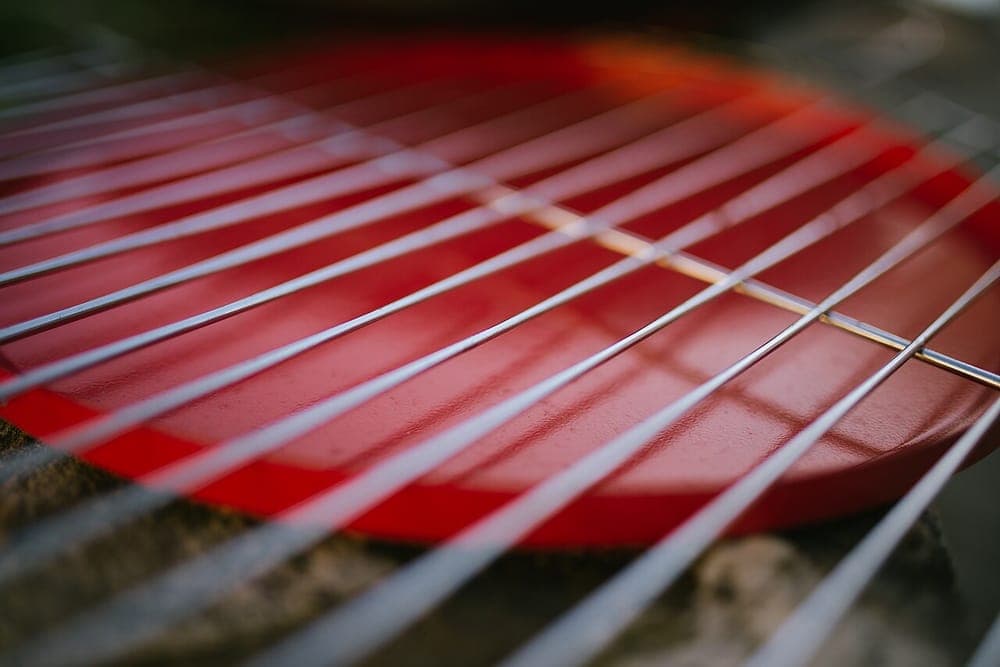
Griddle vs grill
What a flat top does better than a grate and vice versa, with the foods that decide it — and the cheapest way to have both.
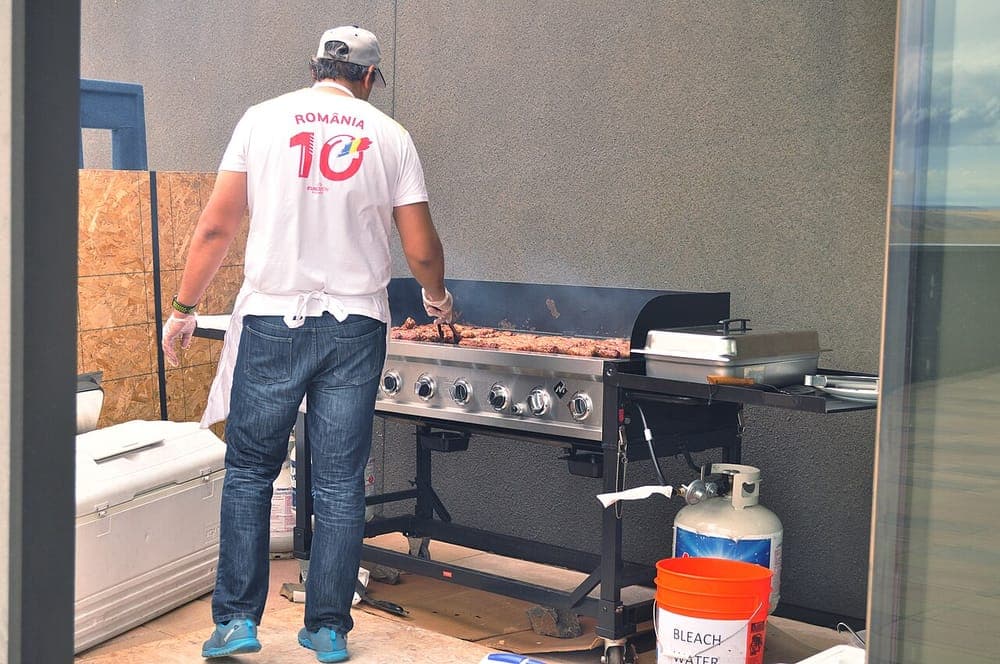
Pit Boss Deluxe 4-Burner
753 square inches, 62,000 BTU, a 4.7 mm pre-seasoned steel plate. The highest heat density in the guide.
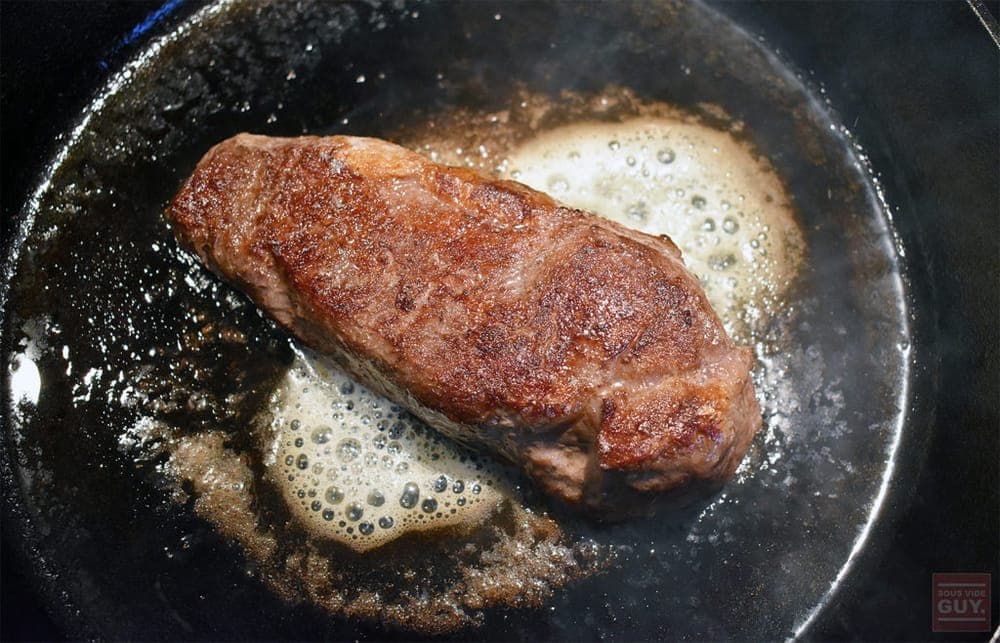
Steak on a griddle
Why full-contact searing beats grill marks on flavor, the method, which cuts suit a flat top, and when to use a grill instead.