Camp Chef vs Weber Slate
Identical heat output, 22% different heat density, and one of them swaps its plate for grill grates.
We earn a commission if you buy through our links, at no extra cost to you. That is how this site is paid for, and it does not decide what we recommend — full disclosure.
Quick picks
Ranked on published specifications using our scoring rubric. Tap a row for the full write-up.
| # | Product | Best for | Score | Price |
|---|---|---|---|---|
| 1 | Camp Chef Flat Top Grill 600People who want a grill and a griddle | People who want a grill and a griddle | 8.3 | Check price on Amazon |
| 2 | 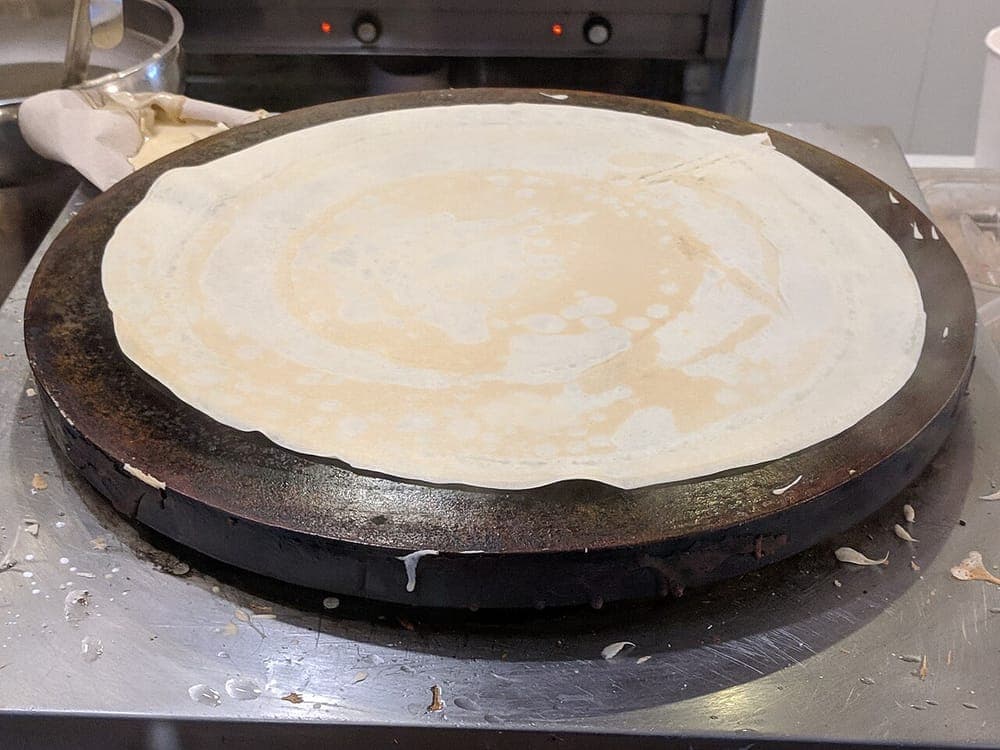 Weber Slate 36" GriddleLarge cooks who do not want to babysit the surface Weber Slate 36" GriddleLarge cooks who do not want to babysit the surface | Large cooks who do not want to babysit the surface | 8.7 | Check price on Amazon |
| 3 | 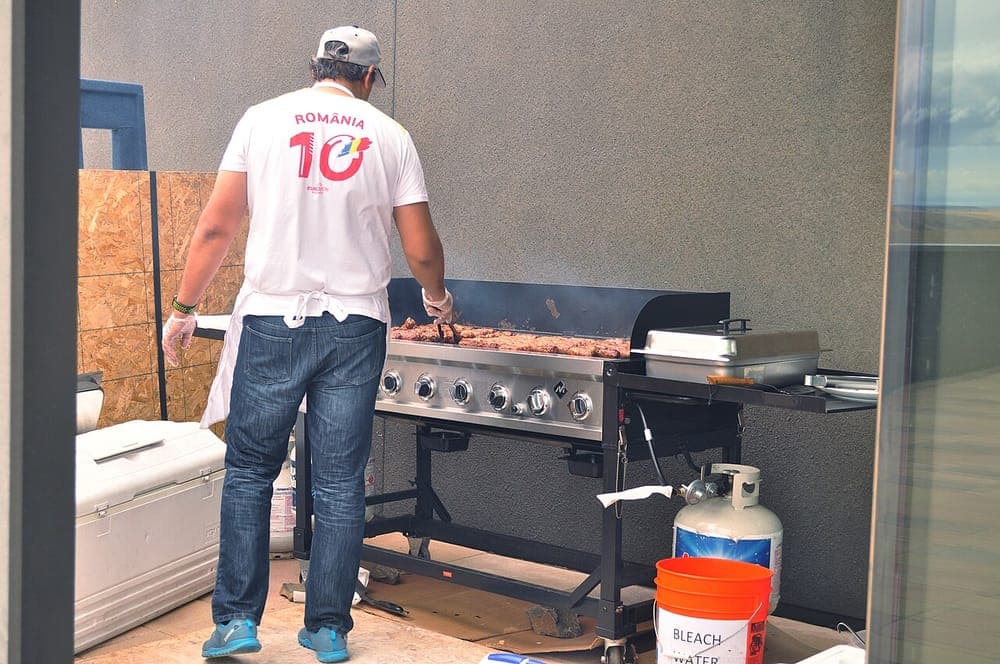 Blackstone 36" Original GriddleLarge families and crowd cooking Blackstone 36" Original GriddleLarge families and crowd cooking | Large families and crowd cooking | 8.6 | Check price on Amazon |
#ad We publish no prices: there is no verified price feed on this site, so the retailer’s page is the only price. How this is funded
Buy the Camp Chef Flat Top Grill 600 if you want one appliance that griddles and grills; buy the Weber Slate 36 if you only ever want a griddle and would rather not maintain it. Both run 48,000 BTU. Camp Chef puts it under 604 square inches of griddle for 79.5 BTU per square inch, and includes 501 square inches of grill grate. Weber spreads the same output over 756 square inches for 63.5 — 22% less heat per square inch, on a cooktop that resists rust.
Side by side
Same fields on both sides. Heat density is computed from the published BTU and cooking area, not quoted from a manufacturer.
| Specification | Camp Chef Flat Top Grill 600 | Weber Slate 36" Griddle |
|---|---|---|
| Cooking area | 604 sq in | 756 sq in |
| Burners | 4 | 4 |
| Total output | 48,000 BTU | 48,000 BTU |
| Heat density | 79.5 BTU / sq in | 63.5 BTU / sq in |
| Cooktop | Pre-seasoned cold-rolled steel | Rust-resistant carbon steel, pre-seasoned |
| Best for | People who want a grill and a griddle | Large cooks who do not want to babysit the surface |
| Our score | 8.3 / 10 | 8.7 / 10 |
The same BTU is the whole story
It is rare for two griddles from different brands to publish an identical total output, and it makes this the cleanest demonstration on the site of why total BTU is close to useless on its own.
48,000 BTU across 604 square inches is generous. The same 48,000 across 756 square inches is merely adequate. Camp Chef’s four burners are specified at 12,000 BTU each, and concentrating that over a smaller plate is why its heat density lands at 79.5 — near the top of the range we measure, and 25% above the Weber.
You feel that difference in one moment and one moment only: the drop when a full load of cold food hits the steel. The arithmetic behind heat density explains why that recovery window, not peak temperature, is the figure worth comparing.
Camp Chef’s real feature is the grate
The FTG600 is called a Flat Top Grill for a reason. It ships able to run as a griddle or, with the grate in place, as a 501-square-inch gas grill. That is not a gimmick bolted onto a griddle — it is the product’s reason for existing, and it is the only thing on this page the Weber cannot do at any price.
Whether that matters comes down to an honest question about your patio. If a griddle would be replacing a grill you still use, the Camp Chef keeps both jobs on one footprint. If you already own a grill you are keeping, the grate is 501 square inches of capability you paid for and will store in a garage. Our combo roundup works through that decision.
Care: pre-seasoned is not the same as rust-resistant
Both cooktops arrive pre-seasoned, and that similarity hides the difference that will shape four years of ownership.
Camp Chef’s plate is pre-seasoned cold-rolled steel. Pre-seasoned means the first layer is already on it; it does not mean the steel underneath has changed. Leave it uncovered through a wet autumn and it rusts exactly like any other cold-rolled plate.
Weber’s Slate cooktop is pre-seasoned and alloyed to resist rust. It still wants a wipe of oil and a cover, but it tolerates the cook you forgot and the week you did not get round to it. For an occasional cook, that tolerance is worth more than 16 BTU per square inch.
Be honest about which cook you are. What actually happens to a griddle left outside is the uncomfortable version of this argument.
Footprint
Camp Chef publishes 62.5 × 37 × 22 inches; Weber publishes 72 × 39 × 28. The Weber is nearly ten inches wider and six inches deeper in its footprint — a real consideration on a small patio or a narrow deck, and worth measuring before either becomes a delivery you cannot place.
Four burners each, two different arrangements
Both griddles are four-burner designs, and the way the output is divided is not the same.
Camp Chef publishes its burners individually: four at 12,000 BTU each. That matters because it tells you every zone is equal, so a zone at one end of the plate can do anything a zone in the middle can. Weber publishes 48,000 BTU in total across four burners without breaking it down, which is the more common practice and leaves you unable to tell whether the outer burners are smaller.
In either case you get four independently controlled zones, which is enough to sear, cook at moderate heat, hold, and keep a toasting lane going simultaneously — the configuration a breakfast for eight actually needs. Where the returns on burner count stop is worth reading if you are also considering a three-zone griddle, because the step from three to four changes how many people you can cook for rather than how you cook.
One practical note on the Camp Chef: switching between griddle and grill is a physical operation with a hot, heavy plate, and the grate has to live somewhere when it is not in use. That is not a criticism of the design — it is the honest cost of a convertible appliance, and it is the reason we rate it for people who genuinely alternate rather than people who might.
If neither is quite right
The third pick is the Blackstone 36 Original: 769 square inches at 60,000 BTU for 78.0 BTU per square inch — essentially Camp Chef’s heat density on a plate bigger than the Weber’s. It is griddle-only and bare carbon steel, so you take on the full seasoning and covering routine, and in exchange you get the largest surface and the deepest accessory ecosystem of the three.
Which to buy
| If you | Buy |
|---|---|
| Are replacing a grill, not adding to one | Camp Chef FTG600 |
| Cook occasionally and store outdoors | Weber Slate 36 |
| Care most about searing and recovery | Camp Chef FTG600 |
| Want the biggest griddle surface | Blackstone 36 |
| Have a narrow patio | Camp Chef FTG600 |
| Want the least maintenance | Weber Slate 36 |
For the other side of the Camp Chef argument, read Blackstone vs Camp Chef, and for the full specification run-through, our Flat Top Grill 600 review.
The picks in detail
Specifications are linked to their source on every card. Scores are ours, derived from those specifications.
#1 · People who want a grill and a griddle
Camp Chef Flat Top Grill 600
604 square inches as a griddle, 501 as a grill — the only unit here that converts properly rather than pretending a griddle plate is a grill.
#ad We publish no prices: there is no verified price feed on this site, so the retailer’s page is the only price. How this is funded
Key specifications
- Griddle area
- 604 sq in
- Grill area
- 501 sq in
- Burners
- 4 × 12,000 BTU
- Total output
- 48,000 BTU
- Cooktop
- Pre-seasoned cold-rolled steel
- Dimensions
- 62.5 × 37 × 22 in
Specifications from BBQGuys spec sheet.
Scores
- Cooking area8.0
- Heat output9.5
- Zone control9.0
- Surface care7.0
- Portability3.5
What works
- Genuinely does both jobs — the grill grates are real grates, not a ridged plate
- Even 12,000 BTU per burner means the zones are matched rather than lopsided
- Pre-seasoned cold-rolled steel out of the box
What to know
- You lose 103 sq in when you convert to grill mode
- More parts to store than a dedicated griddle
- 79.5 BTU per sq in is strong, but only with all four burners lit
#2 · Large cooks who do not want to babysit the surface
Weber Slate 36" Griddle
Four burners across 756 square inches on a rust-resistant, pre-seasoned cooktop — the large griddle for someone who cooks less often than they think they will.
#ad We publish no prices: there is no verified price feed on this site, so the retailer’s page is the only price. How this is funded
Key specifications
- Cooking area
- 756 sq in
- Burners
- 4
- Total output
- 48,000 BTU
- Cooktop
- Rust-resistant carbon steel, pre-seasoned
- Dimensions
- 72 W × 39 H × 28 D in
- Stated temp
- Reaches over 500 °F
Specifications from P.C. Richard spec sheet.
Scores
- Cooking area9.5
- Heat output7.0
- Zone control9.5
- Surface care9.5
- Portability3.0
What works
- The rust-resistant surface is the single biggest practical difference in this guide — it tolerates neglect that kills a bare carbon-steel top
- Pre-seasoned from the factory, so the first cook is genuinely the first cook
- Four zones over 756 sq in, with a digital thermometer on some configurations
What to know
- 63.5 BTU per square inch is notably lower than the Blackstone 36's 78 — it heats and recovers more slowly
- Costs more than the equivalent Blackstone for less heat
- Smaller accessory ecosystem than Blackstone
#3 · Large families and crowd cooking
Blackstone 36" Original Griddle
The default large griddle: four burners over 769 square inches, with the highest burner count in its size class and the deepest accessory ecosystem of any brand here.
#ad We publish no prices: there is no verified price feed on this site, so the retailer’s page is the only price. How this is funded
Key specifications
- Cooking area
- 769 sq in (35¾ × 21½ in)
- Burners
- 4, stainless steel
- Total output
- 60,000 BTU
- Cooktop
- Carbon steel
- Ignition
- Single spark
- Grease system
- Rear
Specifications from BBQGuys spec sheet.
Scores
- Cooking area9.5
- Heat output9.0
- Zone control9.5
- Surface care6.5
- Portability3.0
What works
- Four independent zones is the real argument for this size — you can hold a warm zone and still sear
- 769 sq in is enough to cook a full breakfast for eight without staging
- The widest accessory and spare-parts availability of any brand in this guide
What to know
- Bare carbon steel: it will rust if you leave it uncovered and unseasoned
- Needs real patio footprint — this is not a griddle you put away each week
- Rear grease management means the drain is behind the unit, which is awkward against a wall
Common questions
Is Camp Chef or Weber Slate better?
Does the Camp Chef Flat Top Grill 600 rust?
Can the Weber Slate be used as a grill?
Sources
Every specification on this page came from one of these. If you find one of them has changed, tell us and we will correct it.
Read next
Camp Chef Flat Top Grill 600
604 square inches as a griddle, 501 as a grill, four matched 12,000 BTU burners. A combo that genuinely converts.
Weber Slate 36"
756 square inches, four zones, rust-resistant pre-seasoned carbon steel. Lower heat density, far lower maintenance risk.
Blackstone vs Camp Chef
A dedicated 769 square inch griddle against a combo with real grill grates. What the conversion gains and costs.
The best griddle and grill combos
Griddle-grill combinations compared. Which convert properly, which are a griddle with grill marks, and the cheaper alternative.
Griddle BTU, explained
Why total BTU is close to meaningless, how heat density reorders the category, and which griddles actually recover under load.
Griddle cooktop materials
Bare steel, rust-resistant steel, ceramic coating and porcelain enamel compared on cooking, maintenance and lifespan.