The best griddles for searing
Ranked on the two numbers that decide whether a steak browns or steams: heat per square inch, and how much steel is under it.
We earn a commission if you buy through our links, at no extra cost to you. That is how this site is paid for, and it does not decide what we recommend — full disclosure.
Quick picks
Ranked on published specifications using our scoring rubric. Tap a row for the full write-up.
| # | Product | Best for | Score | Price |
|---|---|---|---|---|
| 1 | 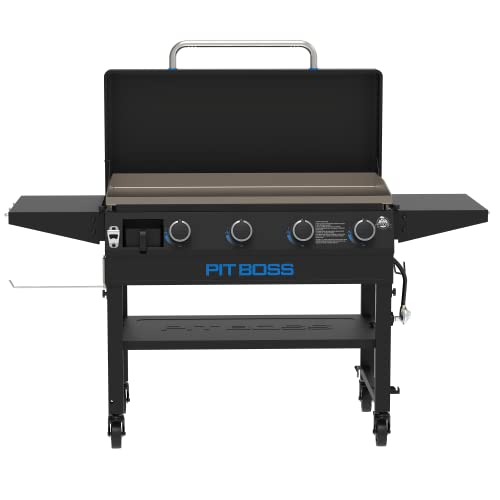 Pit Boss Deluxe 4-Burner GriddleRaw heat per square inch | Raw heat per square inch | 8.5 | $570.81View on Amazon |
| 2 | 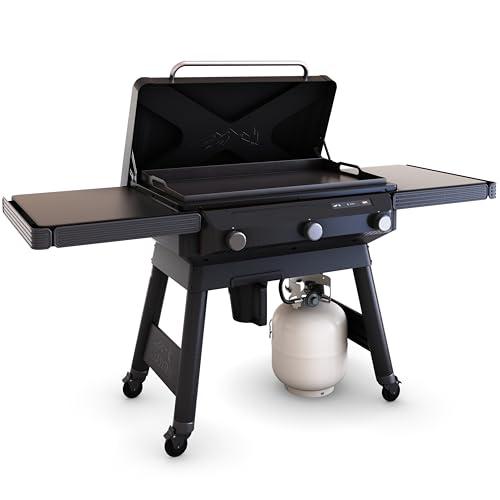 Traeger Flatrock 3-Zone GriddleSearing and zone discipline | Searing and zone discipline | 8.8 | $799.00View on Amazon |
| 3 | 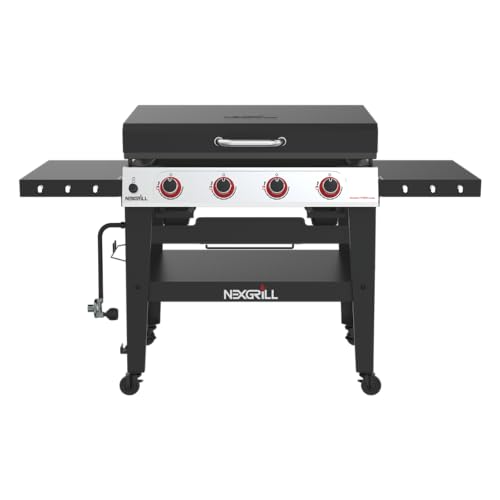 Nexgrill Daytona 4-Burner GriddleBlackstone 36 output for less money | Blackstone 36 output for less money | 8.2 | $399.77View on Amazon |
| 4 | 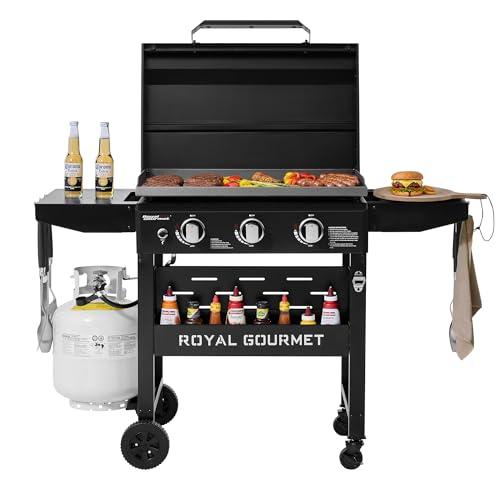 Royal Gourmet GB3000PB 3-Burner GriddleThree zones at a two-burner price | Three zones at a two-burner price | 8.0 | $227.39View on Amazon |
| 5 | 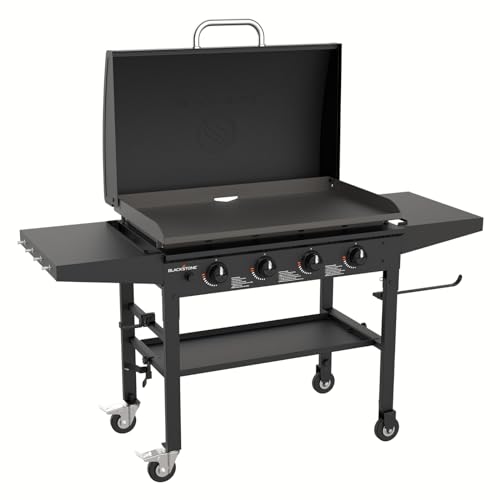 Blackstone 36" Original GriddleLarge families and crowd cooking | Large families and crowd cooking | 8.6 | $498.99View on Amazon |
| 6 | 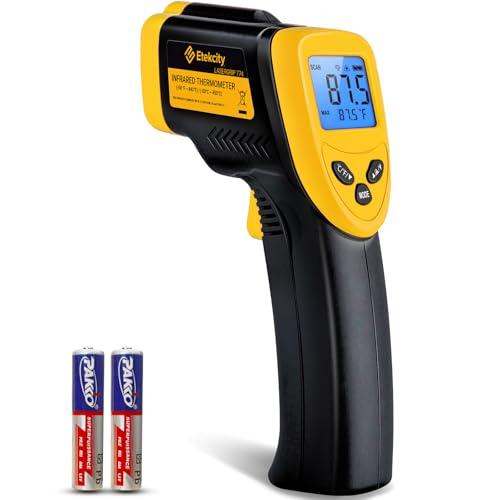 Etekcity 774 Infrared ThermometerKnowing what your plate is actually doing | Knowing what your plate is actually doing | 8.3 | $15.99View on Amazon |
#ad Price as of November 28, 2026; prices change — check the retailer. How this is funded
Buy the Pit Boss Deluxe 4-Burner. It is the best griddle for searing on this site because it combines the highest heat density in the registry — 62,000 BTU across 753 square inches, or 82.3 BTU per square inch — with the thickest cooktop at 4.7 mm. Those are the two numbers that decide a sear, and nothing else here leads on both. The budget pick is the Royal Gourmet GB3000PB: 79.3 BTU per square inch on a 3 mm top, which is within 4% of the winner’s heat density at a fraction of the price, and the cheapest griddle here that will genuinely brown a steak.
Searing is not a peak-temperature problem. Every griddle on this page will reach a temperature that browns meat. Searing is a recovery problem — what happens in the ninety seconds after cold food lands on hot steel and pulls the surface temperature down. Two specifications predict that, and neither of them is the number on the listing.
The two numbers that decide a sear
Heat density, in BTU per square inch. Total BTU on its own is unfalsifiable marketing: 48,000 BTU is generous across 500 square inches and merely adequate across 770. We divide output by area on every griddle on this site and print the result. The full arithmetic is here. This is the figure that tells you how fast the burners can put heat back into the plate.
Plate thickness, in millimetres. Steel stores heat. A thicker plate holds more of it, so the surface temperature falls less when the food lands, and what falls less needs less replacing. A 4.7 mm top and a 3 mm top behave visibly differently with four cold steaks on them. What plate thickness actually changes, and where it stops mattering covers the trade — thicker steel also takes longer to preheat.
Here is how the registry sorts on heat density, highest first: Pit Boss Deluxe 82.3, Royal Gourmet PD1301R 79.9, Nexgrill Daytona 79.4, Royal Gourmet GB3000PB 79.3, Traeger Flatrock 3-Zone 79.1, Blackstone 36 78.0, Traeger Flatrock 2-Zone 76.9, Blackstone 28 XL 73.4, Pit Boss Ultimate 71.1, Weber Slate 30 66.7, Blackstone 28 64.8, Weber Slate 36 63.5, Blackstone 22 61.9, Halo Elite 2B 50.0. The spread between the top and the bottom is a factor of 1.6, and you feel all of it on a loaded plate.
Who each pick is for
- Pit Boss Deluxe 4-Burner — for the cook who sears in volume. The highest heat density here on the thickest plate here, with four separately controlled zones so one corner stays a holding area. Fold-and-go legs rather than a fixed cart.
- Traeger Flatrock 3-Zone — for searing without surrendering the rest of the plate. 79.1 BTU per square inch, and the only griddle on this site with physical insulation between sections, so a 600 °F sear zone next to a warming zone stays two temperatures instead of averaging into one.
- Nexgrill Daytona 4-Burner — for the most sear area per dollar. 756 square inches at 79.4 BTU per square inch across four 15,000 BTU burners. The cheapest route to a genuinely large high-density plate.
- Royal Gourmet GB3000PB — the budget pick. 79.3 BTU per square inch on a 3 mm sandblasted, oil-baked top with three separately controlled zones, at a price well under half the winner’s. The cheapest product here that does the job.
- Blackstone 36" Original — for the biggest sear surface with parts behind it. 769 square inches at 78.0 BTU per square inch, and the most widely supported body in the category for covers, hoods and replacement burners.
- Etekcity 774 Infrared Thermometer — for knowing what the plate is doing. No griddle on this page has a surface thermometer. Searing is the one technique where guessing the plate temperature costs you the result.
Why the Weber Slate line is not on this page
Because it is the wrong tool for this specific job, and saying so is more useful than ranking it sixth. The Weber Slate 36 runs 63.5 BTU per square inch and the Slate 30 runs 66.7 — near the bottom of the table above. What the Slate line buys you instead is a rust-resistant pre-seasoned cooktop that absorbs neglect, which is a genuinely valuable thing and has nothing to do with searing. That is the page where the Slate line wins. Buy it if the griddle lives outdoors and you cook every other week; do not buy it to brown four steaks at once.
How this page differs from the smash-burger and steak pages
Three pages here touch high-heat cooking and they are not interchangeable. The smash-burger ranking is about crust on a thin patty pressed flat, where plate mass and a press do most of the work and the cook lasts two minutes. Steak on a griddle is technique: plate temperature, when to move the steak, how long to rest it. This page is the hardware ranking for sustained searing — several items, repeatedly, without the surface temperature collapsing between batches. The winners differ, and the page you want depends on which of those three things you are actually trying to do.
What we are not claiming
We have not cooked on these in a test lab and do not pretend to have. Every figure above is published by a manufacturer or a major retailer and linked at the foot of this page, and the heat density numbers are computed from those published figures rather than quoted. There are no awards here and no test results. Two spec cautions worth carrying to the checkout: the Pit Boss Deluxe is sold as 753 square inches (model 10963) and 748 (model 10942) at the same 62,000 BTU, and the Traeger Flatrock’s stated range is 350–600 °F, which is lower at the top end than several griddles with worse heat density.
The picks in detail
Specifications are linked to their source on every card. Scores are ours, derived from those specifications.
#1 · Raw heat per square inch
Pit Boss Deluxe 4-Burner Griddle
62,000 BTU across 753 square inches — 82.3 BTU per square inch, the highest heat density of any griddle in this guide.
#ad Price as of November 28, 2026; prices change — check the retailer. How this is funded
Key specifications
- Cooking area
- 753 sq in (top 37 × 20 in)
- Burners
- 4, separately controlled stainless
- Total output
- 62,000 BTU
- Cooktop
- 4.7 mm steel, pre-seasoned with organic oil
- Portability
- Fold-and-go
- Includes
- Side shelves and lid
Specifications from Pit Boss product page.
Listings disagree: Sold as 753 sq in (model 10963) and 748 sq in (model 10942), both at 62,000 BTU.
Scores
- Cooking area9.5
- Heat output10.0
- Zone control9.5
- Surface care7.0
- Portability4.5
What works
- 82.3 BTU per square inch is the highest here — it recovers fastest when a full load of cold food goes down
- A 4.7 mm plate is thick for this price class, which is what buys you stable temperature
- Pre-seasoned with organic oil, so it is usable sooner than a bare plate
What to know
- Fold-and-go legs are less stable than a fixed cart under a loaded 753 sq in top
- The sibling SKU is listed at 748 sq in with a slightly different top — check which you are buying
- Still a steel top: seasoning and covering are on you
#2 · Searing and zone discipline
Traeger Flatrock 3-Zone Griddle
594 square inches with three insulated zones and 79.1 BTU per square inch — the highest usable heat density of any mid-size griddle here.
#ad Price as of November 28, 2026; prices change — check the retailer. How this is funded
Key specifications
- Cooking area
- 594 sq in
- Burners
- 3 (TruZone, insulated)
- Total output
- 47,000 BTU
- Cooktop
- Carbon steel
- Stated range
- 350–600 °F
- Dimensions
- 74 W × 42 H × 27 D in
Specifications from Abt spec sheet.
Scores
- Cooking area8.0
- Heat output9.5
- Zone control9.5
- Surface care6.5
- Portability3.5
What works
- Insulated zones are the real feature — heat does not bleed sideways, so a 'warm' zone stays warm
- 79.1 BTU per sq in is the best heat density in its size class, which is what you feel when six patties hit the plate
- Three genuinely independent zones in a body smaller than a 36
What to know
- Carbon steel, so you are back to seasoning and covering it
- The stated 350–600 °F range is narrower at the bottom than rivals — gentle holding is less controllable
- Smallest accessory ecosystem of the four major brands
#3 · Blackstone 36 output for less money
Nexgrill Daytona 4-Burner Griddle
756 square inches and 60,000 BTU — the same heat and nearly the same surface as a Blackstone 36, from a brand with a smaller accessory ecosystem.
#ad Price as of November 28, 2026; prices change — check the retailer. How this is funded
Key specifications
- Cooking area
- 756 sq in
- Burners
- 4 × 15,000 BTU, stainless
- Total output
- 60,000 BTU
- Cooktop
- Steel
- Lid
- Stainless steel
- Panel
- Stainless control panel
Specifications from Nexgrill product page.
Scores
- Cooking area9.5
- Heat output9.5
- Zone control9.5
- Surface care6.5
- Portability3.0
What works
- 79.4 BTU per square inch matches the Blackstone 36 almost exactly
- Even 15,000 BTU burners — no weak zone
- Stainless lid and control panel at a size where rivals use painted steel
What to know
- Far fewer first-party accessories and spares than Blackstone
- 13 sq in less surface than a Blackstone 36 for the same burner count
- Sold mainly through a small number of retailers, which complicates warranty and parts
#4 · Three zones at a two-burner price
Royal Gourmet GB3000PB 3-Burner Griddle
492 square inches and three independently controlled burners with a hood, lockable wheels and shelves included — the same plate area as a Blackstone 28 with an extra zone on it.
#ad Price as of November 28, 2026; prices change — check the retailer. How this is funded
Key specifications
- Cooking area
- 492 sq in (27.76 × 17.72 in)
- Burners
- 3, stainless steel
- Total output
- 39,000 BTU
- Cooktop
- 3 mm sandblasted, oil-baked steel
- Weight
- 76.1 lb net
- Dimensions
- 52.44 × 23.17 × 37.22 in, shelves out
Specifications from Overton's listing (GB3000PY).
Listings disagree: Overton's spec table reads 39,000 BTU per burner. Royal Gourmet's own product title and Lowe's both state 39,000 BTU as the total for three burners, which is the figure used here.
Scores
- Cooking area7.0
- Heat output8.5
- Zone control8.0
- Surface care6.0
- Portability4.0
What works
- Three independent zones on a 492 sq in plate — the Blackstone 28's area with a holding zone added
- 79.3 BTU per square inch is high for this size class
- Hood, electronic ignition, lockable wheels and collapsible shelves are included rather than extra
What to know
- The 3 mm top is thinner than the 10-gauge (about 3.4 mm) plate Blackstone uses at this size, so it dips further under a load of cold food
- Accessory and parts support is a fraction of Blackstone's — covers, hard covers and replacement tops are model-specific and harder to source
- Bare steel, so it needs the same seasoning routine with far less documentation behind it
#5 · Large families and crowd cooking
Blackstone 36" Original Griddle
The default large griddle: four burners over 769 square inches, with the highest burner count in its size class and the deepest accessory ecosystem of any brand here.
#ad Price as of November 28, 2026; prices change — check the retailer. How this is funded
Key specifications
- Cooking area
- 769 sq in (35¾ × 21½ in)
- Burners
- 4, stainless steel
- Total output
- 60,000 BTU
- Cooktop
- Carbon steel
- Ignition
- Single spark
- Grease system
- Rear
Specifications from BBQGuys spec sheet.
Scores
- Cooking area9.5
- Heat output9.0
- Zone control9.5
- Surface care6.5
- Portability3.0
What works
- Four independent zones is the real argument for this size — you can hold a warm zone and still sear
- 769 sq in is enough to cook a full breakfast for eight without staging
- The widest accessory and spare-parts availability of any brand in this guide
What to know
- Bare carbon steel: it will rust if you leave it uncovered and unseasoned
- Needs real patio footprint — this is not a griddle you put away each week
- Rear grease management means the drain is behind the unit, which is awkward against a wall
#6 · Knowing what your plate is actually doing
Etekcity 774 Infrared Thermometer
The only way to know a griddle's real surface temperature — and the fastest way to find the hot spots every griddle has.
#ad Price as of November 28, 2026; prices change — check the retailer. How this is funded
Key specifications
- Type
- Infrared, non-contact — not a probe thermometer
- Range needed
- At least 100–600 °F
- Use
- Read several points; a griddle is never one temperature
- Limitation
- Reads surfaces, not the inside of food
- Accuracy caveat
- Shiny bare steel reads low; a seasoned plate reads true
- Pairs with
- A probe thermometer for doneness
Scores
- Usefulness9.0
- Accuracy7.5
- Range8.0
- Value8.5
What works
- Turns 'medium heat' from a guess into a number
- Finding your plate's hot spots takes about 30 seconds and changes how you cook on it forever
- Non-contact, so there is nothing to clean
What to know
- Reads surface only — it cannot tell you a burger is done
- Emissivity error on bare, shiny steel can read 50 °F or more low
- One more battery device living near a hot griddle
Common questions
What is the best griddle for searing steaks?
Does a griddle sear as well as a grill?
How hot does a griddle need to be to sear?
Is a thicker griddle plate always better for searing?
Can you sear on a cheap griddle?
Why is total BTU not the number to compare?
Sources
Every specification on this page came from one of these. If you find one of them has changed, tell us and we will correct it.
- Pit Boss — Deluxe 4-Burner Griddle PB4BGD1 product page (753 sq in, 62,000 BTU, 4.7 mm top)
- Abt — Traeger Flatrock 3-Zone spec sheet (594 sq in, 47,000 BTU, insulated TruZone sections, 350-600 F)
- Nexgrill — Daytona 4-Burner product page (756 sq in, 4 x 15,000 BTU stainless burners)
- Overton's — Royal Gourmet GB3000PY listing (492 sq in, 39,000 BTU, 3 mm oil-baked top)
- BBQGuys — Blackstone 36" Original Griddle spec sheet (769 sq in, 60,000 BTU, 4 burners)
- P.C. Richard — Weber Slate 30 spec sheet (540 sq in, 36,000 BTU, rust-resistant pre-seasoned cooktop)
Read next
The best griddles for smash burgers
Griddles ranked for smash burgers by heat density — the spec that decides whether a cold patty sears or steams.
Steak on a griddle
Why full-contact searing beats grill marks on flavor, the method, which cuts suit a flat top, and when to use a grill instead.
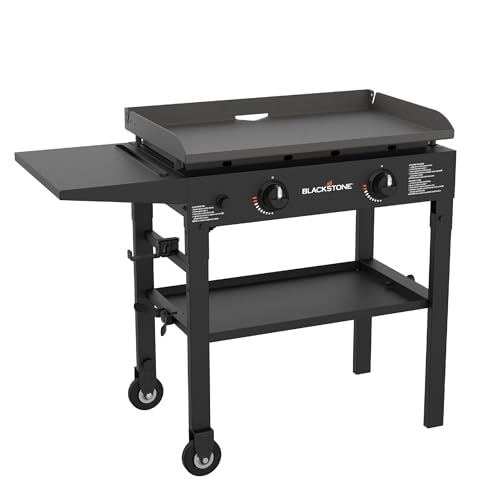
How thick should a griddle be?
Every published plate thickness on this site converted to one unit, with what the difference actually does when cold food lands.
Griddle BTU, explained
Why total BTU is close to meaningless, how heat density reorders the category, and which griddles actually recover under load.
The best flat-top griddles
Our flagship ranking. Every major flat-top griddle scored on cooking area, burner count, heat density and cooktop material.
Griddle temperature chart
Temperatures for everything you cook on a flat top, the reasoning behind each, and how to check without a thermometer.