The best rust-resistant griddles
Ranked on the surface treatment itself, not on how diligently you wipe it — plus the four parts that rust before the cooktop does.

We earn a commission if you buy through our links, at no extra cost to you. That is how this site is paid for, and it does not decide what we recommend — full disclosure.
Quick picks
Ranked on published specifications using our scoring rubric. Tap a row for the full write-up.
| # | Product | Best for | Score | Price |
|---|---|---|---|---|
| 1 | 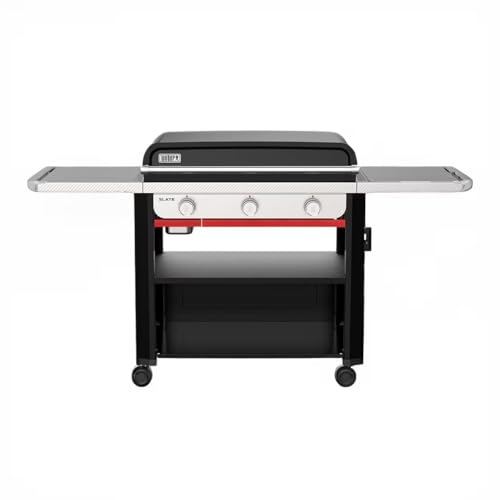 Weber Slate 30" GriddleOccasional cooks who hate rust | Occasional cooks who hate rust | 8.5 | $649.00View on Amazon |
| 2 | 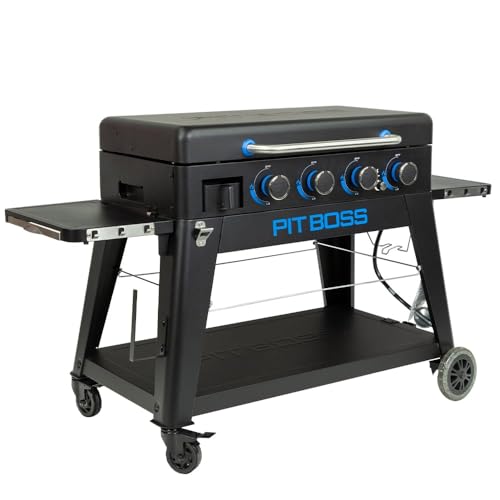 Pit Boss Ultimate Lift-Off 4-Burner GriddleSkipping the seasoning routine entirely | Skipping the seasoning routine entirely | 8.1 | $734.65View on Amazon |
| 3 | 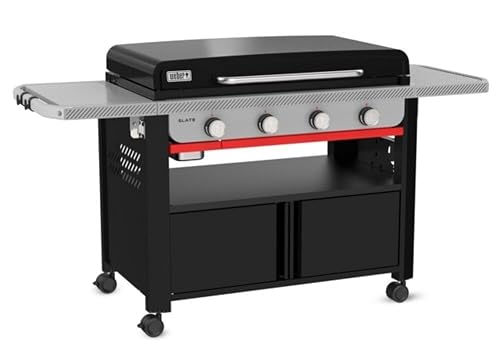 Weber Slate 36" GriddleLarge cooks who do not want to babysit the surface | Large cooks who do not want to babysit the surface | 8.7 | $949.00View on Amazon |
| 4 | 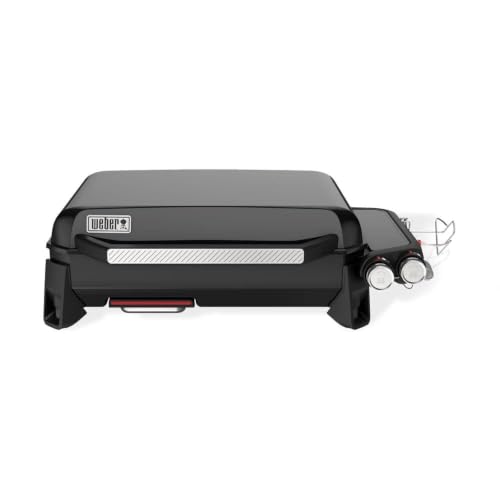 Weber Slate 22" Tabletop GriddleA portable top that resists rust | A portable top that resists rust | 7.7 | Check price on Amazon |
| 5 | 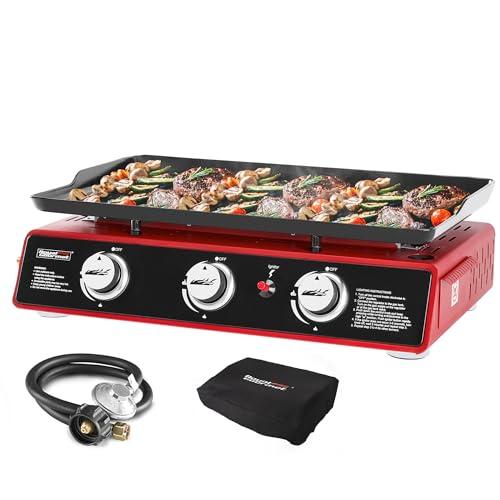 Royal Gourmet PD1301R Portable GriddleThree zones under 30 pounds | Three zones under 30 pounds | 7.6 | $109.69View on Amazon |
| 6 | 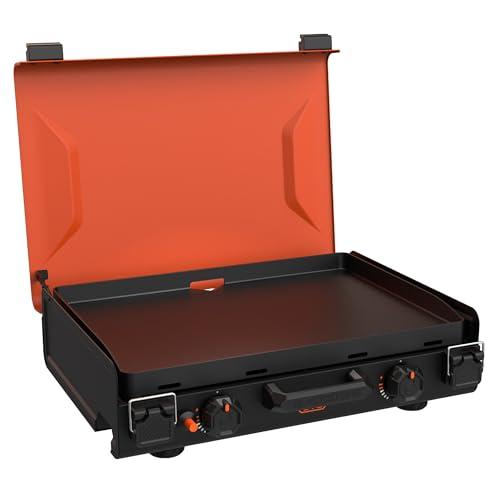 Blackstone 20" × 14" Camping GriddleCampsites, where packed size beats plate size | Campsites, where packed size beats plate size | 7.5 | $199.99View on Amazon |
| 7 | 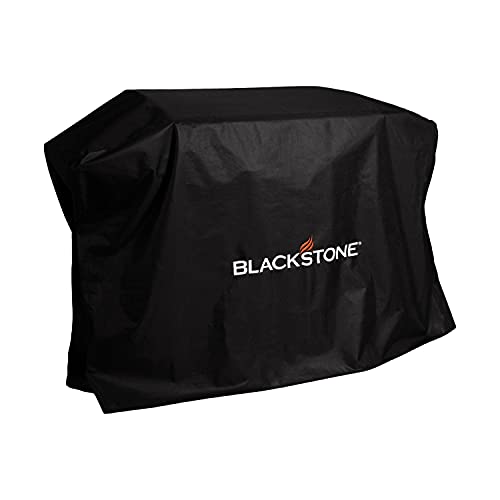 Blackstone 5483 28" Griddle CoverThe single cheapest way to stop rust | The single cheapest way to stop rust | 8.9 | $44.95View on Amazon |
#ad Price as of November 28, 2026; prices change — check the retailer. How this is funded
“Rust-resistant” is a surface treatment, not a promise, and nothing sold in this category is rust-proof. What the phrase buys you is time. A bare carbon-steel plate will flower with surface rust in a couple of damp weeks if you leave it uncovered and unoiled; a rust-resistant or coated top sits through the same fortnight and looks the same at the end of it. That is a real and underrated advantage — but it applies to the cooktop, and the cooktop is not the only thing on a griddle made of steel.
So this page does two jobs. It ranks griddles on the surface treatment itself, which is the specification the question is really about. Then it names the four parts that corrode before the cooktop does, because those are what actually end the life of a griddle that lived outside.
We have not cooked on these in a test lab and do not claim to have. Every figure below is published by a manufacturer or a major retailer and linked at the foot of the page, and every pick was checked as currently purchasable when this page was written.
What “rust-resistant” actually claims
Four different claims get printed in the same size font, and they are not the same claim. Sorting them is most of the work on this page.
- Rust-resistant carbon steel, pre-seasoned. Weber’s Slate line. The plate is still carbon steel — it still seasons, still sears, still takes a metal spatula — but it is treated and arrives with a factory seasoning layer already on it. This is the only claim here that keeps the cooking behavior of bare steel while changing the ownership behavior.
- Non-stick armored ceramic. Pit Boss’s Ultimate. Not steel at the cooking surface at all, so there is no rust clock on it and no seasoning routine either. The trade is that a coating is a wear item.
- Porcelain enamel. Royal Gourmet’s portable tops. Glass fused to steel. Genuinely immune to rust where the enamel is intact, and that last clause is the whole catch: enamel chips, and a chip is a bare steel pinhole with glass around it.
- Ceramic-titanium coating. Blackstone’s camping griddles. A coated top that needs no seasoning, chosen for a griddle that lives in a car rather than on a patio.
And one claim that is not on this list, because it is not a rust claim at all: pre-seasoned bare steel. The Pit Boss Deluxe, the Camp Chef tops and several Blackstone configurations ship pre-seasoned, which saves you the first seasoning session and nothing else. Factory seasoning is a thin oil polymer that wears off in normal use. If a listing says “pre-seasoned” and nothing about the steel itself, the griddle has the same rust clock as any other bare plate. The full material comparison works through the cooking consequences of each surface.
How these are ranked
Four criteria, applied in this order. The order matters, because the griddle with the most corrosion-proof surface is not the one most people should buy.
- How much neglect the surface absorbs. Not “does it rust” — everything rusts eventually — but how long it tolerates being left uncovered, unoiled and damp. This is the thing buyers are actually shopping for.
- Whether the treatment can be restored. A bare steel plate can be taken back to metal with a scraper, a stone and a re-season, indefinitely. A treated steel plate mostly can too. A coating cannot be re-coated. Over a ten-year horizon this criterion reverses the first one.
- What it costs you in heat. Every treatment on this page is paid for in heat density, and the bill is bigger than most buyers expect. Our heat density arithmetic is the context for the BTU-per-square-inch figures below.
- Whether the rest of the griddle got the same attention. A rust-resistant cooktop bolted to a painted-steel cart with an untreated grease tray is one third of a rust-resistant griddle.
The four parts that rust before the cooktop does
This is the part of the question nobody ranks, and it is where rust-resistant griddles still fail. On a griddle stored outdoors, corrosion arrives in this order.
- The underside and the edges of the plate. The treatment and the seasoning are on the cooking face. The underside sees condensation, sits above a burner that heats and cools it every cook, and gets no oil at all. Edges and the front lip are where a rust-resistant top usually shows its first bloom.
- The grease tray and the cup. Standing grease plus rainwater is the most aggressive environment anywhere on the appliance, and the tray is thin stamped steel on almost every griddle here. A liner is a two-dollar fix for the part most likely to rot through.
- Burner tubes and the igniter. Burners are the part that fails and the part that gets replaced, and a corroded igniter electrode is the single most common “my griddle is broken” complaint in this category. Weather reaches them through the open back of the cart.
- Fasteners, shelf brackets and the cart. Powder coat chips, and a chipped bolt head in a coastal climate goes orange in a season. This is cosmetic right up to the point where a shelf bracket lets go.
Which is why the best-value item on this page is not a griddle at all — see the last pick. Can you leave a griddle outside? is the full storage answer, and rust prevention is the routine.
1. Weber Slate 30 — the best rust-resistant griddle to buy
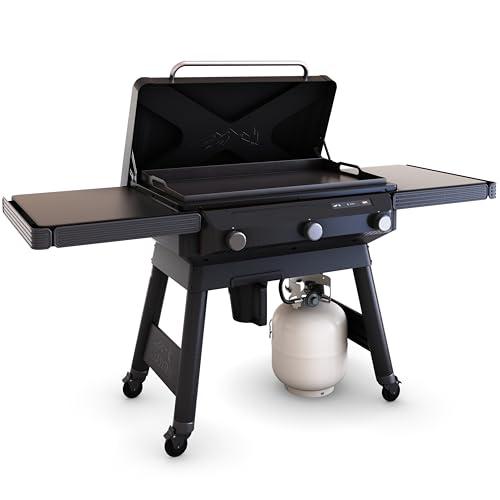
The Slate 30 wins because it is the pick that passes all four criteria rather than maxing out the first one. The cooktop is rust-resistant carbon steel that arrives pre-seasoned, so it absorbs the kind of neglect that destroys a bare plate — a wet autumn, a missed oiling, a cover left off — while still cooking like steel. It can be scraped, stoned and re-seasoned like steel too, which nothing coated on this page can.
Three independently controlled burners over 540 square inches is also more control than the nearest bare-steel cart at the same footprint, and four swivel casters mean it genuinely moves on a patio rather than theoretically moving.
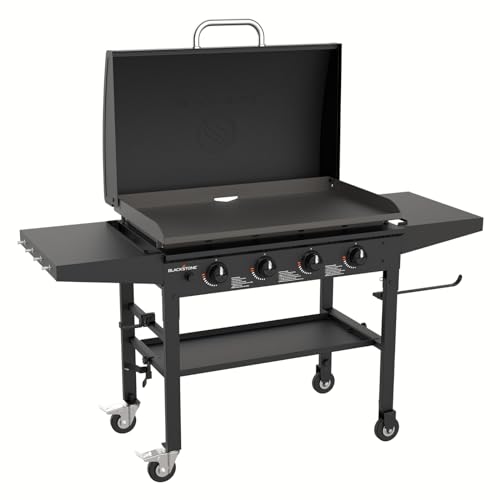
The honest cons. You pay for the surface in heat: 36,000 BTU over 540 square inches is 66.7 BTU per square inch, middling for the class, and you feel it the moment six cold patties land. It costs more than the equivalent bare-steel cart for less heat. At 140 lb it is a patio appliance, not a truck one. And rust-resistant is not rust-proof: the edges, the grease tray and the hardware are all still ordinary steel, so the cover and the liner still matter. Our Slate 30 review has the full picture, and Blackstone vs Weber Slate works the heat-against-maintenance trade properly.
2. Pit Boss Ultimate Lift-Off — the most corrosion-proof cooking surface here
If criterion one is the only one you care about, this is the answer. The Ultimate’s plate is non-stick armored ceramic rather than steel, so there is no seasoning, no oil film after every cook and no rust clock on the cooking face at all. Four zones across 647 square inches at 46,000 BTU, a removable grease tray, and a top that physically lifts off so the plate can be carried to a sink instead of cleaned in place — which also means the underside can be dried properly, the one place a rust-resistant steel top never gets attention.
The honest cons. A coating is a wear item, and that is the whole trade: a steel plate can be stripped and re-seasoned forever, while a worn or chipped ceramic top cannot be re-coated, and once it is through to the substrate you are back to bare steel with a non-stick surface you can no longer use a scraper on. It rules out metal tools, which is most of the griddle toolkit. The lift-off top weighs 89 lb, so “removable for cleaning” is realistically a two-person job. And a non-stick surface does not build the fond that makes a seasoned steel plate sear — if smash burgers are the point, read the smash-burger picks before you buy a coated griddle.
3. Weber Slate 36 — the same surface at crowd size
The large-format version of pick one, and the right choice if you are cooking for eight or more regularly. 756 square inches across four burners on the same rust-resistant, pre-seasoned cooktop, with a digital thermometer on some configurations.
The honest cons. The heat bill gets worse as the plate gets bigger: 48,000 BTU over 756 square inches is 63.5 BTU per square inch, the lowest of any full-size cart on this site and well under what a bare-steel 36 publishes. It costs more than the equivalent Blackstone for less heat. And a 36-inch plate is a lot of surface to cover, dry and store — most people who buy 36 inches cook for four and resent the footprint within a year. Slate 30 vs 36 is the size call, and the sizing guide works the numbers.
4. Weber Slate 22 — the rust-resistant tabletop
Rust resistance matters most on the griddle least likely to get a routine, and that is the portable one: a tabletop lives in a garage, a shed or a truck bed between uses, often put away warm and rarely oiled. The Slate 22 is the only treated-steel tabletop here, with 352 square inches — the largest tabletop surface on this site — across two zones.
The honest cons. 16,000 BTU over 352 square inches is 45.5 BTU per square inch, the lowest density of any griddle in this guide: the “hot” zone is not very hot, and this is not a searing machine. It is also heavier and bulkier than the bare-steel 17-inch tabletops, and 37 inches wide with the lid closed, so you need a real table for it. The tabletop roundup ranks this class on what you stand it on, and Blackstone 22 vs Weber Slate 22 is the direct pairing.
5. Royal Gourmet PD1301 — the budget pick
This is the budget pick on this page. A 3.5 mm porcelain-enameled top is genuinely rust-immune where the enamel is intact, and it arrives on the only portable griddle here with three separately controlled burners — 319 square inches at 29.3 lb, and 79.9 BTU per square inch, the highest density of any portable on this site. No seasoning routine at all, which is the right answer for a griddle stored in a garage between trips.
The honest cons. Enamel chips, and a chip is where rust starts and then spreads underneath the glass, so this is the one surface on the page that punishes being thrown in a trunk loose far more than it punishes being left damp. Each of its three zones is only about 106 square inches — roughly a 10-inch square, which is one burger and not much else. The build is lighter than the Blackstone and Weber tabletops it competes with. And you cannot restore enamel: a chipped top is a chipped top for the life of the griddle.
6. Blackstone 20″ × 14″ Camping Griddle — the coated travel top
The ceramic-titanium coated plate on Blackstone’s camping griddle is here for the same reason as the enamel above: a griddle that gets packed away in a car, often without a hose or a proper dry-down, needs a surface that does not hold a grudge. Two independently controlled zones at 26 lb in a latching 21 × 17 × 6 in box, with a hood that encloses a greasy plate for the drive home.
The honest cons. 13,000 BTU over 280 square inches is 46.4 BTU per square inch, the lowest heat density anywhere on this site — it will not sear a full load of cold food. The coating rules out metal spatulas, scrapers and stones, so the usual rust-management toolkit does not apply to it. And 280 square inches is two burgers and the onions, not a family dinner in one pass. The camping roundup ranks this class on packed size, wind and cleaning without running water.
7. The cheapest rust protection on this page is not a griddle
A correctly sized, vented cover does more for corrosion than the difference between any two griddles above, and it costs a fraction of the upgrade from a bare-steel top to a treated one. It is also the only item on this page that protects the four parts that actually rust first — the plate edges, the grease tray, the burner tubes and the cart hardware.
The honest cons. It has to be vented, and it has to fit: a sealed cover traps moisture against steel and is worse than no cover at all, and a loose cover flogs itself to pieces in wind and holds water in the slack. It also has to go on a cold griddle, not a warm one. And a hood is not a cover — hard covers versus hoods explains the difference, and the cover picks cover fit by model.
What a rust-resistant top does not fix
Three things follow every pick on this page, and they are worth knowing before you treat a surface treatment as the end of the problem.
- Standing water in the grease system. No cooktop treatment reaches the tray, the cup or the drain channel, and that is where a griddle rots from.
- Warping. Thermal shock buckles a treated plate exactly as readily as a bare one, and a warped top pools grease where it cannot drain. Griddle warping covers the causes.
- Existing rust. If you are reading this because a griddle you already own has gone orange, you do not need a new griddle yet. Removing rust from a griddle recovers almost any bare or treated steel plate.
How this page differs from two others here
Three pages on this site touch the same material, deliberately, from different angles. Griddle cooktop materials explains what each surface is and how it cooks. Which griddles are easiest to clean ranks on cleaning labor, which is a different question — the easiest griddle to clean is coated, while the best rust-resistant griddle to own is treated steel. This page ranks on corrosion in storage, and it is the only one of the three that deals with the parts of the griddle that are not the cooktop.
Which one to buy
| If your situation is | Buy |
|---|---|
| Stored outside, cooking every week or two | Weber Slate 30 |
| You never want to season or oil anything | Pit Boss Ultimate Lift-Off |
| The same, for eight or more people | Weber Slate 36 |
| A portable top that lives in a shed | Weber Slate 22 |
| Rust immunity for the least money | Royal Gourmet PD1301 |
| It travels in a car, not on a patio | Blackstone 20″ Camping Griddle |
| You already own a bare-steel griddle | A vented cover and a grease-cup liner |
And the honest closing note: if you cook weekly and cover the griddle, a bare carbon-steel plate will never rust on you, and you keep the heat density that treated and coated tops give away. The main roundup ranks the whole field on area, zones and heat instead, and Weber Slate alternatives is the page for anyone who has decided the surface is not worth what it costs.
The picks in detail
Specifications are linked to their source on every card. Scores are ours, derived from those specifications.
#1 · Occasional cooks who hate rust
Weber Slate 30" Griddle
Three zones over 540 square inches on a rust-resistant top — the best griddle here for someone who cooks once a fortnight and does not want to fight their surface.
#ad Price as of November 28, 2026; prices change — check the retailer. How this is funded
Key specifications
- Cooking area
- 540 sq in
- Burners
- 3, stainless steel
- Total output
- 36,000 BTU
- Cooktop
- Rust-resistant carbon steel, pre-seasoned
- Dimensions
- 70.80 W × 39.50 H × 23.50 D in
- Weight
- 140.34 lb
Specifications from P.C. Richard spec sheet.
Scores
- Cooking area7.5
- Heat output7.0
- Zone control8.5
- Surface care9.5
- Portability4.0
What works
- Three zones at 540 sq in beats the Blackstone 28's two zones at 525 sq in — more control for the same footprint
- Rust resistance is the difference between a griddle that survives a wet autumn and one that does not
- Four swivel casters, so it actually moves on a patio
What to know
- 140 lb means 'moves on a patio', not 'goes in the truck'
- 66.7 BTU per sq in is middling — fine for everyday cooking, slower than the Traeger for a heavy sear
- The rust-resistant coating is not invincible; it still wants a cover
#2 · Skipping the seasoning routine entirely
Pit Boss Ultimate Lift-Off 4-Burner Griddle
The only griddle here with a non-stick armored ceramic surface rather than steel — no seasoning, no rust, and a different set of trade-offs.
#ad Price as of November 28, 2026; prices change — check the retailer. How this is funded
Key specifications
- Cooking area
- 647 sq in
- Burners
- 4, stainless steel
- Total output
- 46,000 BTU
- Cooktop
- Non-stick armored ceramic
- Lift-off top
- 89 lb
- Grease
- Removable tray
Specifications from Pit Boss product page.
Scores
- Cooking area8.5
- Heat output8.0
- Zone control9.5
- Surface care8.0
- Portability3.0
What works
- No seasoning and no rust — this is a genuinely different ownership experience from every steel top here
- Four zones across 647 sq in, and the top lifts off for cleaning
- Folding shelves with built-in tool hooks
What to know
- A ceramic coating is a wear item — steel can be restored indefinitely, a coating cannot
- The lift-off top weighs 89 lb; 'removable for cleaning' is a two-person job
- Non-stick surfaces do not develop the fond that makes a seasoned steel top sear the way it does
#3 · Large cooks who do not want to babysit the surface
Weber Slate 36" Griddle
Four burners across 756 square inches on a rust-resistant, pre-seasoned cooktop — the large griddle for someone who cooks less often than they think they will.
#ad Price as of November 28, 2026; prices change — check the retailer. How this is funded
Key specifications
- Cooking area
- 756 sq in
- Burners
- 4
- Total output
- 48,000 BTU
- Cooktop
- Rust-resistant carbon steel, pre-seasoned
- Dimensions
- 72 W × 39 H × 28 D in
- Stated temp
- Reaches over 500 °F
Specifications from P.C. Richard spec sheet.
Scores
- Cooking area9.5
- Heat output7.0
- Zone control9.5
- Surface care9.5
- Portability3.0
What works
- The rust-resistant surface is the single biggest practical difference in this guide — it tolerates neglect that kills a bare carbon-steel top
- Pre-seasoned from the factory, so the first cook is genuinely the first cook
- Four zones over 756 sq in, with a digital thermometer on some configurations
What to know
- 63.5 BTU per square inch is notably lower than the Blackstone 36's 78 — it heats and recovers more slowly
- Costs more than the equivalent Blackstone for less heat
- Smaller accessory ecosystem than Blackstone
#4 · A portable top that resists rust
Weber Slate 22" Tabletop Griddle
352 square inches of rust-resistant, pre-seasoned surface in a tabletop body — the low-maintenance answer to the Blackstone 22.
#ad Price as of November 28, 2026; prices change — check the retailer. How this is funded
Key specifications
- Cooking area
- 352 sq in
- Burners
- 2
- Primary output
- 16,000 BTU (burner range 5,000–20,000)
- Cooktop
- Rust-resistant carbon steel
- Fuel
- Liquid propane
- Format
- Tabletop
Specifications from Weber product page.
Scores
- Cooking area5.5
- Heat output4.5
- Zone control6.5
- Surface care9.5
- Portability7.5
What works
- The only rust-resistant tabletop in this guide, which matters most on the griddle most likely to live in a garage or a truck bed
- 352 sq in is the largest tabletop surface here
- Pre-seasoned, so it travels well without a seasoning routine
What to know
- 45.5 BTU per square inch is the second-lowest in this guide — it is not a searing machine
- Heavier and bulkier than the Blackstone 17 for genuine backpack-and-camp use
- Two zones, but with modest total output the 'hot' zone is not very hot
#5 · Three zones under 30 pounds
Royal Gourmet PD1301R Portable Griddle
Three separately controlled burners over 319 square inches at 29.3 lb — more zone control than any other truly portable griddle here.
#ad Price as of November 28, 2026; prices change — check the retailer. How this is funded
Key specifications
- Cooking area
- 319 sq in (23.82 × 13.39 in)
- Burners
- 3, separately controlled
- Total output
- 25,500 BTU
- Cooktop
- 3.5 mm porcelain-enameled steel
- Weight
- 29.3 lb
- Dimensions
- 26.69 × 16.14 × 7.87 in
Specifications from Home Depot listing.
Scores
- Cooking area4.5
- Heat output7.5
- Zone control8.0
- Surface care7.5
- Portability8.5
What works
- Three zones in a 29 lb tabletop is genuinely unusual
- 79.9 BTU per square inch — the highest density of any portable here
- Porcelain enamel means no seasoning routine on a griddle that lives in a garage
What to know
- Porcelain enamel chips, and a chipped enamel top rusts from the chip outward
- 319 sq in is small once you are cooking for more than three
- Lighter build than the Blackstone or Weber tabletops
#6 · Campsites, where packed size beats plate size
Blackstone 20" × 14" Camping Griddle
Two independently controlled zones at 26 lb in a latching 21 × 17 × 6 in box — the only griddle here designed around what fits in a loaded car rather than what cooks fastest.
#ad Price as of November 28, 2026; prices change — check the retailer. How this is funded
Key specifications
- Cooking area
- 280 sq in (20 × 14 in)
- Zones
- 2, independently controlled
- Total output
- 13,000 BTU combined
- Cooktop
- Ceramic-titanium coated; no metal utensils
- Weight
- 26 lb
- Packed size
- 21 × 17 × 6 in, hood latched
Specifications from Overton's listing (OTG 20 × 14 Camping Griddle).
Listings disagree: Overton's and Camping World both print 26 lb in the feature copy and 29 lb as "unit weight" in the spec table. 13,000 BTU comes from Blackstone's own listing; the US retailer pages omit a BTU figure.
Scores
- Cooking area3.5
- Heat output4.0
- Zone control6.5
- Surface care7.0
- Portability9.5
What works
- Two independent zones at 26 lb — a hot side and a holding side in a shape that fits a packed trunk
- Latching T-handle hood encloses a greasy plate for the drive home
- Coated top needs no seasoning routine, which matters where there is no hose and no oven
What to know
- 46.4 BTU per square inch is the lowest heat density on this site — it will not sear a full load of cold food
- The non-stick coating rules out metal spatulas, scrapers and stones, which is most of the griddle toolkit
- 280 sq in is two burgers and the onions, not a family dinner in one pass
#7 · The single cheapest way to stop rust
Blackstone 5483 28" Griddle Cover
The accessory that decides whether a bare-steel griddle survives its first wet season — buy it sized to your griddle's width, not approximately.
#ad Price as of November 28, 2026; prices change — check the retailer. How this is funded
Key specifications
- Match on
- Griddle width: 17, 22, 28 or 36 in
- Also match
- Hood vs no hood — a hood changes the height
- Critical feature
- Vents, so trapped moisture can escape
- Critical feature
- Straps or a cinch, or wind lifts it off
- What fails first
- Seams and the elastic hem
- Common mistake
- A cover that fits loosely holds water against the top
Scores
- Fit9.0
- Durability7.0
- Rust protection9.5
- Value9.0
What works
- A vented, correctly sized cover prevents more griddle deaths than any other single purchase
- Cheap relative to the surface it protects
- Works with the hard cover rather than instead of it — the hard cover keeps rain off the plate, the soft cover keeps it off the cart
What to know
- An unvented cover is worse than no cover: it traps condensation against bare steel
- Sizes are not interchangeable between brands even at the same stated width
- Covers are consumables — UV destroys them in a few seasons
Common questions
What is the best rust-resistant griddle?
Is there a griddle that will not rust at all?
Does rust-resistant mean I do not need a cover?
What does a rust-resistant cooktop cost you?
Is pre-seasoned the same as rust-resistant?
Can a rusted griddle be saved?
Sources
Every specification on this page came from one of these. If you find one of them has changed, tell us and we will correct it.
- P.C. Richard — Weber Slate 30 spec sheet (540 sq in, 36,000 BTU, rust-resistant pre-seasoned cooktop, 140.34 lb)
- P.C. Richard — Weber Slate 36 spec sheet (756 sq in, 48,000 BTU, rust-resistant cooktop)
- Town Appliance — Weber Slate 36" 1500216 listing (availability checked for this page)
- Weber — Slate 22" Rust-Resistant Tabletop Griddle (352 sq in, 16,000 BTU)
- Pit Boss — 4-Burner Ultimate Lift-Off Griddle (647 sq in, 46,000 BTU, non-stick armored ceramic, 89 lb lift-off top)
- Home Depot — Royal Gourmet PD1301 (319 sq in, 25,500 BTU, 3.5 mm porcelain-enameled top, 29.3 lb)
- Overton's — Blackstone OTG 20 × 14 Camping Griddle (280 sq in, ceramic-titanium coated top, latching hood)
- Blackstone — current griddle line-up, cooktop and accessory range
Read next
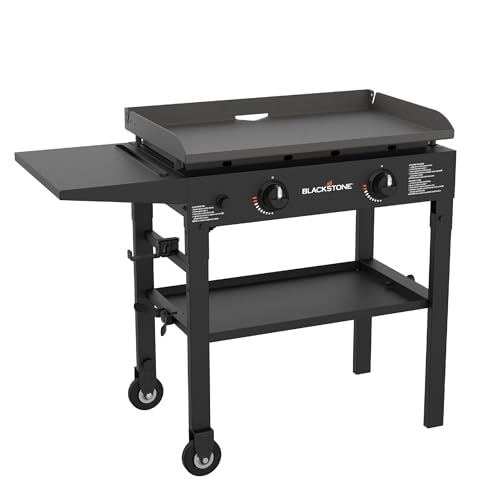
Griddle cooktop materials
Bare steel, rust-resistant steel, ceramic coating and porcelain enamel compared on cooking, maintenance and lifespan.
Which griddles are easiest to clean?
Coated or rust-resistant surface, removable plate, grease routing and a level cooktop — the four features that decide the work.
How to stop a griddle rusting
The oil-and-cover routine, why vents matter more than people think, and how to store a griddle over a wet season.
Griddle covers, by size and burner count
Covers sized by width, hood configuration and burner count, why vents are non-negotiable, and what wears out first.
Weber Slate griddle alternatives
Six alternatives to a Weber Slate, each matched to a specific reason for shopping elsewhere: heat density, plate thickness, accessory support, price or weight.
Blackstone vs Weber Slate
The category's defining comparison: bare carbon steel and more heat, against a rust-resistant top that forgives neglect.