The griddle accessories worth buying
Ranked by the order to buy them in, not by how much they cost — starting with the one that decides whether the griddle survives.
We earn a commission if you buy through our links, at no extra cost to you. That is how this site is paid for, and it does not decide what we recommend — full disclosure.
Quick picks
Ranked on published specifications using our scoring rubric. Tap a row for the full write-up.
| # | Product | Best for | Score | Price |
|---|---|---|---|---|
| 1 |  Griddle Cover (match your width)The single cheapest way to stop rust | The single cheapest way to stop rust | 8.9 | Check price on Amazon |
| 2 |  Griddle Spatula PairThe two tools you actually use | The two tools you actually use | 8.7 | Check price on Amazon |
| 3 |  Griddle ScraperThe 60 seconds after every cook | The 60 seconds after every cook | 8.5 | Check price on Amazon |
| 4 | Squeeze Bottle SetOil control, which is most of the technique | Oil control, which is most of the technique | 8.3 | Check price on Amazon |
| 5 |  Melting DomeCheese, and steaming anything | Cheese, and steaming anything | 8.4 | Check price on Amazon |
| 6 |  Grease Cup LinersThe chore nobody wants to do | The chore nobody wants to do | 8.2 | Check price on Amazon |
| 7 | 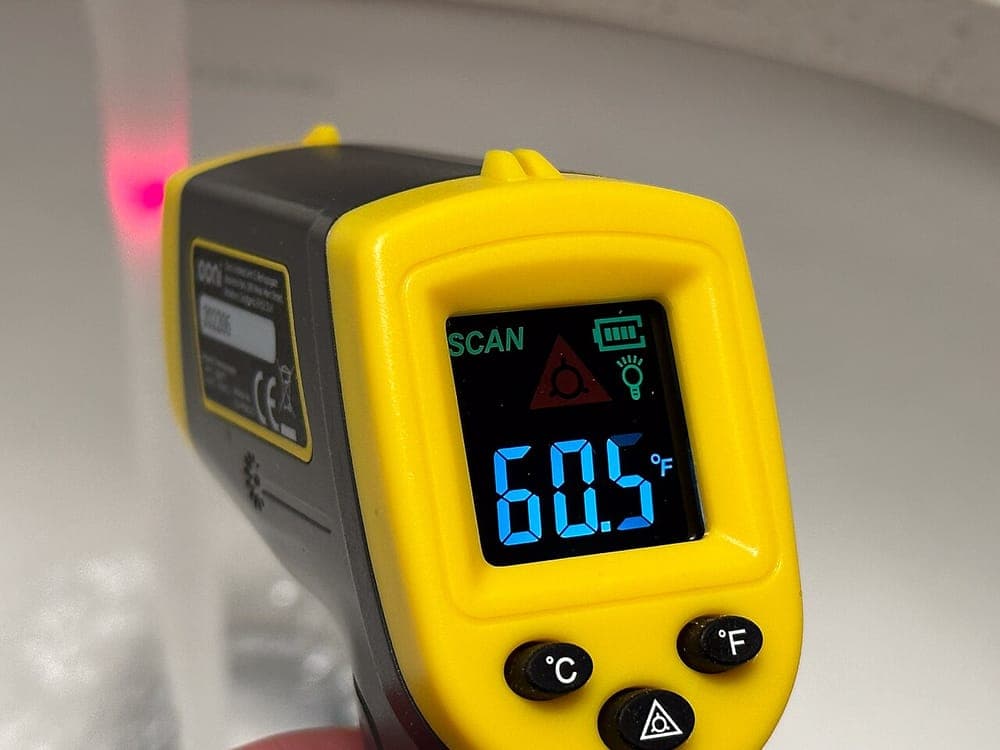 Infrared Surface ThermometerKnowing what your plate is actually doing | Knowing what your plate is actually doing | 8.3 | Check price on Amazon |
| 8 | 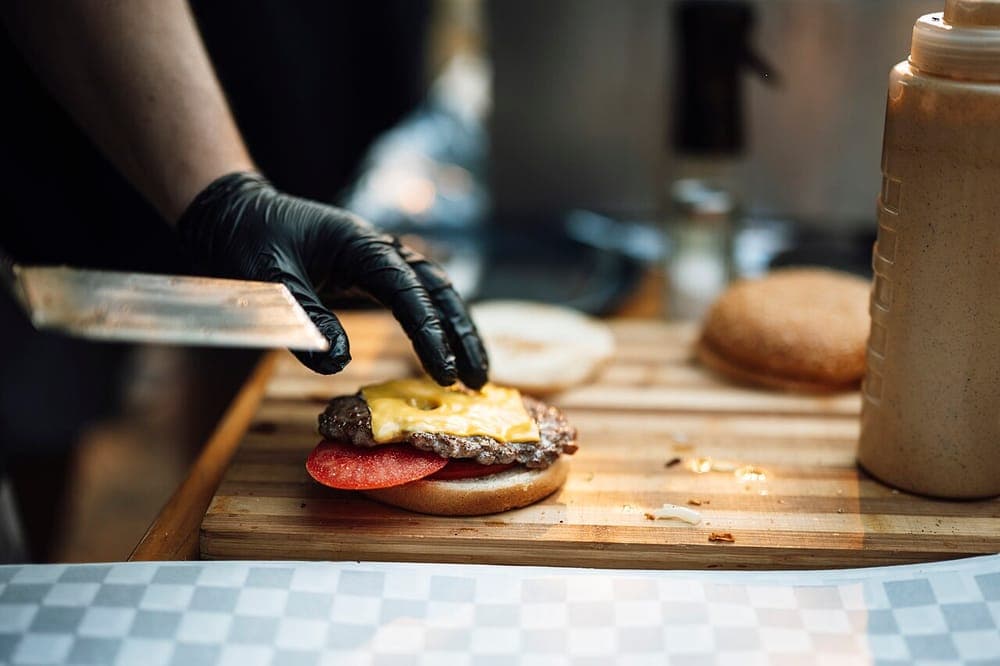 Smash Burger PressCrust, which is the entire point | Crust, which is the entire point | 8.6 | Check price on Amazon |
| 9 |  Griddle / Grill MatDecks, patios and rented space | Decks, patios and rented space | 7.8 | Check price on Amazon |
| 10 | Griddle Hard Cover / HoodRain, and roasting | Rain, and roasting | 8.1 | Check price on Amazon |
#ad We publish no prices: there is no verified price feed on this site, so the retailer’s page is the only price. How this is funded
The four tests an accessory has to pass
The accessory aisle for this category is enormous and most of it is the same four useful items repackaged. Before anything gets onto a list like this one, we ask four questions of it, and they are the questions worth asking in a shop as well.
- Does it do something the griddle cannot do without it? A melting dome does. A sauce brush does not — the kitchen drawer already answers that.
- Does it replace a chore, or create one? Grease cup liners remove the single most unpleasant job in griddle ownership. A 30-piece tool set creates a storage problem.
- Will it survive being near a hot plate? Thin stamped steel flexes, cheap plastic deforms, and fabric that cannot be wiped absorbs grease permanently.
- Does it fit any griddle, or only yours? This is the one that decides whether an accessory is a safe purchase or a likely return, and it is the reason the list below is split the way it is.
That last test matters more than any specification. Roughly half of the items here work on any flat top ever made, and the other half have to match your griddle’s width, hood and grease system exactly. Buying in the wrong order — model-specific items before universal ones — is how people end up with a drawer of near-misses.
The buying order
If you bought a griddle this week and want to know what to add and when, this is the order. It is not a ranking by price or by how much we like each item; it is the sequence that gets the most use out of each purchase.
| # | Accessory | What it is for | Fits any griddle? |
|---|---|---|---|
| 1 | Cover | Keeping the plate dry between cooks | No — match width and hood |
| 2 | Two stiff spatulas | Every cook, all of them | Yes |
| 3 | Scraper | The sixty seconds after cooking | Yes |
| 4 | Squeeze bottles | Dosing oil and water | Yes |
| 5 | Melting dome | Cheese, steaming, finishing | Yes |
| 6 | Grease cup liners | Emptying the cup without touching it | No — match the cup type |
| 7 | Infrared thermometer | Turning “medium” into a number | Yes |
| 8 | Smash burger press | Crust on a thin patty | Yes |
| 9 | Griddle mat | Protecting a deck or patio | Yes, by size |
| 10 | Hard cover or hood | Weather, and roasting | No — model and model-year |
Owners who already have tools can skip to item five. Owners who have nothing at all should read the note on kits below before buying items two, three and four separately.
1. A cover, before anything else
On a bare carbon-steel griddle — which is most of them, including every Blackstone and both Traeger Flatrocks — the cover is not an accessory. It is the thing standing between your cooktop and a rust problem, and it costs a fraction of what a replacement plate does.
It has to match three things: the width, whether the griddle has a hood, and the cart style. A 36-inch cover cut for one brand will not sit correctly on another brand’s 36-inch cart, which is why covers are the most commonly returned item in this category. Vents are non-negotiable: an unvented cover traps condensation against steel, which is precisely the thing you bought it to prevent. Covers by size and burner count works through the sizing.
The honest limitation: a cover is a consumable. Seams, zips and the inner coating are what fail, usually after two or three seasons outdoors, and no cover survives being put on over a plate that is still warm.
2. Two spatulas, and only two
The pair of spatulas is the tool you touch on every single cook, and the only specification that matters is stiffness. A blade that flexes when you push it under a patty slides over the crust instead of lifting it, which is the difference between a burger that comes up whole and one that tears.
A long turner for moving food and a shorter, wider one for scooping covers essentially everything. Everything beyond that pair is the kit manufacturer counting pieces. What makes a spatula stiff enough.
Cons worth knowing: welded-handle spatulas conduct heat up to your hand faster than riveted ones, and the thin stamped blades that come bundled with budget griddles are the first thing most owners replace.
3. A scraper — the one that saves the surface
Griddle maintenance is almost entirely a sixty-second routine performed while the plate is still hot: scrape, wipe, thin film of oil. A proper flat scraper does that job in one pass where the edge of a spatula does it in six, and a hot plate releases residue that a cold one has glued down.
Match the scraper to your cooktop material. Steel is correct on bare carbon steel and wrong on a ceramic-coated top like the Pit Boss Ultimate, where it cuts through the coating you paid extra for. Scrapers, stones and what each strips separates the daily tools from the once-a-season ones.
4. Squeeze bottles, which cost almost nothing
Two bottles, one for oil and one for water. This is the least glamorous item on the page and the one with the best ratio of technique unlocked to money spent.
Dosing oil by eye from a jug gives you either a dry plate or a shallow fry; a narrow tip lays a controlled line, which is what a seared crust requires. The water bottle is what makes the after-cook routine fast, because steam lifts residue that scraping alone leaves behind, and it is also how you steam under the dome in the next item.
Two honest cons: wide-tip bottles over-dose oil and defeat the whole purpose, and oil left in a bottle on an outdoor griddle for a season goes rancid. Label them — oil and water look identical through opaque plastic.
5. A melting dome
A smash burger is done in roughly ninety seconds and cheese does not melt in ninety seconds. A dome plus a squirt of water from the bottle you just bought solves that in about ten, and the same trick steams onions, warms buns and finishes thicker food without burning the outside.
It fits any griddle, it is cheap, and it gets used on most cooks. Sizing and what to look for. The limitation is that a dome is a crude instrument — it traps steam, which is exactly what you do not want under anything you are trying to keep crisp.
6. Grease cup liners, if the cup fits them
Liners turn emptying the grease cup from a job you put off into one you do without thinking, and putting it off is how the cup overflows down the back of the cart.
They are model-specific. Rear-drain and front-drain cups are different shapes, and a liner cut for one will not seat in the other — check which your griddle has before buying. Which liner fits which cup. They are also a recurring cost rather than a one-off, and foil liners tear if you let the cup get genuinely full.
7. An infrared thermometer
Griddle knobs are labeled low to high, which tells you nothing about the surface temperature, and surface temperature is the whole game — pancakes want a moderate plate, smash burgers want one as hot as it gets. An infrared gun reads the plate in a second and finds the hot spots every griddle has in about thirty.
It is the item that most changes how well someone cooks on a griddle in the first month, and it works on any griddle, indoor or out. What to look for in a surface thermometer and the temperature chart to read it against.
The caveat is real: infrared thermometers read surface temperature only, so they are no substitute for a probe thermometer for doneness, and a shiny, freshly oiled plate can read low because polished metal reflects rather than emits.
8. A smash burger press, if you smash
Narrower use than the items above, which is why it is eighth rather than third, but on the cook it is for it is decisive. Crust comes from maximum contact between cold meat and hot steel for the first thirty seconds, and that needs weight and a genuinely flat face.
The light aluminum discs bundled in tool kits bounce off the patty instead of holding it down. Heavy cast iron with a flat face is the article. Presses, weight and face flatness, and the technique it belongs to.
9. A mat, if the griddle stands on something you care about
Grease spatter travels further than people expect and a wood deck, a composite deck or a rental patio does not recover from it. A mat is the cheapest insurance available against a permanent stain, and it also stops cart casters marking soft surfaces.
Buy one bigger than the griddle’s footprint — spatter lands beyond the cart, not under it. Mat sizing and materials. Nobody needs one on concrete or gravel, which is why it is ninth.
10. A hard cover or hood, last and biggest
This is the one accessory that changes what the griddle can cook rather than how comfortably you cook on it. Trapped heat lets you roast, melt and hold, and a hard cover deals with weather in a way fabric cannot.
It is also the most model-specific item in the category: mounts are matched to the model and often the model year, so you need both before ordering. Clearance above the griddle matters too, since a hood that cannot open fully is worse than none. Hard covers against hoods explains which one your griddle can take.
If you own nothing at all, consider a kit instead of items 2 to 5
A single kit is usually cheaper than buying two spatulas, a scraper, bottles and a dome separately, and a first-party kit is cut to your griddle’s dimensions. The trap is piece count: a 30-piece kit holds the same four or five useful tools as a 10-piece one plus twenty-odd items destined for a drawer, and kits economize precisely where it matters — spatula stiffness. How to judge a kit is the page for that decision.
What we would not buy
- Anything that duplicates a kitchen item. Tongs, sauce brushes, seasoning shakers and skewers are all sold as griddle accessories and none of them are.
- Branded seasoning blends, as a first purchase. A conditioner is a convenience with a usable viscosity, not a chemically different product from a high-smoke-point oil applied thinly. Which oils actually polymerize.
- Cleaning kits, as an everyday tool. They contain abrasives that strip seasoning by design, which makes them occasional-reset equipment rather than part of the daily routine. When to use one.
- A wind guard, unless wind is your problem. On an exposed or coastal patio it is the difference between a griddle that holds temperature and one that does not; anywhere sheltered it is a solution looking for a situation. Wind guards.
- A caddy or a carry bag bought early. Both are genuinely useful — one for not walking back to the kitchen mid-cook, one for a tabletop griddle that travels — but both are organization rather than capability, and both are model-specific.
The brand-ecosystem point nobody mentions
Accessory availability is not equal across brands, and it is invisible at the point of buying the griddle. Blackstone’s parts and accessory range is the deepest in the category; Traeger’s Flatrock line has the thinnest of the major four, which is a genuine ownership consideration rather than a specification one.
It matters twice: when you want a hood or a first-party cover that definitely fits, and in year four when a burner assembly or a regulator needs replacing. If you are still choosing between models, the two Traeger Flatrock sizes compared includes what the smaller ecosystem means in practice, and Blackstone against Traeger Flatrock weighs it against the heat advantage.
Cooking indoors instead? Almost nothing on this page transfers except the thermometer and the bottles — coated electric plates need plastic or silicone tools, not steel. Flat tops for an electric stove covers what indoor cooking actually needs.
What we cannot tell you
We have not run these through a test program, and this site has no test kitchen. What that rules out is durability claims about an individual listing: whether one brand’s cover outlasts another’s, or how a particular spatula holds up after two hundred cooks.
So the picks here are deliberately category picks, not SKU picks. What we will tell you is what to match, what each item replaces, what fails first and the order to buy in — which is the part of the decision that does not change when a listing goes out of stock. The selection rubric is at how we choose.
The picks in detail
Specifications are linked to their source on every card. Scores are ours, derived from those specifications.
#1 · The single cheapest way to stop rust
Griddle Cover (match your width)
The accessory that decides whether a bare-steel griddle survives its first wet season — buy it sized to your griddle's width, not approximately.
#ad We publish no prices: there is no verified price feed on this site, so the retailer’s page is the only price. How this is funded
Key specifications
- Match on
- Griddle width: 17, 22, 28 or 36 in
- Also match
- Hood vs no hood — a hood changes the height
- Critical feature
- Vents, so trapped moisture can escape
- Critical feature
- Straps or a cinch, or wind lifts it off
- What fails first
- Seams and the elastic hem
- Common mistake
- A cover that fits loosely holds water against the top
Scores
- Fit9.0
- Durability7.0
- Rust protection9.5
- Value9.0
What works
- A vented, correctly sized cover prevents more griddle deaths than any other single purchase
- Cheap relative to the surface it protects
- Works with the hard cover rather than instead of it — the hard cover keeps rain off the plate, the soft cover keeps it off the cart
What to know
- An unvented cover is worse than no cover: it traps condensation against bare steel
- Sizes are not interchangeable between brands even at the same stated width
- Covers are consumables — UV destroys them in a few seasons
#2 · The two tools you actually use
Griddle Spatula Pair
Two stiff, wide, bevelled-edge spatulas do 90% of griddle work — everything beyond that in a 30-piece kit is storage clutter.
#ad We publish no prices: there is no verified price feed on this site, so the retailer’s page is the only price. How this is funded
Key specifications
- What matters
- Blade stiffness — a flexible blade cannot lift a stuck smash burger
- What matters
- A bevelled front edge that gets under fond
- Width
- Wide enough to carry a whole patty, narrow enough to turn in a crowd
- Quantity
- Two — one to lift, one to steady
- Handle
- Riveted, not glued
- What fails first
- The handle rivet and the blade's leading edge
Scores
- Stiffness9.0
- Edge9.0
- Handle7.5
- Value8.5
What works
- A stiff bevelled blade is the difference between turning a smash burger and destroying one
- Two spatulas lets you work food against itself rather than against the plate
- Stainless blades can be scraped and scrubbed without degrading
What to know
- Thin, flexible 'griddle' spatulas sold in big kits are the wrong tool and are what most kits contain
- Long handles get in the way on a tabletop griddle
- Riveted handles collect grease at the joint
#3 · The 60 seconds after every cook
Griddle Scraper
A stiff, flat scraper used while the plate is still hot is the entire daily cleaning routine — everything else is an occasional job.
#ad We publish no prices: there is no verified price feed on this site, so the retailer’s page is the only price. How this is funded
Key specifications
- Blade
- Stiff and dead straight — a curved blade misses the middle
- Width
- Wide enough to clear a lane in one pass
- Handle
- Long enough to stay out of the heat
- When to use
- While the plate is still hot, right after cooking
- Pairs with
- Water, squirted on to steam-lift the residue
- What fails first
- The blade's leading edge, which rounds off
Specifications from Blackstone cleaning accessories.
Scores
- Stiffness9.0
- Edge8.5
- Handle7.5
- Value9.0
What works
- A hot plate releases residue that a cold plate will not — timing matters more than the tool
- One stiff scraper replaces an entire cleaning kit for daily use
- Nothing to wear out but the edge
What to know
- A rounded or flexible blade skates over the fond instead of lifting it
- Short-handled scrapers put your knuckles over a 400 °F plate
- Does not address rust or a flaking seasoning layer
#4 · Oil control, which is most of the technique
Squeeze Bottle Set
Two bottles — one oil, one water — are the most underrated griddle tools there are, because dosing oil by eye is how food sticks or swims.
#ad We publish no prices: there is no verified price feed on this site, so the retailer’s page is the only price. How this is funded
Key specifications
- How many
- Two minimum: oil and water
- Tip
- Narrow, so you can lay a thin line rather than a puddle
- Water bottle use
- Steam-lifting residue and steaming under a dome
- Material
- Heat-tolerant — bottles sit near a hot plate
- Caps
- Must seal; open bottles collect everything
- Label them
- Oil and water look identical in an opaque bottle
Specifications from Blackstone accessories.
Scores
- Control9.0
- Material7.0
- Sealing7.5
- Value9.5
What works
- A thin controlled line of oil is the difference between a seared crust and a fried one
- The water bottle makes daily cleanup a 60-second job
- Trivially cheap for how much technique they unlock
What to know
- Wide-tip bottles over-dose oil and defeat the purpose
- Cheap plastic deforms if left on a hot side shelf
- Oil goes rancid in a bottle left outside for months
#5 · Cheese, and steaming anything
Melting Dome
A dome plus a squirt of water turns a dry griddle into a steamer for thirty seconds — it is how cheese melts before the patty overcooks.
#ad We publish no prices: there is no verified price feed on this site, so the retailer’s page is the only price. How this is funded
Key specifications
- What it does
- Traps steam so cheese melts in seconds, not minutes
- Diameter
- Larger than your patty plus the cheese overhang
- Material
- Stainless holds up; aluminum warps
- Handle
- Must stand off the dome — it gets hot immediately
- Technique
- Squirt water beside the food, then cover
- Also good for
- Steaming vegetables and reheating buns
Scores
- Seal8.5
- Material8.0
- Handle7.0
- Value9.0
What works
- Solves the real smash-burger problem: the patty cooks in 90 seconds, cheese does not melt in 90 seconds
- Doubles as a steamer for anything on the plate
- Cheap and essentially unbreakable in stainless
What to know
- Aluminum domes warp and then do not seal
- A dome with a flush handle is unusable without a glove
- One dome covers one burger; cooking six means working in rounds
#6 · The chore nobody wants to do
Grease Cup Liners
Disposable liners turn emptying the grease cup from a scraping job into lifting a liner out — the highest convenience-per-dollar accessory here.
#ad We publish no prices: there is no verified price feed on this site, so the retailer’s page is the only price. How this is funded
Key specifications
- Match on
- Your griddle's cup shape — rear-drain and front-drain cups differ
- Material
- Foil or coated paper
- Why it matters
- Congealed grease in a bare cup has to be scraped out
- Frequency
- One per few cooks, depending on what you cook
- Disposal
- Cool completely first — hot grease melts the liner seam
- Not a substitute for
- Cleaning the drain channel itself
Scores
- Fit7.5
- Convenience9.5
- Durability7.0
- Value9.0
What works
- Removes the single most unpleasant part of griddle ownership
- Cheap, and genuinely consumable rather than optional
- Reduces the chance of a forgotten, overflowing cup
What to know
- Shapes are brand- and model-specific
- Does nothing about the drain channel, which still needs scraping
- Pouring hot grease in can melt the liner
#7 · Knowing what your plate is actually doing
Infrared Surface Thermometer
The only way to know a griddle's real surface temperature — and the fastest way to find the hot spots every griddle has.
#ad We publish no prices: there is no verified price feed on this site, so the retailer’s page is the only price. How this is funded
Key specifications
- Type
- Infrared, non-contact — not a probe thermometer
- Range needed
- At least 100–600 °F
- Use
- Read several points; a griddle is never one temperature
- Limitation
- Reads surfaces, not the inside of food
- Accuracy caveat
- Shiny bare steel reads low; a seasoned plate reads true
- Pairs with
- A probe thermometer for doneness
Scores
- Usefulness9.0
- Accuracy7.5
- Range8.0
- Value8.5
What works
- Turns 'medium heat' from a guess into a number
- Finding your plate's hot spots takes about 30 seconds and changes how you cook on it forever
- Non-contact, so there is nothing to clean
What to know
- Reads surface only — it cannot tell you a burger is done
- Emissivity error on bare, shiny steel can read 50 °F or more low
- One more battery device living near a hot griddle
#8 · Crust, which is the entire point
Smash Burger Press
Mass and a flat face are all that matter — a heavy press holds the patty against the plate long enough to build crust instead of steaming it.
#ad We publish no prices: there is no verified price feed on this site, so the retailer’s page is the only price. How this is funded
Key specifications
- What matters most
- Weight — light presses bounce off the patty
- Face
- Dead flat; a domed face leaves a thin middle
- Diameter
- Wider than your finished patty
- Handle
- Offset and insulated — it sits on a 400 °F plate
- Technique
- Press once, hold 10 seconds, do not press again
- What fails first
- Wooden handles, which char at the joint
Scores
- Mass9.0
- Flatness8.5
- Handle7.0
- Value8.5
What works
- Heavy cast iron presses do the job a spatula physically cannot
- A flat face gives even crust across the whole patty
- Works equally on any griddle regardless of brand
What to know
- Pressing a second time squeezes out the juice you just built crust to hold in
- Light aluminum presses are common and do not work
- Needs its own seasoning and care if it is bare cast iron
#9 · Decks, patios and rented space
Griddle / Grill Mat
Protects whatever is under the griddle from the grease that will absolutely reach it — most relevant on wood decking and new concrete.
#ad We publish no prices: there is no verified price feed on this site, so the retailer’s page is the only price. How this is funded
Key specifications
- Size rule
- Wider than the griddle's footprint plus two feet of standing room
- Surface
- Must be non-slip when greasy
- Material
- Flame-resistant, not merely 'heat resistant'
- Cleaning
- Hoseable — a mat you cannot wash is a grease rag
- Most needed on
- Wood decking, composite decking, new concrete
- Least needed on
- Gravel and old stained concrete
Scores
- Coverage8.0
- Grip7.5
- Cleaning8.0
- Value7.5
What works
- Grease stains on composite decking are effectively permanent; a mat is far cheaper than the deck board
- Reduces the slip hazard right where you stand to cook
- Rolls up for storage unlike most griddle accessories
What to know
- A mat that is too small is worse than none — grease lands on the edge seam
- Cheap mats slide underfoot once greasy
- Not necessary at all on many surfaces
#10 · Rain, and roasting
Griddle Hard Cover / Hood
A hinged hood does two jobs a soft cover cannot: it keeps rain off the plate between cooks and it traps heat so you can roast rather than only sear.
#ad We publish no prices: there is no verified price feed on this site, so the retailer’s page is the only price. How this is funded
Key specifications
- Two types
- Hinged hood (stays on) vs lift-off hard cover
- Hood enables
- Trapped-heat cooking — roasting, melting, reheating
- Hard cover enables
- Flat storage and stacking
- Match on
- Griddle width and generation — mounts changed between model years
- Not a substitute for
- A soft cover over the whole cart
- Watch for
- Hood clearance under a low patio roof or overhang
Scores
- Weather protection8.5
- Cooking benefit8.5
- Fit6.5
- Value8.0
What works
- A hood turns a griddle into something that can finish thick food without burning the outside
- Rain protection between cooks without wrestling a fabric cover
- Makes the griddle usable in light weather
What to know
- Adds height, which matters under a low overhang and for cover fit
- Hinged hoods trap grease vapor and need their own cleaning
- Mounts are model-year specific, so a used hood may not fit
Common questions
What griddle accessories do I actually need?
What is the first griddle accessory to buy?
Which griddle accessories fit any griddle?
Are griddle tool kits better value than buying separately?
Do I need an infrared thermometer for a griddle?
Sources
Every specification on this page came from one of these. If you find one of them has changed, tell us and we will correct it.
Read next
Griddle covers, by size and burner count
Covers sized by width, hood configuration and burner count, why vents are non-negotiable, and what wears out first.
Griddle spatulas
Why stiffness matters more than anything, why two beats one, and why the spatulas in big kits are the wrong tool.
Griddle tool kits
What a kit genuinely needs to contain, what is filler, and when buying the tools separately is the better call.
Melting domes
Why a dome plus water beats waiting, what to look for in material and handle, and the other things it is good for.
Griddle thermometers
Why infrared beats a probe for griddles, what range you need, and the emissivity error that reads bare steel low.

Cleaning a griddle after every cook
The complete after-cook routine, why timing matters more than tools, and the three things never to use on a seasoned surface.