The best griddle brands
Not a model ranking. Which company to buy from, judged on the four things you only find out in year three.
We earn a commission if you buy through our links, at no extra cost to you. That is how this site is paid for, and it does not decide what we recommend — full disclosure.
Quick picks
Ranked on published specifications using our scoring rubric. Tap a row for the full write-up.
| # | Product | Best for | Score | Price |
|---|---|---|---|---|
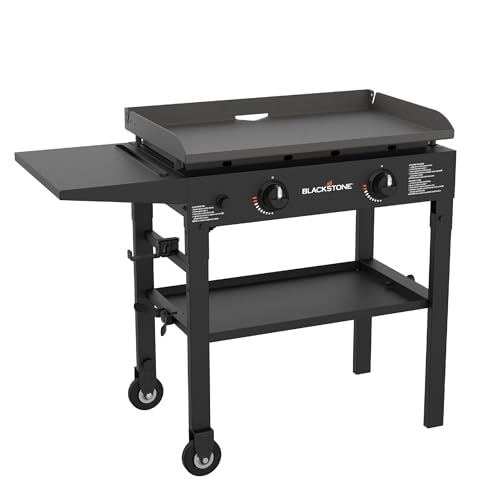
| 1 | 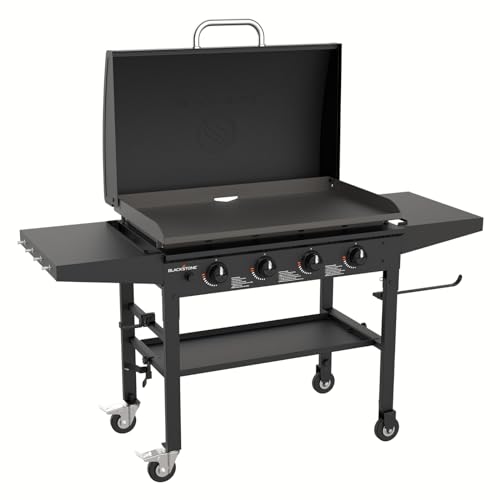 Blackstone 36" Original GriddleLarge families and crowd cooking | Large families and crowd cooking | 8.6 | $498.99View on Amazon |
| 2 | 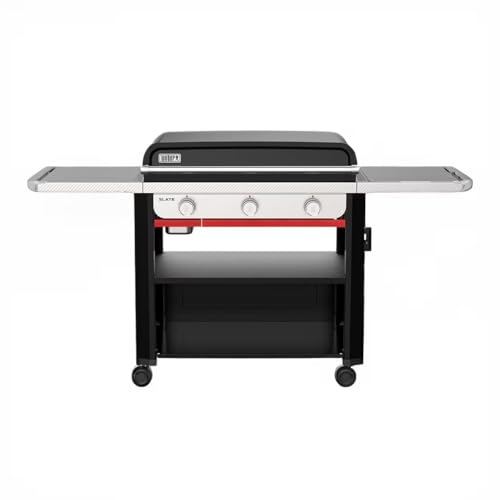 Weber Slate 30" GriddleOccasional cooks who hate rust | Occasional cooks who hate rust | 8.5 | $649.00View on Amazon |
| 3 | 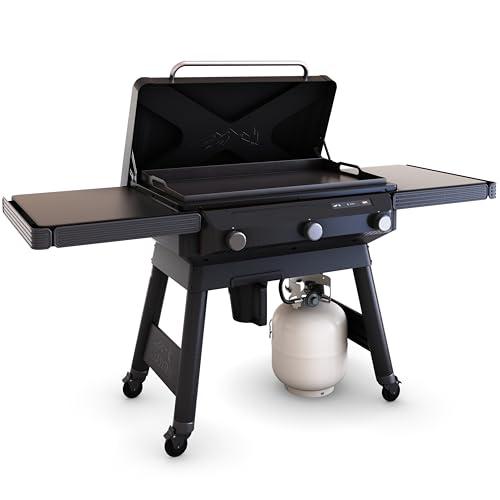 Traeger Flatrock 3-Zone GriddleSearing and zone discipline | Searing and zone discipline | 8.8 | $799.00View on Amazon |
| 4 | 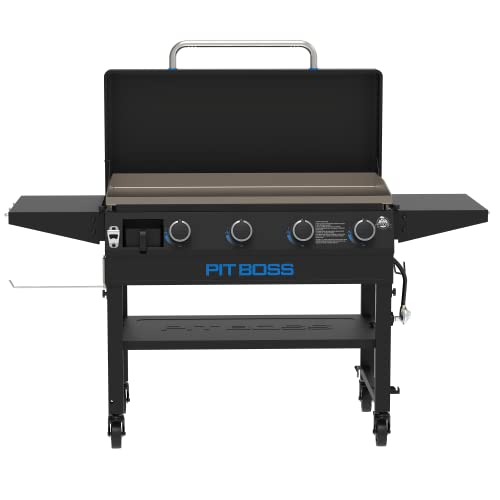 Pit Boss Deluxe 4-Burner GriddleRaw heat per square inch | Raw heat per square inch | 8.5 | $570.81View on Amazon |
| 5 | 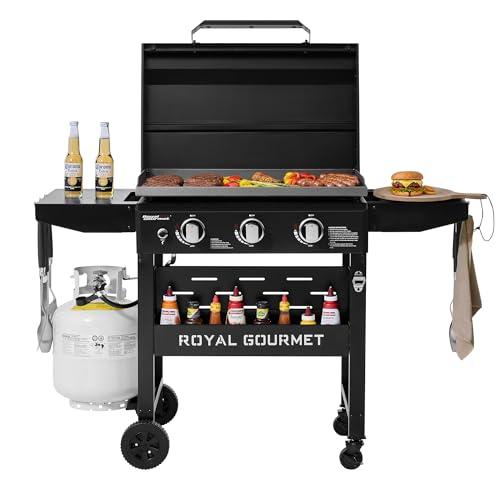 Royal Gourmet GB3000PB 3-Burner GriddleThree zones at a two-burner price | Three zones at a two-burner price | 8.0 | $227.39View on Amazon |
| 6 | 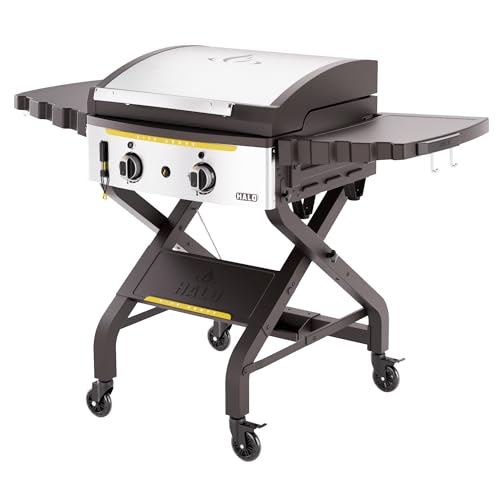 Halo Elite 2B GriddleFour zones from two burners | Four zones from two burners | 7.4 | $699.99View on Amazon |
#ad Price as of November 28, 2026; prices change — check the retailer. How this is funded
This is not a model ranking, and if that is what you want, the main roundup ranks every griddle here on area, zones and heat density. This page answers a different question, and a more consequential one: which company should you buy a griddle from? Because within a size class the specifications converge, and what actually differs between two 36-inch four-burner carts is the company behind them — whether a replacement igniter exists in four years, whether a cover is made for that exact body, whether the number on the box is the number in the manual.
Those things do not show up in a spec comparison and they decide whether you still own a working griddle in year five. So the ranking below is on brand behavior, with one currently-purchasable model named per brand as the entry point.
We have not cooked on these in a test lab and do not claim to have. Every figure below is published by a manufacturer or a major retailer and linked at the foot of the page, every heat-density number is computed by us from those published figures, and every pick was checked as currently purchasable when this page was written.
The five things a brand decides
- Spare parts in five years. Burners, regulators, igniters and replacement cooktops are the parts that fail. A brand that stocks them by model name at the home centers is selling you a griddle you can keep; how long a griddle lasts is mostly a parts question, not a steel question.
- Accessory fit. Covers, hard covers, caddies and carry bags are sized to a specific body. A brand with a popular footprint gets a whole third-party industry sizing parts for it; a brand without one leaves you measuring.
- Cooktop philosophy. Each brand has made a decision about the surface — bare steel, treated steel, or coated — and it is a decision about what kind of owner they want. The material comparison is the reference.
- Spec-sheet honesty. This category has a real problem with it. The same model gets sold at two BTU ratings; a manufacturer’s own page contradicts its retailers on surface area. A brand whose numbers agree with themselves is telling you something about the rest of the operation.
- Where you can actually buy one. Home centers, club stores, specialist dealers and direct-only each imply a different experience when something goes wrong. Where to buy a griddle covers the channels.
1. Blackstone — the best griddle brand to buy into
Blackstone wins on criteria one and two by a margin nothing else here approaches, and those are the two that matter most over a decade. Covers, hard covers, caddies, carry bags, replacement tops, burners, regulators and igniters are stocked by name, by multiple makers, at the major home centers — the 28 and 36-inch footprints are effectively standards that the rest of the accessory industry sizes to. The line also runs from a 17-inch single-burner tabletop to 36-inch four-burner carts, so you can stay inside the brand as your needs change, and the entry point below — 60,000 BTU across 769 square inches, 78.0 BTU per square inch — is the highest heat density of any mainstream large griddle.
The honest cons. Blackstone is committed to bare carbon steel across almost the whole line, which means every griddle it sells carries a rust clock and a seasoning routine. Its model naming is the worst in the category — Original, Omnivore, Culinary, Select, Adventure Ready and On The Go overlap at the same sizes with different tops, hoods and burner counts, and two listings with the same stated size are often not the same griddle. Heat density across the line also varies enormously, from 78.0 on the 36 down to 46.4 on the coated 20-inch camping griddle, so the brand’s reputation for heat does not transfer to every model wearing the badge. Which Blackstone griddle to buy exists mainly to untangle that, and Blackstone alternatives covers the reasons to leave.
2. Weber — the best brand to own, and the most expensive way to cook
Weber is the only brand here that made a different decision about the cooktop and committed to it: the Slate line’s rust-resistant carbon steel arrives pre-seasoned, and it is the single biggest practical difference available in this category. Weber also includes what others charge for — a lid, extendable side tables, casters, a digital thermometer on some configurations — and it sits behind the largest dealer, parts and warranty network in outdoor cooking, which is the one thing you cannot buy later.
The honest cons. Weber is the weakest brand here on heat per square inch, and not marginally: 63.5 on the Slate 36, 66.7 on the 30 and 45.5 on the 22, against roughly 78 to 82 for bare-steel carts at comparable sizes. It costs more than the equivalent Blackstone for less heat. The griddle line is young and short — three sizes — so there is less to grow into. And the third-party accessory industry is still built around Blackstone bodies, so your cover and caddy options are mostly Weber’s own. The rust-resistant ranking is where that cooktop decision pays off, and Weber Slate alternatives is the page for when it does not.
3. Traeger — the brand with the best engineering idea
Traeger brought the one genuinely new idea in flat-top design: insulated zones. On every other griddle here heat bleeds sideways, so a “warm” zone beside a searing zone does not stay warm. The Flatrock’s TruZone sections are separated from each other, and that is the difference between three temperature settings and three actual zones. The 3-Zone also lands at 79.1 BTU per square inch, the best density in its size class.
The honest cons. Traeger has the smallest accessory and parts range of the four major brands — a cover and a cleaning kit, not an ecosystem — and that is a real cost on a griddle you intend to keep. The griddle line is two models deep. The stated temperature range starts at 350 °F, higher at the bottom than rivals, which makes gentle holding less controllable than the zone story suggests. And it is bare carbon steel, so the maintenance routine is the same as Blackstone’s. Flatrock 2-Zone vs 3-Zone is the decision inside the line.
4. Pit Boss — the brand that sells the most heat per dollar
Pit Boss is the specification-per-dollar leader in this category and the only brand offering two genuinely different cooktop philosophies side by side. The Deluxe below publishes 82.3 BTU per square inch across 753 square inches on a 4.7 mm plate — the highest heat density and the thickest cooktop anywhere on this site — while the Ultimate Lift-Off uses non-stick armored ceramic with no seasoning routine at all and a top that lifts off to be washed. No other brand here gives you that choice.
The honest cons. Build quality is where the money came from: fold-and-go legs under a loaded 753-square-inch top are less stable than a fixed cart, and fit and finish sit below Weber’s. The lineup has the same naming confusion as Blackstone’s, and the Deluxe ships as 753 square inches on one model number and 748 on another at the same 62,000 BTU. Accessory support sits between Blackstone’s and Traeger’s. And the ceramic option trades permanence for convenience — a coating cannot be re-applied. Blackstone vs Pit Boss has the detail.
5. Royal Gourmet — the budget pick
This is the budget pick on this page. Royal Gourmet is the brand to buy from if the specification per dollar is the only thing you are optimizing, and it is better at it than its price suggests: the GB3000PY below gives three independently controlled zones over 492 square inches at 79.3 BTU per square inch, with a hood, electronic ignition, lockable wheels and folding shelves included rather than extra. Its portable PD1301 publishes 79.9 BTU per square inch, the highest density of any portable griddle here, on a porcelain-enameled top that needs no seasoning. Royal Gourmet is also widely stocked — home centers, Tractor Supply, outdoor retailers and its own store.
The honest cons. Plates are thinner than the big brands use at the same sizes — 3 mm on the GB3000PY against roughly 3.4 mm for Blackstone at that plate area — and thickness is what stops the surface diving when cold food lands. Accessory and parts support is a fraction of Blackstone’s, and model-specific, which is the real cost of buying outside the big names. The model range is wide and changes quickly, so a cover or top that fits this year’s SKU may not be listed next year. And its spec sheets are among the least consistent here: Overton’s table reads 39,000 BTU per burner on the GB3000PY while Royal Gourmet’s own title and Lowe’s give 39,000 as the three-burner total, which is the figure we use. The budget roundup ranks this layer properly.
6. Halo — the specialist worth knowing about
Halo is the small brand with a genuinely distinct product: the Elite 2B splits two burners into four controllable temperature zones across 480 square inches, with a stated ceiling of 750 °F — higher than anything else on this site — in a commercial-style body with a hood at a compact size. If what you want is zone granularity rather than surface area, no major brand sells this shape.
The honest cons. 24,000 BTU over 480 square inches is 50.0 BTU per square inch, which is low: the high stated ceiling describes peak temperature in one zone, not recovery under a full load, and a roughly ten-minute warm-up is slower than its rivals. More importantly for a brand page, Halo has the smallest dealer and parts network of any brand we have put a buy button on, stock varies sharply between retailers, and that is the entire risk of buying a specialist. Our Halo Elite 2B review has the specifications, and Weber Slate vs Halo is the pairing.
Four brands we are not putting a buy button on
Each of these comes up in the same searches, and each fails a check we apply before linking anything. None of this is a verdict on how they cook.
Camp Chef. For years the most interesting brand in the category, because the Flat Top Grill 600 genuinely converted between a 604-square-inch griddle and a 501-square-inch grill with real grates. Camp Chef’s own reference page describes that model as discontinued and we could not find it in stock at a mainstream retailer. The newer Gridiron line is dealer-routed and the Pro configuration we checked was showing sold out at Camp Chef with no stock at its dealer locator, so the brand is discussed rather than picked. Our Camp Chef review stays up as a reference.
LoCo Cookers. On paper the best idea in the category after Traeger’s zones: a real thermostat in 25-degree increments, so the griddle holds a temperature instead of a knob position, plus a cooktop leveling system that fixes the most common real-world complaint. 738 square inches at 63.0 BTU per square inch. When we last checked, it was showing sold out or unavailable at the retailers that carry it. Our LoCo review has the detail.
Nexgrill. The clearest example of criterion four going wrong. Retailers list the Daytona at 756 square inches and 60,000 BTU — which would be 79.4 BTU per square inch, matching a Blackstone 36 — while Nexgrill’s own current product page gives 792 square inches and 38,000 BTU for the same name. That is not a rounding difference, it changes the headline number by a third, and stock at the big retailers has been patchy. Our Nexgrill review explains what to read off the box.
Member’s Mark. Sam’s Club’s own label, and a credible 36-inch griddle: 720 square inches with 304 stainless burners, a better burner grade than several pricier brands use. The problem is the same specification one — it ships at both 48,000 and 60,000 BTU with the same 720-square-inch surface, a 25% heat difference you have to catch on the label — combined with club-store exclusivity that makes parts and warranty harder outside that channel. Our Member’s Mark review says which figure to look for.
Heat density by brand, across the models we cover
One number, computed by us from each griddle’s published BTU and cooking area, because no manufacturer publishes it. The spread within a brand is often wider than the gap between brands, which is the real argument against buying on badge.
| Brand | BTU per sq in, across the models here | Cooktop philosophy |
|---|---|---|
| Pit Boss | 71.1 – 82.3 | Bare steel and armored ceramic, both |
| Royal Gourmet | 79.3 – 79.9 | Bare steel and porcelain enamel |
| Traeger | 79.1 on the 3-Zone | Bare carbon steel, insulated zones |
| Blackstone | 46.4 – 78.0 | Bare carbon steel, coated on camping models |
| Weber | 45.5 – 66.7 | Rust-resistant pre-seasoned steel |
| Halo | 50.0 on the Elite 2B | Steel, four zones from two burners |
Griddle BTU explained has the full table and the arithmetic.
What no brand will fix for you
- The cover. Whatever badge is on the cart, a correctly sized vented cover is the cheapest thing in this category and the difference between a griddle that lasts a decade and one that is pitted by its second spring.
- Reading the label. Two of the brands above sell the same model at two different BTU ratings. Nobody is going to catch that for you at the till.
- The routine. Unless you buy a coated or treated top, every brand here hands you the same job: scrape, steam, wipe, oil, every cook.
Which brand to buy from
| If what you care about is | Buy from |
|---|---|
| Parts and accessories in five years | Blackstone |
| A surface that forgives neglect, and a warranty | Weber |
| Zones that genuinely stay separate | Traeger |
| The most heat and the thickest plate | Pit Boss |
| Specification per dollar | Royal Gourmet |
| Zone granularity in a small body | Halo |
| A thermostat, or a grill-griddle convertible | Nothing we can currently link — see LoCo and Camp Chef above |
And the closing caveat this page earns: brand is the tiebreaker, not the decision. Size and zone count come first, and the sizing guide settles those. What griddle owners actually say is the other half of this picture — the complaints that recur per brand rather than the specifications they publish.
The picks in detail
Specifications are linked to their source on every card. Scores are ours, derived from those specifications.
#1 · Large families and crowd cooking
Blackstone 36" Original Griddle
The default large griddle: four burners over 769 square inches, with the highest burner count in its size class and the deepest accessory ecosystem of any brand here.
#ad Price as of November 28, 2026; prices change — check the retailer. How this is funded
Key specifications
- Cooking area
- 769 sq in (35¾ × 21½ in)
- Burners
- 4, stainless steel
- Total output
- 60,000 BTU
- Cooktop
- Carbon steel
- Ignition
- Single spark
- Grease system
- Rear
Specifications from BBQGuys spec sheet.
Scores
- Cooking area9.5
- Heat output9.0
- Zone control9.5
- Surface care6.5
- Portability3.0
What works
- Four independent zones is the real argument for this size — you can hold a warm zone and still sear
- 769 sq in is enough to cook a full breakfast for eight without staging
- The widest accessory and spare-parts availability of any brand in this guide
What to know
- Bare carbon steel: it will rust if you leave it uncovered and unseasoned
- Needs real patio footprint — this is not a griddle you put away each week
- Rear grease management means the drain is behind the unit, which is awkward against a wall
#2 · Occasional cooks who hate rust
Weber Slate 30" Griddle
Three zones over 540 square inches on a rust-resistant top — the best griddle here for someone who cooks once a fortnight and does not want to fight their surface.
#ad Price as of November 28, 2026; prices change — check the retailer. How this is funded
Key specifications
- Cooking area
- 540 sq in
- Burners
- 3, stainless steel
- Total output
- 36,000 BTU
- Cooktop
- Rust-resistant carbon steel, pre-seasoned
- Dimensions
- 70.80 W × 39.50 H × 23.50 D in
- Weight
- 140.34 lb
Specifications from P.C. Richard spec sheet.
Scores
- Cooking area7.5
- Heat output7.0
- Zone control8.5
- Surface care9.5
- Portability4.0
What works
- Three zones at 540 sq in beats the Blackstone 28's two zones at 525 sq in — more control for the same footprint
- Rust resistance is the difference between a griddle that survives a wet autumn and one that does not
- Four swivel casters, so it actually moves on a patio
What to know
- 140 lb means 'moves on a patio', not 'goes in the truck'
- 66.7 BTU per sq in is middling — fine for everyday cooking, slower than the Traeger for a heavy sear
- The rust-resistant coating is not invincible; it still wants a cover
#3 · Searing and zone discipline
Traeger Flatrock 3-Zone Griddle
594 square inches with three insulated zones and 79.1 BTU per square inch — the highest usable heat density of any mid-size griddle here.
#ad Price as of November 28, 2026; prices change — check the retailer. How this is funded
Key specifications
- Cooking area
- 594 sq in
- Burners
- 3 (TruZone, insulated)
- Total output
- 47,000 BTU
- Cooktop
- Carbon steel
- Stated range
- 350–600 °F
- Dimensions
- 74 W × 42 H × 27 D in
Specifications from Abt spec sheet.
Scores
- Cooking area8.0
- Heat output9.5
- Zone control9.5
- Surface care6.5
- Portability3.5
What works
- Insulated zones are the real feature — heat does not bleed sideways, so a 'warm' zone stays warm
- 79.1 BTU per sq in is the best heat density in its size class, which is what you feel when six patties hit the plate
- Three genuinely independent zones in a body smaller than a 36
What to know
- Carbon steel, so you are back to seasoning and covering it
- The stated 350–600 °F range is narrower at the bottom than rivals — gentle holding is less controllable
- Smallest accessory ecosystem of the four major brands
#4 · Raw heat per square inch
Pit Boss Deluxe 4-Burner Griddle
62,000 BTU across 753 square inches — 82.3 BTU per square inch, the highest heat density of any griddle in this guide.
#ad Price as of November 28, 2026; prices change — check the retailer. How this is funded
Key specifications
- Cooking area
- 753 sq in (top 37 × 20 in)
- Burners
- 4, separately controlled stainless
- Total output
- 62,000 BTU
- Cooktop
- 4.7 mm steel, pre-seasoned with organic oil
- Portability
- Fold-and-go
- Includes
- Side shelves and lid
Specifications from Pit Boss product page.
Listings disagree: Sold as 753 sq in (model 10963) and 748 sq in (model 10942), both at 62,000 BTU.
Scores
- Cooking area9.5
- Heat output10.0
- Zone control9.5
- Surface care7.0
- Portability4.5
What works
- 82.3 BTU per square inch is the highest here — it recovers fastest when a full load of cold food goes down
- A 4.7 mm plate is thick for this price class, which is what buys you stable temperature
- Pre-seasoned with organic oil, so it is usable sooner than a bare plate
What to know
- Fold-and-go legs are less stable than a fixed cart under a loaded 753 sq in top
- The sibling SKU is listed at 748 sq in with a slightly different top — check which you are buying
- Still a steel top: seasoning and covering are on you
#5 · Three zones at a two-burner price
Royal Gourmet GB3000PB 3-Burner Griddle
492 square inches and three independently controlled burners with a hood, lockable wheels and shelves included — the same plate area as a Blackstone 28 with an extra zone on it.
#ad Price as of November 28, 2026; prices change — check the retailer. How this is funded
Key specifications
- Cooking area
- 492 sq in (27.76 × 17.72 in)
- Burners
- 3, stainless steel
- Total output
- 39,000 BTU
- Cooktop
- 3 mm sandblasted, oil-baked steel
- Weight
- 76.1 lb net
- Dimensions
- 52.44 × 23.17 × 37.22 in, shelves out
Specifications from Overton's listing (GB3000PY).
Listings disagree: Overton's spec table reads 39,000 BTU per burner. Royal Gourmet's own product title and Lowe's both state 39,000 BTU as the total for three burners, which is the figure used here.
Scores
- Cooking area7.0
- Heat output8.5
- Zone control8.0
- Surface care6.0
- Portability4.0
What works
- Three independent zones on a 492 sq in plate — the Blackstone 28's area with a holding zone added
- 79.3 BTU per square inch is high for this size class
- Hood, electronic ignition, lockable wheels and collapsible shelves are included rather than extra
What to know
- The 3 mm top is thinner than the 10-gauge (about 3.4 mm) plate Blackstone uses at this size, so it dips further under a load of cold food
- Accessory and parts support is a fraction of Blackstone's — covers, hard covers and replacement tops are model-specific and harder to source
- Bare steel, so it needs the same seasoning routine with far less documentation behind it
#6 · Four zones from two burners
Halo Elite 2B Griddle
Two burners split into four temperature zones across 480 square inches, with a stated ceiling of 750 °F — unusual control for a small griddle.
#ad Price as of November 28, 2026; prices change — check the retailer. How this is funded
Key specifications
- Cooking area
- 480 sq in
- Burners
- 2 burners / 4 zones
- Total output
- 24,000 BTU (12,000 per burner)
- Stated range
- 300–750 °F
- Warm-up
- ~10 minutes
- Hood
- Yes
Specifications from Flame Authority listing.
Scores
- Cooking area6.5
- Heat output5.0
- Zone control8.5
- Surface care6.5
- Portability4.0
What works
- A stated 750 °F ceiling is higher than anything else in this guide
- Four zones from two burners gives finer control than the burner count suggests
- Commercial-style build with a hood at a compact size
What to know
- 50.0 BTU per square inch is low — the high stated ceiling is about peak temperature in one zone, not about recovery under load
- 480 sq in with a 10-minute warm-up is slower to get going than its rivals
- The smallest dealer and parts network of any brand here
Common questions
What is the best griddle brand?
Is Weber or Blackstone the better griddle brand?
Which griddle brand has the best build quality?
Are cheap griddle brands worth buying?
Why do griddle brands list different specs for the same model?
Does the griddle brand matter more than the size?
Sources
Every specification on this page came from one of these. If you find one of them has changed, tell us and we will correct it.
- Blackstone — current griddle line-up, cooktop and accessory range
- BBQGuys — Blackstone 36" Original Griddle spec sheet (769 sq in, 60,000 BTU, 4 burners)
- P.C. Richard — Weber Slate 30 spec sheet (540 sq in, 36,000 BTU, rust-resistant pre-seasoned cooktop)
- Abt — Traeger Flatrock 3-Zone spec sheet (594 sq in, 47,000 BTU, insulated TruZone sections)
- Pit Boss — Deluxe 4-Burner Griddle PB4BGD1 (753 sq in, 62,000 BTU, 4.7 mm top)
- Pit Boss — 4-Burner Ultimate Lift-Off Griddle (647 sq in, 46,000 BTU, armored ceramic)
- Overton's — Royal Gourmet GB3000PY (492 sq in, 3 burners, 3 mm top, hood included)
- Flame Authority — Halo Elite 2B (480 sq in, 24,000 BTU, 2 burners / 4 zones, stated 300–750 °F)
- GW Store — Halo Elite 2B HZ-1003 listing (availability checked for this page)
- Camp Chef — flat top grill reference page describing the FTG600 as discontinued
- Nexgrill — Daytona 36-inch 4-burner product page (792 sq in / 38,000 BTU, against retailers' 756 / 60,000)
- Sam's Club — Member's Mark 4-Burner 36" Griddle (720 sq in, 304 stainless burners)
- Bass Pro — LoCo 36" SmartTemp 3-Burner Griddle (738 sq in, up to 46,500 BTU, thermostat control)
Read next
The best flat-top griddles
Our flagship ranking. Every major flat-top griddle scored on cooking area, burner count, heat density and cooktop material.
Weber Slate griddle alternatives
Six alternatives to a Weber Slate, each matched to a specific reason for shopping elsewhere: heat density, plate thickness, accessory support, price or weight.
Blackstone griddle alternatives
Six alternatives to a Blackstone, each matched to a specific reason for looking elsewhere: heat, rust, seasoning, price, size or no outdoor space.
The best rust-resistant griddles
Griddles ranked by how much neglect the cooking surface absorbs: what rust-resistant actually claims, what it costs you in heat, and which parts corrode first.
What griddle owners actually complain about
The four recurring real-world griddle complaints, what causes each, and which specs and accessories actually prevent them.
Where to buy a griddle
How retail channel affects warranty, spares and accessories — and the exclusives worth knowing about before you commit.