Flat-top griddle recipes, by technique
A flat top only does seven things. Learn those seven and you stop needing recipes — you start building cooks.
We earn a commission if you buy through our links, at no extra cost to you. That is how this site is paid for, and it does not decide what we recommend — full disclosure.
Quick picks
Ranked on published specifications using our scoring rubric. Tap a row for the full write-up.
| # | Product | Best for | Score | Price |
|---|---|---|---|---|
| 1 | 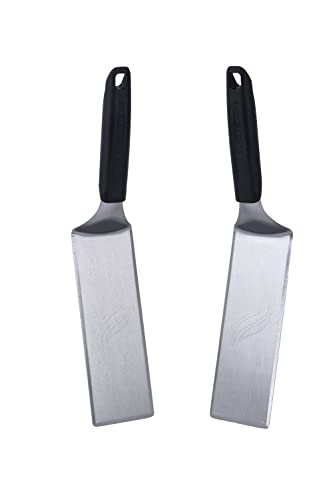 Blackstone Extra Long Griddle Spatulas, Set of 2The two tools you actually use | The two tools you actually use | 8.7 | $18.69View on Amazon |
| 2 | 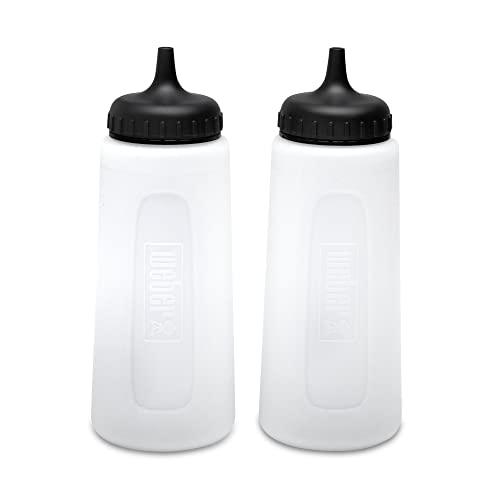 Weber 16 oz Griddle Squeeze Bottles, 2-PackOil control, which is most of the technique | Oil control, which is most of the technique | 8.3 | $12.99View on Amazon |
| 3 | 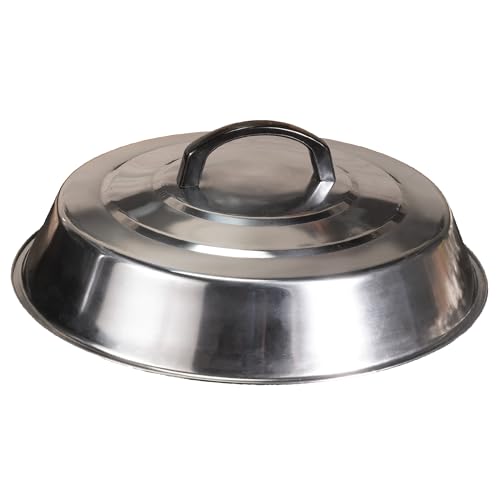 Blackstone 12" Round Griddle Basting CoverCheese, and steaming anything | Cheese, and steaming anything | 8.4 | $17.98View on Amazon |
| 4 | 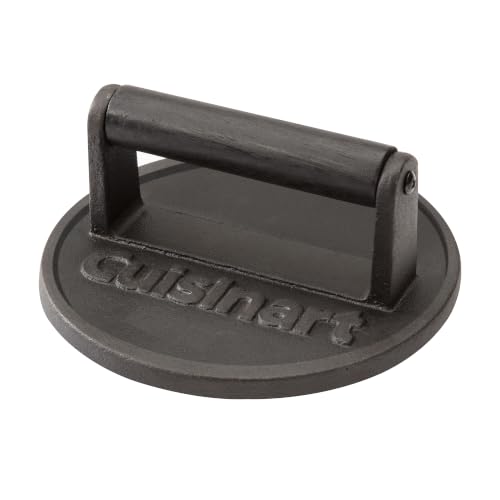 Cuisinart Cast Iron Smash Burger Press (CISB-111P)Crust, which is the entire point | Crust, which is the entire point | 8.6 | $16.99View on Amazon |
| 5 | 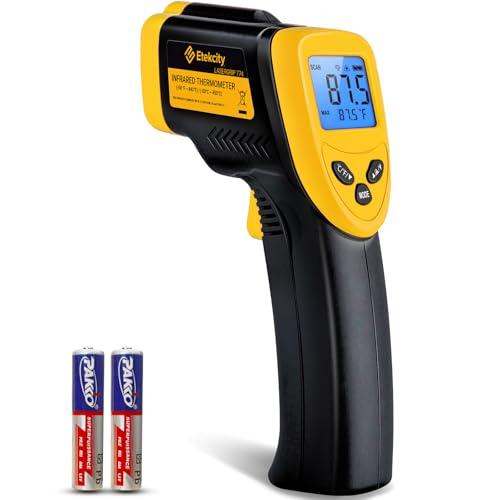 Etekcity 774 Infrared ThermometerKnowing what your plate is actually doing | Knowing what your plate is actually doing | 8.3 | $15.99View on Amazon |
#ad Price as of November 28, 2026; prices change — check the retailer. How this is funded
There are not hundreds of flat-top griddle recipes. There are seven techniques, and everything you have ever seen cooked on a griddle is one of them, or two of them in sequence. Recipe lists teach you one dish at a time. Technique teaches you the plate, and the plate is what you actually bought.
This page is the index to that. Each technique below gets what it is, the surface temperature it needs, the one tool it will not work without, which cooks belong to it, and the mistake that ruins it. The recipe lists on this site — your first five cooks, dinner ideas and breakfast — sit underneath it.
Why this is organized by technique and not by dish
A griddle is one continuous slab of steel at several temperatures at once. That is the whole machine. It cannot roast, it cannot convect, it cannot smoke and it cannot cook anything from above. Everything it does is full contact between food and hot metal, which means the only variables you ever control are four:
- Surface temperature — what the steel is doing where the food is sitting, not what the knob says. Knob positions are not temperatures.
- Fat, and how much of it. A film gives contact and crust. A puddle gives shallow frying. Same food, different dish.
- Pressure. Whether the food is resting on the plate or being held against it.
- Moisture. Whether steam is allowed to escape or is trapped against the food.
Seven useful combinations come out of those four, and they are the seven below. Once you can name which one a dish is, you can cook it without instructions — and you can see immediately why it went wrong when it does.
1. Smash — maximum heat, maximum pressure, no movement
Temperature: as hot as the plate goes, 450 °F and up. Tool: a heavy press and a stiff beveled spatula.
A ball of loose ground beef goes onto a very hot plate, is pressed flat once, held for about ten seconds, and left alone. The crust forms because every square millimeter of the underside is in contact with metal hot enough to brown it before the interior has time to overcook.
The mistake: pressing twice. The second press squeezes out the fat and juice the first press just built a crust to hold in. Also a plate at 375 °F, which gives you a gray patty with color on it rather than crust.
This technique is: smash burgers, smash-burger tacos, patty melts, and — with a cake of cooked rice or potato instead of beef — anything you want one crisp face on. It is the cook a grate physically cannot do, and it is why heat density matters more than total BTU.
2. Sear and slide — two temperatures, one piece of food
Temperature: 450 °F and up on the hot zone, 250–300 °F on the cool zone. Tool: an infrared thermometer, once, to learn where your zones actually are.
Put a hard crust on the outside of something thick, then move it sideways to a gentler part of the plate to finish through to temperature. This is the technique that makes a griddle better than a pan for anything over an inch thick: a pan gives you one temperature and a choice between a raw middle and a burnt outside.
The mistake: trying it on a single-burner griddle. Without two independently controlled zones there is nowhere to slide to, which is the whole argument in how many burners do you need.
This technique is: steak, thick pork chops, bone-in chicken thighs, salmon skin-side-first, and thick formed burgers as opposed to smashed ones. Finish by internal temperature rather than by time: USDA gives 145 °F with a three-minute rest for whole-muscle beef, pork, veal and lamb, 160 °F for anything ground, and 165 °F for all poultry.
3. Render — moderate heat, and let the fat do the cooking
Temperature: 300–325 °F, which is lower than most people run it. Tool: none. This one is patience.
Fatty food on a moderate plate releases its own fat slowly, and that fat becomes the cooking medium for everything you add next. Bacon at 325 °F renders and crisps evenly. Bacon at 450 °F burns along the lean edge while the fat is still raw.
The mistake: treating rendering as a preheat problem and cranking the burner. The second mistake is scraping the rendered fat off the plate. That fat is the best thing on the griddle and the next four things you cook should be cooked in it.
This technique is: bacon, breakfast sausage, chorizo, pancetta, potatoes in duck fat, and the first ten minutes of any griddle breakfast — which is why breakfast is cooked in that order and not any other.
4. Sweat and fry — diced food in a thin film
Temperature: 375–400 °F. Tool: two spatulas, and an oil squeeze bottle so the film stays a film.
Anything small, diced or loose gets a thin line of oil and near-constant movement. A griddle beats any domestic pan at this for one reason: surface area. A wok on a home burner steams its contents because they are piled up. Spread the same volume over 500 square inches and it fries.
The mistake: too much oil, which turns frying into shallow frying, and crowding, which turns frying into steaming. If liquid is pooling on the plate you have one of those two problems.
This technique is: onions and peppers, mushrooms, hash browns, fried rice, fajitas and stir-fries, shrimp, diced potatoes, Brussels sprouts cut-face-down, and noodles.
5. Steam-finish — water, a dome, thirty seconds
Temperature: whatever the food was already cooking at. Tool: a melting dome and a water squeeze bottle. There is no substitute for either.
Squirt water onto the plate beside the food, drop a dome over the top, and for thirty seconds the griddle is a steamer. This solves the one genuinely hard timing problem in griddle cooking: a smash burger is finished in ninety seconds and cheese does not melt in ninety seconds.
The mistake: an aluminum dome, which warps and then stops sealing, and squirting the water directly onto the food rather than beside it.
This technique is: melting cheese on anything, steaming buns, warming tortillas, finishing vegetables you want tender rather than charred, and reviving yesterday’s rice.
6. Pour — batter and egg on a dead-flat plate
Temperature: 325–375 °F, and no hotter. Tool: a thin flexible turner, which is the one job the stiff spatulas are wrong for.
A liquid poured onto hot steel spreads to the shape of the plate and cooks from one side. This is the technique a flat top owns outright, because a grate cannot hold a liquid at all.
The mistake: heat. Above about 375 °F a pancake colors before the middle sets and an egg gets rubbery lace around the edge. Pour cooks are the one place where a griddle’s cool end is the useful end, and where knowing your hot spots stops one pancake in four from coming out darker than the rest.
This technique is: pancakes, crepes, eggs in every form, French toast, Dutch babies, okonomiyaki, johnnycakes, and the egg layer on a breakfast sandwich.
7. Press and toast — dry heat, light weight, both sides
Temperature: 350–400 °F. Tool: a press, or any flat heavy thing, used gently.
Bread, tortillas and anything layered goes onto a dry or barely oiled plate with a little weight on top, then gets turned. It is the lowest-effort technique on the plate and the one most new owners never think of, because it does not feel like a “recipe.”
The mistake: the full weight of the smash press, which crushes the layers flat and squeezes the filling out of the side.
This technique is: quesadillas, grilled cheese, buns for every burger you will ever make, pressed Cubanos, breakfast sandwiches, naan, pita, and leftover pizza put face-down for thirty seconds.
Building a cook instead of following a recipe
The point of naming the seven is that a meal is a sequence of them, and the sequence is decided by fat and by temperature — dry before greasy, cool before hot, because you cannot un-grease a plate mid-cook and you cannot quickly cool one down.
| The meal | The sequence |
|---|---|
| Full breakfast | Render (bacon, sausage) → sweat and fry (hash browns, mushrooms in the fat) → pour (pancakes, eggs on the cool end) → press (toast) |
| Smash burger night | Press (buns, on the dry plate first) → sweat and fry (onions) → smash (patties, hot zone) → steam-finish (cheese under the dome) |
| Fajitas or taco night | Sweat and fry (peppers, onions) → sear and slide (steak or chicken) → press or steam-finish (tortillas) |
| Steak dinner | Sweat and fry (mushrooms, potatoes) → sear and slide (steak, then across to the cool zone to finish) → steam-finish (vegetables under the dome while the steak rests) |
Every one of those is four techniques, one plate, one set of burner positions and no recipe. The temperature chart is the reference for the numbers, and cooking for a crowd is the same sequencing problem with staging added on top.
The tools each technique genuinely needs
Seven techniques do not need seven tools. Across all of them the list is five things and three of those are cheap. The picks below are those five. We have not cooked on them in a test kitchen and do not claim to have — they are chosen on what each technique physically requires.
- Two stiff beveled spatulas — smash, sear, sweat and fry. A flexible blade cannot lift a smash patty off the plate without tearing it.
- Two squeeze bottles, oil and water — every technique except press. Oil dosing is the biggest single difference between a griddle cook who gets crust and one who gets fried food.
- A melting dome — the only tool that does steam-finish at all.
- A heavy flat press — smash, and press-and-toast at a fraction of the force.
- An infrared thermometer — not for every cook, but once, to find out where your zones are and what your knob positions actually mean.
A thin flexible turner for pour cooks is a sixth, and it usually arrives in a tool kit. The accessory buying order ranks the whole category by how much each item changes the cooking.
The recipe lists on this site
This page is the technique layer. These are the dish layer, and each maps onto the seven above:
- Your first five griddle cooks — roughly one cook per technique, in the order they are easiest to learn.
- Griddle dinner ideas — mostly sweat and fry, plus sear and slide.
- Breakfast on a griddle — render, pour and press in strict sequence.
- Smash burgers — the full method for technique one.
- Steak on a griddle — the full method for technique two.
- What to cook on a griddle — the full-contact principle, and the four things a flat top is genuinely bad at.
What none of the seven can do
Worth saying plainly, because it is where disappointment comes from. A flat top cannot produce grilled flavor — that comes from fat dripping onto fire and vaporizing back through the food, and a griddle holds the fat on the plate by design. It cannot drain fat away. It cannot cook anything low and slow for hours. And it cannot surround a thick roast or a whole bird with heat.
If those matter, griddle vs grill is the honest comparison and the combination units are the hardware answer.
The picks in detail
Specifications are linked to their source on every card. Scores are ours, derived from those specifications.
#1 · The two tools you actually use
Blackstone Extra Long Griddle Spatulas, Set of 2
Two stiff, wide, bevelled-edge spatulas do 90% of griddle work — everything beyond that in a 30-piece kit is storage clutter.
#ad Price as of November 28, 2026; prices change — check the retailer. How this is funded
Key specifications
- What matters
- Blade stiffness — a flexible blade cannot lift a stuck smash burger
- What matters
- A bevelled front edge that gets under fond
- Width
- Wide enough to carry a whole patty, narrow enough to turn in a crowd
- Quantity
- Two — one to lift, one to steady
- Handle
- Riveted, not glued
- What fails first
- The handle rivet and the blade's leading edge
Scores
- Stiffness9.0
- Edge9.0
- Handle7.5
- Value8.5
What works
- A stiff bevelled blade is the difference between turning a smash burger and destroying one
- Two spatulas lets you work food against itself rather than against the plate
- Stainless blades can be scraped and scrubbed without degrading
What to know
- Thin, flexible 'griddle' spatulas sold in big kits are the wrong tool and are what most kits contain
- Long handles get in the way on a tabletop griddle
- Riveted handles collect grease at the joint
#2 · Oil control, which is most of the technique
Weber 16 oz Griddle Squeeze Bottles, 2-Pack
Two bottles — one oil, one water — are the most underrated griddle tools there are, because dosing oil by eye is how food sticks or swims.
#ad Price as of November 28, 2026; prices change — check the retailer. How this is funded
Key specifications
- How many
- Two minimum: oil and water
- Tip
- Narrow, so you can lay a thin line rather than a puddle
- Water bottle use
- Steam-lifting residue and steaming under a dome
- Material
- Heat-tolerant — bottles sit near a hot plate
- Caps
- Must seal; open bottles collect everything
- Label them
- Oil and water look identical in an opaque bottle
Specifications from Blackstone accessories.
Scores
- Control9.0
- Material7.0
- Sealing7.5
- Value9.5
What works
- A thin controlled line of oil is the difference between a seared crust and a fried one
- The water bottle makes daily cleanup a 60-second job
- Trivially cheap for how much technique they unlock
What to know
- Wide-tip bottles over-dose oil and defeat the purpose
- Cheap plastic deforms if left on a hot side shelf
- Oil goes rancid in a bottle left outside for months
#3 · Cheese, and steaming anything
Blackstone 12" Round Griddle Basting Cover
A dome plus a squirt of water turns a dry griddle into a steamer for thirty seconds — it is how cheese melts before the patty overcooks.
#ad Price as of November 28, 2026; prices change — check the retailer. How this is funded
Key specifications
- What it does
- Traps steam so cheese melts in seconds, not minutes
- Diameter
- Larger than your patty plus the cheese overhang
- Material
- Stainless holds up; aluminum warps
- Handle
- Must stand off the dome — it gets hot immediately
- Technique
- Squirt water beside the food, then cover
- Also good for
- Steaming vegetables and reheating buns
Scores
- Seal8.5
- Material8.0
- Handle7.0
- Value9.0
What works
- Solves the real smash-burger problem: the patty cooks in 90 seconds, cheese does not melt in 90 seconds
- Doubles as a steamer for anything on the plate
- Cheap and essentially unbreakable in stainless
What to know
- Aluminum domes warp and then do not seal
- A dome with a flush handle is unusable without a glove
- One dome covers one burger; cooking six means working in rounds
#4 · Crust, which is the entire point
Cuisinart Cast Iron Smash Burger Press (CISB-111P)
Mass and a flat face are all that matter — a heavy press holds the patty against the plate long enough to build crust instead of steaming it.
#ad Price as of November 28, 2026; prices change — check the retailer. How this is funded
Key specifications
- What matters most
- Weight — light presses bounce off the patty
- Face
- Dead flat; a domed face leaves a thin middle
- Diameter
- Wider than your finished patty
- Handle
- Offset and insulated — it sits on a 400 °F plate
- Technique
- Press once, hold 10 seconds, do not press again
- What fails first
- Wooden handles, which char at the joint
Scores
- Mass9.0
- Flatness8.5
- Handle7.0
- Value8.5
What works
- Heavy cast iron presses do the job a spatula physically cannot
- A flat face gives even crust across the whole patty
- Works equally on any griddle regardless of brand
What to know
- Pressing a second time squeezes out the juice you just built crust to hold in
- Light aluminum presses are common and do not work
- Needs its own seasoning and care if it is bare cast iron
#5 · Knowing what your plate is actually doing
Etekcity 774 Infrared Thermometer
The only way to know a griddle's real surface temperature — and the fastest way to find the hot spots every griddle has.
#ad Price as of November 28, 2026; prices change — check the retailer. How this is funded
Key specifications
- Type
- Infrared, non-contact — not a probe thermometer
- Range needed
- At least 100–600 °F
- Use
- Read several points; a griddle is never one temperature
- Limitation
- Reads surfaces, not the inside of food
- Accuracy caveat
- Shiny bare steel reads low; a seasoned plate reads true
- Pairs with
- A probe thermometer for doneness
Scores
- Usefulness9.0
- Accuracy7.5
- Range8.0
- Value8.5
What works
- Turns 'medium heat' from a guess into a number
- Finding your plate's hot spots takes about 30 seconds and changes how you cook on it forever
- Non-contact, so there is nothing to clean
What to know
- Reads surface only — it cannot tell you a burger is done
- Emissivity error on bare, shiny steel can read 50 °F or more low
- One more battery device living near a hot griddle
Common questions
What can you cook on a flat-top griddle?
What is the easiest thing to cook on a griddle first?
In what order should you cook a griddle breakfast?
Do you need recipes to cook on a griddle?
What temperature should a griddle be for most food?
Why does my griddle food come out greasy instead of crisp?
Sources
Every specification on this page came from one of these. If you find one of them has changed, tell us and we will correct it.
Read next
Your first five griddle cooks
Five first cooks in a deliberate order, what each teaches, and the beginner mistakes to skip past.
Griddle dinner ideas
Ten dinners that suit a flat top, why each works, and the technique point that makes the difference in each.
Breakfast on a griddle
A full griddle breakfast: the zone plan, the order of operations, and timings so everything lands together.
Griddle temperature chart
Temperatures for everything you cook on a flat top, the reasoning behind each, and how to check without a thermometer.
What to cook on a griddle
The full-contact principle, what a flat top genuinely wins at, what it loses at, and the surprising successes.
The griddle accessories worth buying
The ten accessories that earn their place, in buying order: what each one actually replaces, which fit any griddle, and which have to match your model.