Flat top griddles for a gas stove
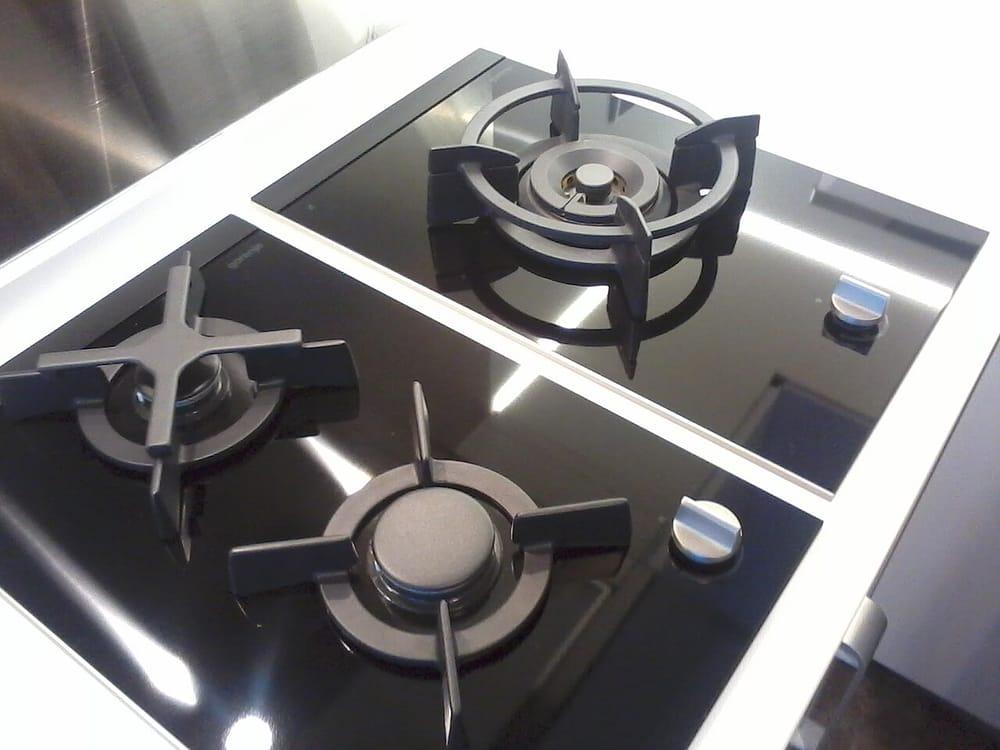
A gas range is the right stove for this. The question is whether yours takes a full plate, a two-burner plate, or neither.
We earn a commission if you buy through our links, at no extra cost to you. That is how this site is paid for, and it does not decide what we recommend — full disclosure.
Quick picks
Ranked on published specifications using our scoring rubric. Tap a row for the full write-up.
| # | Product | Best for | Score | Price |
|---|---|---|---|---|
| 1 | 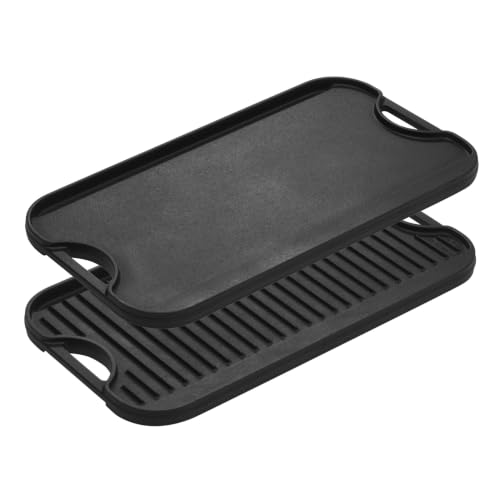 Lodge Pro-Grid Reversible Grill/Griddle (20")A flat top across two stove burners | A flat top across two stove burners | 7.6 | $49.90View on Amazon |
| 2 | Steelmade PRO Series Flat Top (30" range)A flat top on a kitchen range | A flat top on a kitchen range | 7.7 | Check price on Amazon |
| 3 | 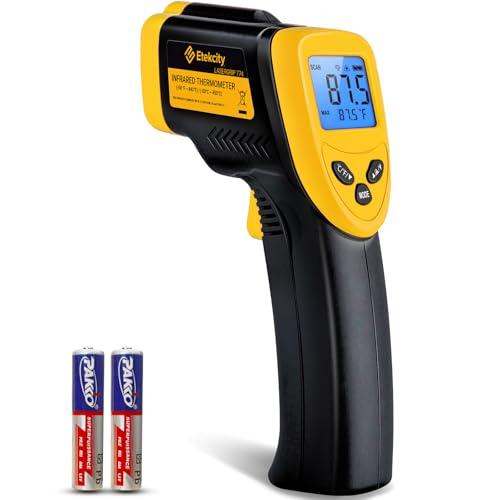 Etekcity 774 Infrared ThermometerKnowing what your plate is actually doing | Knowing what your plate is actually doing | 8.3 | $15.99View on Amazon |
#ad Price as of November 28, 2026; prices change — check the retailer. How this is funded
Of all the stoves in a domestic kitchen, a gas range is the one a flat top belongs on. It is not capped by a wall outlet, it heats a solid plate by conduction from an open flame, and the plate makers build specifically for it. The question is not whether a flat top works on gas — it does. The question is which of three routes your particular range can take.
The three routes, and which range takes which
| Route | What it needs | Realistic surface |
|---|---|---|
| Full-range steel plate | A specific range layout — see the fit section below | Most of your cooktop |
| Two-burner cast-iron plate | Any gas range with two burners side by side | About 20 × 10.5 in |
| Countertop electric griddle | An outlet and worktop space | Up to roughly 22 × 11 in, capped at ~1500 W |
Most people searching for this want route one and will end up happiest with route two. The reason is fit, and it is more restrictive than the category admits.
The thing nobody tells you: a plate only gets the burners it covers
This is the single most useful correction to how these are usually described, and it changes what you should expect.
A range plate does not inherit your range’s total rated output. It inherits the output of the burners that sit underneath it. Take a mainstream 30-inch five-burner gas range — GE’s JGBS66REKSS is a fair example and publishes its numbers: 51,500 BTU total, made up of a 15,000 BTU power burner, a 12,000, a 9,500, a 5,000 BTU simmer burner and a center oval.
A plate covering the center and right-hand burners is therefore running on the 12,000, the 9,500 and the oval — a useful amount of heat, and nowhere near 51,500. If the plate happens to leave your 15,000 BTU power burner uncovered, you have left the best burner on the range out of the arrangement.
Two practical consequences:
- Check which burners your plate will cover before you buy it, not after. On most ranges the big burner is front-left, and several plates are designed to sit over the center and right.
- Expect an indoor plate to behave like a modest outdoor griddle, not a big one. For scale, an outdoor Blackstone 28 puts 34,000 BTU under 525 square inches. Your range’s covered burners will be in that region at best, spread over a smaller plate — which is genuinely good, and still not a 60,000 BTU cart.
It is still far more heat than the roughly 5,100 BTU-per-hour equivalent a 1500-watt countertop griddle can manage, which is why gas is the stove worth doing this on at all. Electric against gas works that gap through in full.
Four measurements to take before you buy a full-range plate
Plate makers publish fit requirements, and they are specific. Steelmade — the main maker of range plates in the US — states on its own product pages that the PRO Series Junior works with 5-burner 30-inch gas ranges, that the range must have a center oval burner, that a minimum 19-inch cooking area depth is required, and that it is not recommended for glass-ceramic or electric coil tops. It also runs a fitment checker and asks buyers who are unsure to send photos and measurements.
So before you spend anything, measure:
- Cooktop depth, front edge to backguard. This is the measurement that disqualifies most ranges. Nineteen inches of usable cooking depth is more than a lot of freestanding 30-inch ranges have once the control panel and backguard are accounted for.
- Burner layout and whether there is a center burner. Four burners in a square with nothing in the middle is a different problem from five with a center oval. A plate designed around a center oval has no heat under its middle on a four-burner range.
- Grate geometry. Continuous cast-iron grates give a plate a flat, stable bed. Individual grates per burner leave gaps, and a plate bridging them can rock.
- Clearance above. A plate raises your cooking surface by the thickness of the grates plus the plate. If you have a low over-range microwave, measure the gap you will actually be working in.
If you cannot satisfy all four, that is not a failure — it is the answer, and the two-burner route below is the right one. Stovetop griddle plates, in full has the thickness and weight comparison across the plates themselves.
Availability is a real factor here
Range plates are made-to-order, direct-from-maker items rather than something you add to a cart at a big retailer. Variants are frequently out of stock — options on the Junior page were showing sold out when we checked while writing this. Lead times and availability move around, so treat the plate route as something to plan rather than order on a Friday for the weekend.
That is one of the two reasons the cast-iron plate is the first pick on this page. The other is that it fits.
The two-burner plate: what most gas-range owners should actually buy
A double-burner cast-iron griddle spans two burners, weighs about thirteen pounds, costs a fraction of a range plate, and has no fitment requirements worth the name. Lodge publishes its 20-inch Pro-Grid at 20 × 10.5 × 0.81 inches and 13.5 lb, seasoned, reversible — smooth griddle on one face, ribbed grill on the other — and states it works on any stovetop including induction.
What it gives you honestly:
- Enough surface for two to three people. Two burgers and the onions, four pancakes, a round of grilled sandwiches, bacon for two.
- Real flat-top behavior. Cast iron at that thickness holds heat the way a thin stamped pan cannot, which is the whole point of the format.
- Two hot spots and a cooler middle. Your burners are spaced for pans, so the plate is hottest above each burner and cooler between them. Learn where, and you have a temperature gradient instead of a defect. Mapping hot spots matters more on a stovetop plate than anywhere else.
- Bare metal, so it needs seasoning. Same routine as any flat top. First-time seasoning, and dry it before it goes in a cupboard — a cupboard is where things get put away damp. Rust prevention applies in full.
What it is not: a family griddle. If you are cooking for five, no indoor route gets you there and the honest answer is a propane griddle outdoors.
Extraction is the constraint that actually bites
Not power, not fit. Smoke.
A flat top works by putting fat on hot steel in the open, which is precisely the thing a range hood struggles with. Range hood manufacturers publish a rule of thumb worth knowing: take your cooktop’s total BTU rating and divide by 100 to get a minimum airflow in CFM. A 51,500 BTU range points at roughly 515 CFM before you account for anything else.
Then it gets worse, because duct resistance counts. The same guidance adds roughly one CFM per foot of duct, 25 CFM for each elbow and 40 CFM for a roof cap. And once you are specifying more than about 400 CFM, your jurisdiction may require a make-up air provision — worth checking locally rather than discovering later.
Two things that follow from this:
- A recirculating hood is not extraction. It filters grease and pushes the air back into the room. For flat-top cooking it is close to useless, and a plate on a range under a recirculating hood is how people end up with a smoke alarm routine.
- Run the hood on high before you start, not when it is already smoky. Open a window, and keep the plate at the lowest temperature that does the job — a plate run hotter than the food needs is the main source of avoidable smoke.
And the absolute rule, which has nothing to do with smoke: never bring a propane griddle indoors. Carbon monoxide is a different hazard from smoke and it has no safe indoor version.
Why a thermometer belongs on this page
A gas range has no temperature readout and a plate on top of it has no thermostat. You are cooking by knob position on a surface whose temperature you cannot see, and the hot spots are not where you would guess.
An infrared thermometer reads the plate in a second and turns guesswork into a number. It is the cheapest useful thing on this page and the one that most changes the results. Aim at the temperature chart: around 350 °F for pancakes and eggs, higher for a sear, and expect the cool band between your burners to read 50 to 100 degrees lower than the hot spots.
One note on tools: a seasoned cast-iron or steel plate takes metal spatulas and scrapers happily, unlike a coated electric griddle. The accessories worth buying flags which items are surface-safe.
What a gas-range flat top is good and bad at
Good: smash burgers for two, grilled cheese and quesadillas, pancakes and eggs, bacon, fajita vegetables, anything where even heat and a dry surface beat a pan’s curved sides. The sear is genuinely better than a countertop electric griddle can manage, because the heat source is a flame rather than a 1500-watt element.
Bad: volume. Any indoor flat top is a two-to-three-person surface, and that is the ceiling rather than a limitation of the cheap options. Also bad: anything you would rather not smell for the rest of the evening.
If what you want is the full flat-top experience — cooking for six, a hard sear on a big plate, smash burgers in batches — the honest answer is outdoors, and the three-burner class is where the arithmetic works best for a household. The best 3-burner griddles.
If your “gas stove” is actually a gas grill
Worth separating, because the two queries get mixed together: a steel plate that drops onto an existing outdoor gas grill is a different and much easier product, with no kitchen ventilation problem and considerably more heat underneath it. The best griddle plates for gas grills covers that route.
Which route to take
| If your range | Do this |
|---|---|
| Is a 30″ 5-burner gas range with a center oval and 19″ of depth | A full-range plate is genuinely an option |
| Is a 4-burner gas range | Two-burner cast-iron plate |
| Has less than 19″ of cooking depth | Two-burner cast-iron plate |
| Has a recirculating hood or no hood | Two-burner plate, lowest workable heat, window open |
| Is glass-top gas or induction | See the electric-stove guide |
| Needs to feed five or more | Cook outdoors |
What we cannot tell you
We have not tested these plates on a range, and this site runs no test kitchen. We cannot tell you how a particular plate sits on your grates, how your hood copes, or how long a given seasoning layer lasts in your kitchen. Every figure above is published by the manufacturer or the retailer and linked below; the hood arithmetic is the industry rule of thumb rather than a code requirement.
What we can tell you is the part that does not change: a plate gets the burners it covers, fit is decided by depth and burner layout before anything else, and extraction is what will actually limit how often you use it. The rubric behind the picks is at how we choose.
The picks in detail
Specifications are linked to their source on every card. Scores are ours, derived from those specifications.
#1 · A flat top across two stove burners
Lodge Pro-Grid Reversible Grill/Griddle (20")
A 20-inch double-burner cast-iron plate, smooth on one side and ribbed on the other — the flat top that actually fits an ordinary kitchen range, at a fraction of the weight of a full-range steel plate.
#ad Price as of November 28, 2026; prices change — check the retailer. How this is funded
Key specifications
- Dimensions
- 20 × 10.5 × 0.81 in
- Weight
- 13.5 lb
- Material
- Cast iron, seasoned, PFAS-free
- Surfaces
- Reversible — smooth griddle one side, ribbed grill the other
- Fits
- Two stovetop burners
- Cooktops
- Any stovetop including induction, per Lodge
Specifications from Lodge product page.
Listings disagree: Lodge publishes 13.5 lb; some retailer listings say 15 lb. Lodge states it works on any stovetop including induction, while at least one retailer listing says it is not induction compatible — and a double-burner plate will only heat over the coils on an induction top regardless.
Scores
- Cooking area4.0
- Heat output5.0
- Zone control4.5
- Surface care6.5
- Portability7.0
What works
- 13.5 lb is a one-handed lift, which is the difference between a plate you use and a plate you store
- No fitment problem: it spans two burners rather than needing a particular range layout
- Seasoned cast iron recovers heat well for its mass and will outlive any coated surface
What to know
- 210 square inches of outer dimension is a fraction of a cart griddle — two burgers and some onions, not a family cook
- It is only as hot as the two burners under it, and the steel between them stays cooler
- Cast iron, so it is bare metal: season it, dry it and oil it like any flat top
#2 · A flat top on a kitchen range
Steelmade PRO Series Flat Top (30" range)
3/8-inch steel at roughly 62 lb, sized for a 30-inch gas or electric coil range — a genuine indoor flat top rather than a griddle pan.
#ad Price as of November 28, 2026; prices change — check the retailer. How this is funded
Key specifications
- Steel thickness
- 3/8 in
- Weight
- ~62.0 lb
- Fits
- 30 in gas or electric coil range
- Surface
- Bare steel — needs seasoning
- Format
- Range-top insert
- Made in
- USA
Specifications from Steelmade product page.
Scores
- Cooking area5.5
- Heat output5.5
- Zone control5.0
- Surface care6.0
- Portability3.0
What works
- 3/8 in is thicker than any freestanding griddle top in this guide — it is the most stable surface here
- Turns an existing range into an indoor flat top without a new appliance or a propane tank
- No outdoor storage, no cover, no weather exposure
What to know
- 62 lb on a range top is a serious load — check your range can take it before buying
- Needs real kitchen ventilation; a flat top produces a lot of smoke
- Covers your burners, so it is the whole cooktop while it is on
#3 · Knowing what your plate is actually doing
Etekcity 774 Infrared Thermometer
The only way to know a griddle's real surface temperature — and the fastest way to find the hot spots every griddle has.
#ad Price as of November 28, 2026; prices change — check the retailer. How this is funded
Key specifications
- Type
- Infrared, non-contact — not a probe thermometer
- Range needed
- At least 100–600 °F
- Use
- Read several points; a griddle is never one temperature
- Limitation
- Reads surfaces, not the inside of food
- Accuracy caveat
- Shiny bare steel reads low; a seasoned plate reads true
- Pairs with
- A probe thermometer for doneness
Scores
- Usefulness9.0
- Accuracy7.5
- Range8.0
- Value8.5
What works
- Turns 'medium heat' from a guess into a number
- Finding your plate's hot spots takes about 30 seconds and changes how you cook on it forever
- Non-contact, so there is nothing to clean
What to know
- Reads surface only — it cannot tell you a burger is done
- Emissivity error on bare, shiny steel can read 50 °F or more low
- One more battery device living near a hot griddle
Common questions
Can you use a flat top griddle on a gas stove?
What size gas range do I need for a full flat top plate?
Does a griddle plate get as hot as my range's total BTU rating?
What is the best flat top griddle for a gas stove?
How much hood CFM do I need to cook on a griddle indoors?
Will a griddle plate damage my gas range?
Sources
Every specification on this page came from one of these. If you find one of them has changed, tell us and we will correct it.
- Steelmade — PRO Series Junior fit requirements (5-burner 30" gas range, center oval burner, 19" minimum depth)
- Steelmade — PRO Series Flat Top Original (30" gas or electric coil range)
- Lodge — Pro-Grid Reversible Grill/Griddle (20 × 10.5 × 0.81 in, 13.5 lb)
- AJ Madison — GE JGBS66REKSS burner ratings (15,000 / 12,000 / 9,500 / 5,000 BTU)
- Proline Range Hoods — CFM sizing rule of thumb and duct allowances
Read next
Stovetop griddles
Steel plates for gas and electric coil ranges: thickness, weight, what fits, and why ventilation becomes the real limit.
Flat top griddles for an electric stove
Coil, glass-ceramic and induction ranges each take a different answer. What fits, what cracks a cooktop, and the countertop route that works on all three.
Can you use a propane griddle indoors?
The unambiguous answer, the reasoning behind it, the edge cases people ask about, and what to use instead.
The best griddle plates for gas grills
Steel griddle inserts for gas grills and ranges, compared on thickness, drainage and what you give up.
Finding your griddle's hot spots
Why every griddle heats unevenly, how to map yours with a nine-point grid, and how to cook with the map.
Electric vs gas griddle
1500 watts against 34,000 BTU — what the gap means in practice, and the things electric genuinely does better.