The best griddles with a lid
Half the reasons people want a hood are the wrong reasons. Here is what a lid actually does, and which griddles do it well.
We earn a commission if you buy through our links, at no extra cost to you. That is how this site is paid for, and it does not decide what we recommend — full disclosure.
Quick picks
Ranked on published specifications using our scoring rubric. Tap a row for the full write-up.
| # | Product | Best for | Score | Price |
|---|---|---|---|---|
| 1 | 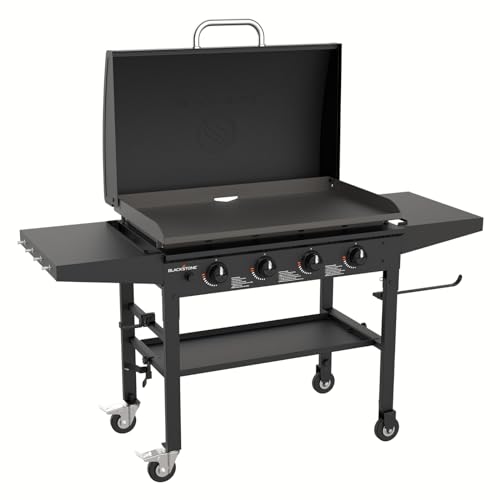 Blackstone 36" Original GriddleLarge families and crowd cooking | Large families and crowd cooking | 8.6 | $498.99View on Amazon |
| 2 | 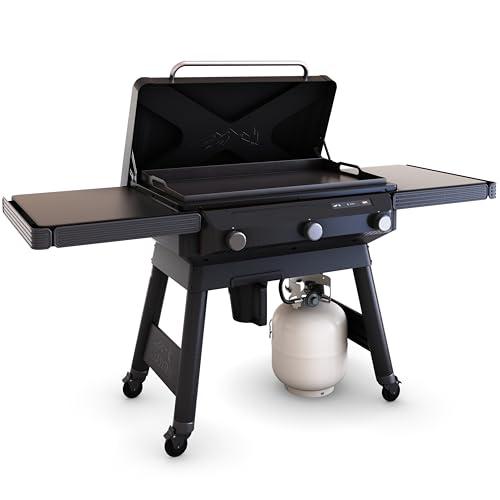 Traeger Flatrock 3-Zone GriddleSearing and zone discipline | Searing and zone discipline | 8.8 | $799.00View on Amazon |
| 3 | 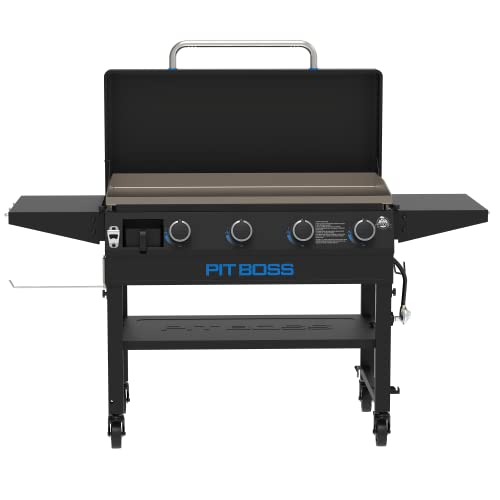 Pit Boss Deluxe 4-Burner GriddleRaw heat per square inch | Raw heat per square inch | 8.5 | $570.81View on Amazon |
| 4 | 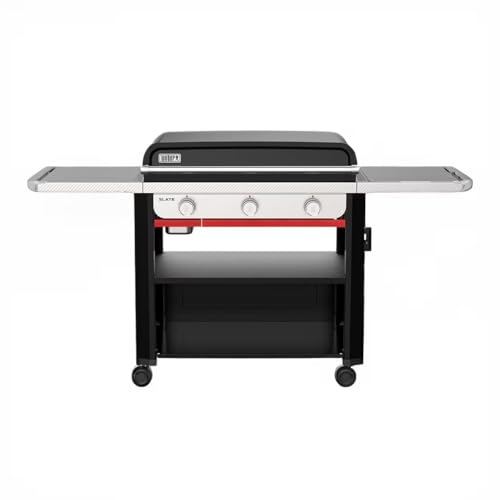 Weber Slate 30" GriddleOccasional cooks who hate rust | Occasional cooks who hate rust | 8.5 | $649.00View on Amazon |
| 5 | 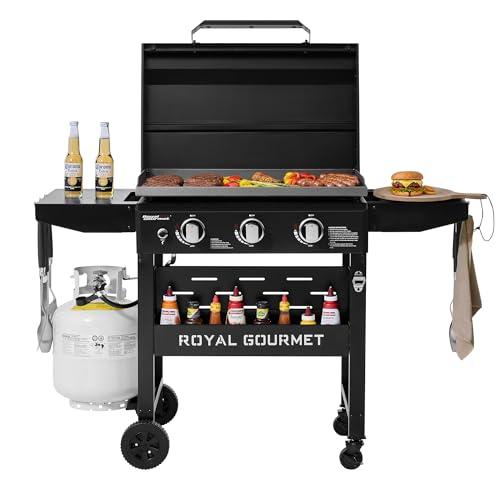 Royal Gourmet GB3000PB 3-Burner GriddleThree zones at a two-burner price | Three zones at a two-burner price | 8.0 | $227.39View on Amazon |
| 6 | 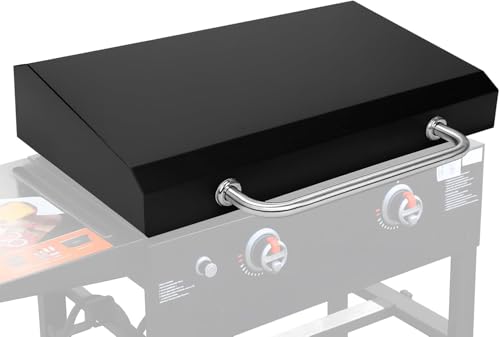 Hinged Hard Cover Hood for 28" Blackstone GriddlesRain, and roasting | Rain, and roasting | 8.1 | $84.99View on Amazon |
#ad Price as of November 28, 2026; prices change — check the retailer. How this is funded
A lid is not a cover, and the single most expensive mistake in this category is treating it as one. A hood keeps leaves, dust and casual rain off a plate between cooks. It does not seal, it does not keep humidity out, and closing it over a warm griddle actively traps moisture against the steel — which is how griddles that live under a hood still arrive at spring with rust on them. A correctly sized vented cover is still the thing that protects a griddle outdoors.
So why buy a griddle with a lid at all? Because of four other things it does, all of which are real, and three of which nobody puts on the box.
What a lid is actually for
- Wind. This is the best argument and the least advertised one. Wind strips heat off an exposed plate faster than a burner can replace it, and a closed hood during preheat is a windscreen that costs nothing. Pit Boss says this out loud in its own product copy — the Deluxe’s lid “doubles as a windscreen.” If your griddle has no lid, a three-sided wind guard is the substitute.
- Preheat. A closed lid holds the hot air above the plate instead of letting it leave, so the surface reaches working temperature sooner and from a lower burner setting. How long a griddle takes to preheat has the detail; the short version is that a hood is worth several minutes on a cold day.
- Roasting and melting. Lid down, a griddle stops being a flat top and becomes a low oven: chicken thighs cook through instead of burning outside and staying raw inside, vegetables soften, cheese melts without a torch. For single items a melting dome does the same job faster and more precisely, but a hood does it for the whole plate at once.
- Transport and storage. On a tabletop griddle, a latching hood is what encloses a greasy plate for a drive home. On a cart griddle it is what stops you needing to find somewhere clean to put the plate when you move the unit.
And the honest cost, which applies to every pick below: a hood adds height, hinges and another painted surface to look after. Open-lid height is the specification people forget — the Traeger Flatrock stands 36 inches tall with the lid closed and 57 inches with it open, so a griddle that fits under a pergola beam or a low awning with the lid down may not open there at all. Measure before you buy.
How we ranked them
Five criteria, in order. We have not cooked on these in a test lab and do not claim to have; every figure below is published by the manufacturer or a retailer and linked at the foot of the page.
- Is the lid included or an upcharge? Several brands sell the same body with and without a hood, and the hood version is a different purchase.
- Does it close over a full plate? A lid that will not close over a loaded griddle, or with a wind guard or griddle plate in place, is a storage cover rather than a cooking tool.
- Open height clearance. The number that decides whether it fits where you wanted to put it.
- Does it double as a windscreen? Some lids are designed to; some are flat panels that do very little when raised.
- Then the griddle itself — surface area, zones and heat density, because a good hood on a mediocre griddle is still a mediocre griddle. Heat density, explained.
1. Blackstone 36″ Original with Hood — the default, and the one with parts
Blackstone sells this body with the hood as a standard configuration rather than a special order, and that matters more than the hood’s design: it is the hood you can replace, and the only one in this guide with hinges and hardware stocked by name at the major home centers. Four independent zones over 769 square inches at 60,000 BTU is 78 BTU per square inch, the highest density of any mainstream large griddle here, so the cooking underneath the hood holds up.
The honest cons. Bare carbon steel, so the hood changes nothing about seasoning, oiling or rust — and because a hood makes it feel protected, this is the griddle most often left uncovered on that assumption. 769 square inches is a storage problem bought on purpose if you cook for four. And the grease system is at the rear, which is awkward against a wall. Our Blackstone 36 review and 28 vs 36 are the size decision.
2. Traeger Flatrock 3-Zone — the best-engineered lid here
Traeger calls it a premium lid enclosure, and it is the one hood in this guide that reads as part of the design rather than an accessory bolted to the top. Closed, the unit is 36 inches tall; open, 57. Underneath it sits the best heat density in its size class — 47,000 BTU over 594 square inches is 79.1 BTU per square inch — and three genuinely insulated zones, so heat does not bleed sideways while the lid is down.
The honest cons. That 57-inch open height is the real constraint: under a low awning you cannot use the lid you paid for. The stated range starts at 350 °F, which is high for the gentle lid-down holding this format is otherwise good at. It is bare carbon steel like the Blackstone. And Traeger has the smallest accessory and spares network of the four major brands, which is a hinge-and-latch risk over years. Our Flatrock 3-zone review.
3. Pit Boss Deluxe 4-Burner — the lid sold as a windscreen
The only manufacturer in this guide that names the real benefit in its own copy: a sturdy lid for protecting the surface between cooks that doubles as a windscreen. It also sits over the hardest-hitting plate on this page. 62,000 BTU across 753 square inches is 82.3 BTU per square inch, the highest figure on this site, on a 4.7 mm cooktop that is thicker than anything else here at this price — which is what stops the surface diving when a full load of cold food lands.
The honest cons. It rides on fold-and-go legs rather than a fixed cart, which is less stable under a loaded 753-square-inch top than the carts above it. The sibling SKU is listed at 748 square inches with a slightly different top, so check which one you are buying. And it is pre-seasoned steel, not a coated plate — the routine is still yours. Our Pit Boss Deluxe review and Blackstone vs Pit Boss.
4. Weber Slate 30 — lid and wind guard in the box
The Slate 30 is the only pick here that ships with both a lid and a wind guard, which is the pairing that actually solves wind: the hood for preheating, the guard for cooking. It is also the only rust-resistant cooktop in this guide, pre-seasoned from the factory, which takes the sting out of the one thing a hood does not protect you from. Three independently controlled zones over 540 square inches.
The honest cons. 36,000 BTU over 540 square inches is 66.7 BTU per square inch, noticeably less heat than the three picks above it, and lid-down roasting is where you most want recovery. At 140 lb it moves on a patio and nowhere else. Rust-resistant is not rust-proof, and a lid closed on a warm plate is exactly the situation that tests that claim — rust prevention explains why you let it cool first. Our Weber Slate 30 review.
5. Royal Gourmet GB3000PY — the cheapest hood worth having
Three independently controlled burners over 492 square inches with a hood, electronic ignition, lockable wheels and folding shelves all included rather than optional. 39,000 BTU across that plate is 79.3 BTU per square inch, which is genuinely strong for the price class and better than two of the picks above it.
The honest cons. The 3 mm top is thinner than the roughly 3.4 mm plate the big brands use at this size, so it dips further under cold food — plate thickness matters. Accessory and parts support is a fraction of Blackstone’s, and that includes hinges, lid stops and replacement tops: a hood is a moving part, and moving parts need spares. The listings also disagree about the BTU rating — Overton’s spec table reads 39,000 BTU per burner, while Royal Gourmet’s own title and Lowe’s give 39,000 as the three-burner total, which is the figure we use. Royal Gourmet vs Blackstone 28.
If your griddle has no lid: buy a hard cover, not a hood
Retrofitting a hinged hood to a griddle that was not built for one is rarely worth it. The better answer is a hard cover — a rigid lift-off top sized to your model. It does the between-cooks protection job a hood does, stores flat, and does not add open-lid height to a griddle that has to live somewhere tight. What it does not do is work as a windscreen or a roasting lid, so if those are the features you want, buy a griddle that came with a hood instead. Hard covers versus hoods, in detail is the full comparison, and it is model-specific: match it to your griddle’s width before anything else.
A hard cover still is not weather protection. Neither is a hood. Both sit on top of a plate that is open at the sides, which is why leaving a griddle outside is a cover question rather than a lid question.
Tabletop griddles with hoods, briefly
Every current Blackstone tabletop is sold in a hood or hard-cover configuration, and on a griddle you carry, a latching hood is doing a different job: it encloses a greasy plate for the drive rather than protecting it on a patio. The 22-inch tabletop with a hood is the size worth having, because it is the smallest body that still gives two independently controlled zones. The 20-inch camping griddle’s latching T-handle hood is the most travel-focused version of the idea on the market. The tabletop roundup ranks that class properly, and the camping roundup re-ranks it on campsite constraints.
Four lid-down techniques worth knowing
A hood you never close is money spent on a dust lid. These are the four cooks that need it.
- Thick proteins. Bone-in chicken, pork chops, thick-cut vegetables: sear both sides, then drop the lid and the burner. The enclosed air finishes the inside without burning the crust you just built.
- Holding. Low burner, lid down, and the first batch stays hot while you cook the second. The alternative on an open plate is a warm zone you cannot really control — cooking for a crowd leans on this.
- Steaming and melting. A splash of water under the hood steams vegetables, softens onions and melts cheese across a whole plate at once.
- Preheating in wind or cold. Lid closed, medium burner, and you reach temperature sooner and with less propane — how much propane a griddle uses.
One rule attached to all four: open the lid before the plate cools, and never close it over a warm, freshly oiled surface for storage. Trapped moisture over warm steel is the single most reliable way to rust a griddle that is otherwise well looked after — the after-cook routine ends with the lid up, not down.
Which to buy
| If you | Buy |
|---|---|
| Want a hood whose parts you can still buy in five years | Blackstone 36″ with Hood |
| Want the best-built lid and the best zone separation | Traeger Flatrock 3-Zone |
| Cook somewhere windy | Pit Boss Deluxe, or the Weber Slate 30 for its included guard |
| Want the hardest sear under the lid | Pit Boss Deluxe — 82.3 BTU per sq in |
| Hate surface maintenance | Weber Slate 30 |
| Want a hood without the big-brand price | Royal Gourmet GB3000PY |
| Already own a griddle with no lid | A model-specific hard cover |
| Have a low awning or pergola | Measure open-lid height first — 57 in on the Flatrock |
If the lid is not actually your requirement, the main roundup ranks the same field on surface, zones and heat density, and Blackstone alternatives groups the field by the reason people shop away from the default.
The picks in detail
Specifications are linked to their source on every card. Scores are ours, derived from those specifications.
#1 · Large families and crowd cooking
Blackstone 36" Original Griddle
The default large griddle: four burners over 769 square inches, with the highest burner count in its size class and the deepest accessory ecosystem of any brand here.
#ad Price as of November 28, 2026; prices change — check the retailer. How this is funded
Key specifications
- Cooking area
- 769 sq in (35¾ × 21½ in)
- Burners
- 4, stainless steel
- Total output
- 60,000 BTU
- Cooktop
- Carbon steel
- Ignition
- Single spark
- Grease system
- Rear
Specifications from BBQGuys spec sheet.
Scores
- Cooking area9.5
- Heat output9.0
- Zone control9.5
- Surface care6.5
- Portability3.0
What works
- Four independent zones is the real argument for this size — you can hold a warm zone and still sear
- 769 sq in is enough to cook a full breakfast for eight without staging
- The widest accessory and spare-parts availability of any brand in this guide
What to know
- Bare carbon steel: it will rust if you leave it uncovered and unseasoned
- Needs real patio footprint — this is not a griddle you put away each week
- Rear grease management means the drain is behind the unit, which is awkward against a wall
#2 · Searing and zone discipline
Traeger Flatrock 3-Zone Griddle
594 square inches with three insulated zones and 79.1 BTU per square inch — the highest usable heat density of any mid-size griddle here.
#ad Price as of November 28, 2026; prices change — check the retailer. How this is funded
Key specifications
- Cooking area
- 594 sq in
- Burners
- 3 (TruZone, insulated)
- Total output
- 47,000 BTU
- Cooktop
- Carbon steel
- Stated range
- 350–600 °F
- Dimensions
- 74 W × 42 H × 27 D in
Specifications from Abt spec sheet.
Scores
- Cooking area8.0
- Heat output9.5
- Zone control9.5
- Surface care6.5
- Portability3.5
What works
- Insulated zones are the real feature — heat does not bleed sideways, so a 'warm' zone stays warm
- 79.1 BTU per sq in is the best heat density in its size class, which is what you feel when six patties hit the plate
- Three genuinely independent zones in a body smaller than a 36
What to know
- Carbon steel, so you are back to seasoning and covering it
- The stated 350–600 °F range is narrower at the bottom than rivals — gentle holding is less controllable
- Smallest accessory ecosystem of the four major brands
#3 · Raw heat per square inch
Pit Boss Deluxe 4-Burner Griddle
62,000 BTU across 753 square inches — 82.3 BTU per square inch, the highest heat density of any griddle in this guide.
#ad Price as of November 28, 2026; prices change — check the retailer. How this is funded
Key specifications
- Cooking area
- 753 sq in (top 37 × 20 in)
- Burners
- 4, separately controlled stainless
- Total output
- 62,000 BTU
- Cooktop
- 4.7 mm steel, pre-seasoned with organic oil
- Portability
- Fold-and-go
- Includes
- Side shelves and lid
Specifications from Pit Boss product page.
Listings disagree: Sold as 753 sq in (model 10963) and 748 sq in (model 10942), both at 62,000 BTU.
Scores
- Cooking area9.5
- Heat output10.0
- Zone control9.5
- Surface care7.0
- Portability4.5
What works
- 82.3 BTU per square inch is the highest here — it recovers fastest when a full load of cold food goes down
- A 4.7 mm plate is thick for this price class, which is what buys you stable temperature
- Pre-seasoned with organic oil, so it is usable sooner than a bare plate
What to know
- Fold-and-go legs are less stable than a fixed cart under a loaded 753 sq in top
- The sibling SKU is listed at 748 sq in with a slightly different top — check which you are buying
- Still a steel top: seasoning and covering are on you
#4 · Occasional cooks who hate rust
Weber Slate 30" Griddle
Three zones over 540 square inches on a rust-resistant top — the best griddle here for someone who cooks once a fortnight and does not want to fight their surface.
#ad Price as of November 28, 2026; prices change — check the retailer. How this is funded
Key specifications
- Cooking area
- 540 sq in
- Burners
- 3, stainless steel
- Total output
- 36,000 BTU
- Cooktop
- Rust-resistant carbon steel, pre-seasoned
- Dimensions
- 70.80 W × 39.50 H × 23.50 D in
- Weight
- 140.34 lb
Specifications from P.C. Richard spec sheet.
Scores
- Cooking area7.5
- Heat output7.0
- Zone control8.5
- Surface care9.5
- Portability4.0
What works
- Three zones at 540 sq in beats the Blackstone 28's two zones at 525 sq in — more control for the same footprint
- Rust resistance is the difference between a griddle that survives a wet autumn and one that does not
- Four swivel casters, so it actually moves on a patio
What to know
- 140 lb means 'moves on a patio', not 'goes in the truck'
- 66.7 BTU per sq in is middling — fine for everyday cooking, slower than the Traeger for a heavy sear
- The rust-resistant coating is not invincible; it still wants a cover
#5 · Three zones at a two-burner price
Royal Gourmet GB3000PB 3-Burner Griddle
492 square inches and three independently controlled burners with a hood, lockable wheels and shelves included — the same plate area as a Blackstone 28 with an extra zone on it.
#ad Price as of November 28, 2026; prices change — check the retailer. How this is funded
Key specifications
- Cooking area
- 492 sq in (27.76 × 17.72 in)
- Burners
- 3, stainless steel
- Total output
- 39,000 BTU
- Cooktop
- 3 mm sandblasted, oil-baked steel
- Weight
- 76.1 lb net
- Dimensions
- 52.44 × 23.17 × 37.22 in, shelves out
Specifications from Overton's listing (GB3000PY).
Listings disagree: Overton's spec table reads 39,000 BTU per burner. Royal Gourmet's own product title and Lowe's both state 39,000 BTU as the total for three burners, which is the figure used here.
Scores
- Cooking area7.0
- Heat output8.5
- Zone control8.0
- Surface care6.0
- Portability4.0
What works
- Three independent zones on a 492 sq in plate — the Blackstone 28's area with a holding zone added
- 79.3 BTU per square inch is high for this size class
- Hood, electronic ignition, lockable wheels and collapsible shelves are included rather than extra
What to know
- The 3 mm top is thinner than the 10-gauge (about 3.4 mm) plate Blackstone uses at this size, so it dips further under a load of cold food
- Accessory and parts support is a fraction of Blackstone's — covers, hard covers and replacement tops are model-specific and harder to source
- Bare steel, so it needs the same seasoning routine with far less documentation behind it
#6 · Rain, and roasting
Hinged Hard Cover Hood for 28" Blackstone Griddles
A hinged hood does two jobs a soft cover cannot: it keeps rain off the plate between cooks and it traps heat so you can roast rather than only sear.
#ad Price as of November 28, 2026; prices change — check the retailer. How this is funded
Key specifications
- Two types
- Hinged hood (stays on) vs lift-off hard cover
- Hood enables
- Trapped-heat cooking — roasting, melting, reheating
- Hard cover enables
- Flat storage and stacking
- Match on
- Griddle width and generation — mounts changed between model years
- Not a substitute for
- A soft cover over the whole cart
- Watch for
- Hood clearance under a low patio roof or overhang
Scores
- Weather protection8.5
- Cooking benefit8.5
- Fit6.5
- Value8.0
What works
- A hood turns a griddle into something that can finish thick food without burning the outside
- Rain protection between cooks without wrestling a fabric cover
- Makes the griddle usable in light weather
What to know
- Adds height, which matters under a low overhang and for cover fit
- Hinged hoods trap grease vapor and need their own cleaning
- Mounts are model-year specific, so a used hood may not fit
Common questions
Do you need a lid on a griddle?
Is a griddle lid the same as a griddle cover?
Which griddle has the best hood?
Can you cook with the griddle lid closed?
Can you close a griddle lid while the griddle is hot?
What if my griddle does not have a hood?
How much clearance does a griddle lid need?
Sources
Every specification on this page came from one of these. If you find one of them has changed, tell us and we will correct it.
- BBQGuys — Blackstone Original 36-inch Griddle Cooking Station with Hood (769 sq in, 60,000 BTU)
- Blackstone — current griddle line-up, including the hood and hard-cover configurations
- Abt — Traeger Flatrock 3-Zone (premium lid enclosure; 36 in closed, 57 in open; 594 sq in)
- Pit Boss — 4-Burner Deluxe Griddle with Side Shelves + Lid (753 sq in, 62,000 BTU, 4.7 mm top, lid doubles as a windscreen)
- P.C. Richard — Weber Slate 30 (grill lid included, windguard included, 540 sq in, 36,000 BTU)
- Overton's — Royal Gourmet GB3000PY (492 sq in, 3 burners, hood, shelves and lockable wheels included)
Read next
Griddle hard covers vs hoods
Hinged hoods against lift-off hard covers: weather protection, trapped-heat cooking, clearance and fit.
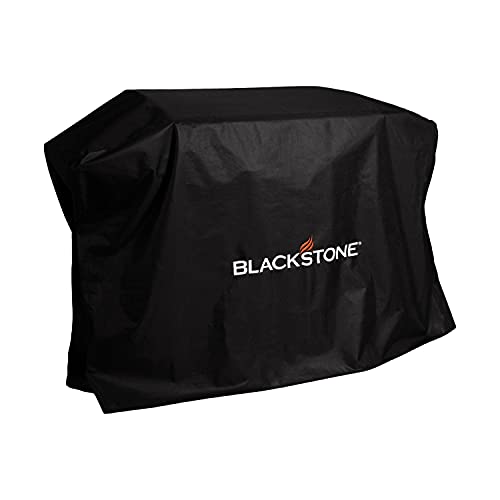
Griddle covers, by size and burner count
Covers sized by width, hood configuration and burner count, why vents are non-negotiable, and what wears out first.
The best flat-top griddles
Our flagship ranking. Every major flat-top griddle scored on cooking area, burner count, heat density and cooktop material.
Blackstone griddle alternatives
Six alternatives to a Blackstone, each matched to a specific reason for looking elsewhere: heat, rust, seasoning, price, size or no outdoor space.
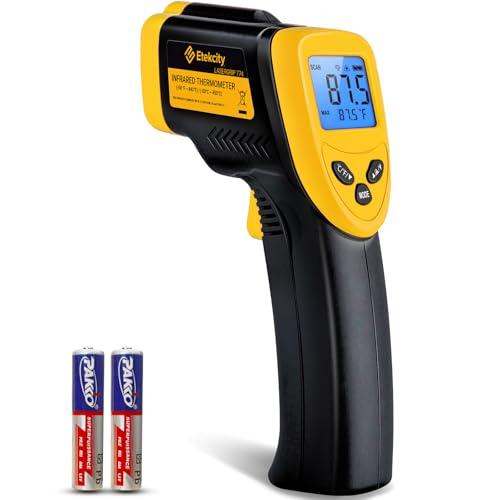
How long does a griddle take to heat up?
Why thick plates and big plates take longer, the water-drop test, and the cost of cooking on a plate that is still climbing.
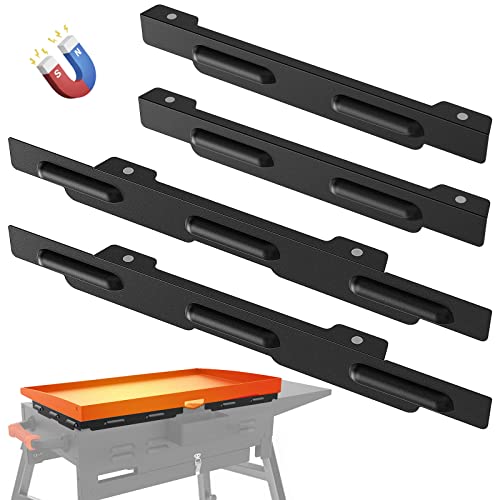
Griddle wind guards
Why wind costs you more heat than you would expect, what a guard must cover to work, and when you do not need one.